
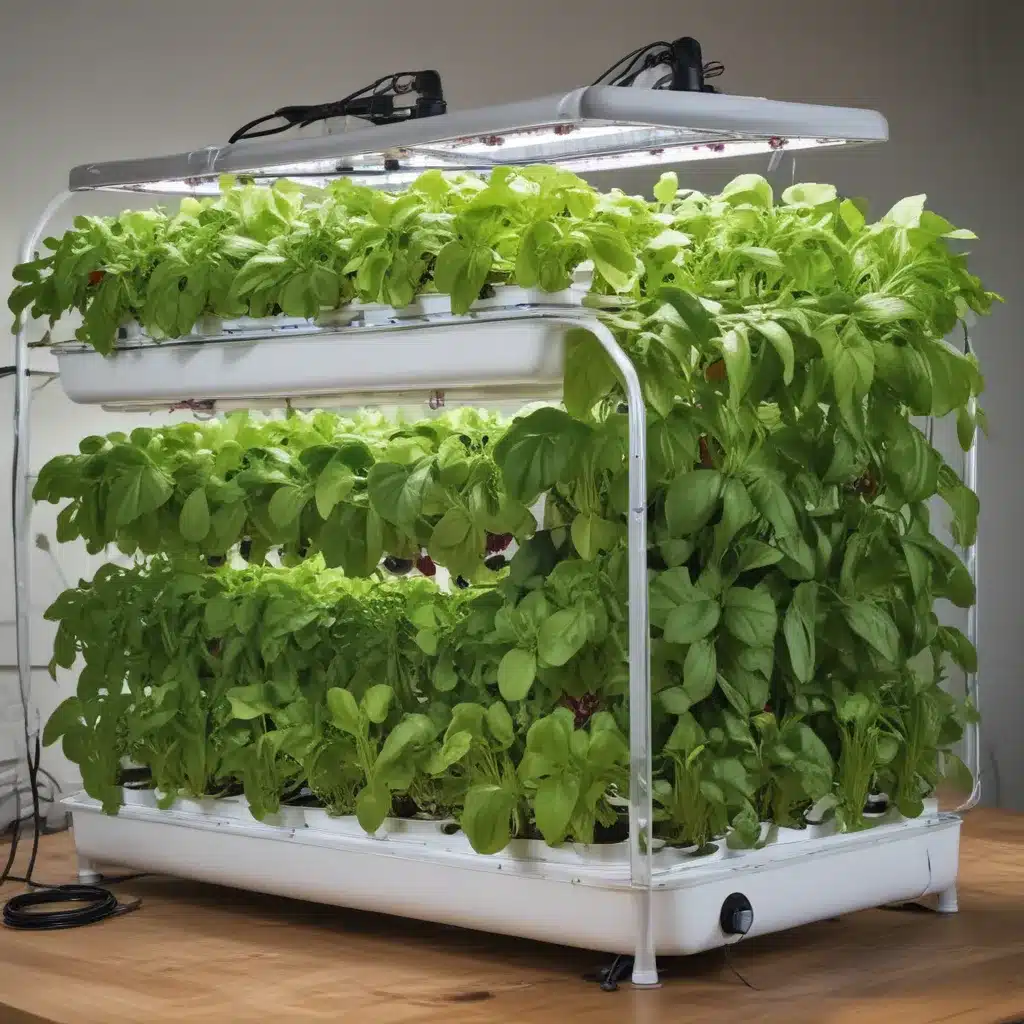
The Soilless Revolution: Dive Into the World of Hydroponics
As a lifelong gardener and someone who’s always looking for new and innovative ways to cultivate my green thumb, I’ve been absolutely fascinated by the incredible world of hydroponics. I remember the first time I stumbled upon the concept – I was scrolling through my social media feed when I came across a video of these lush, thriving plants seemingly floating in mid-air, their roots submerged in a nutrient-rich solution. I was instantly hooked!
You see, I’ve always loved the idea of growing my own produce, but the constant battle with pests, weeds, and finicky soil conditions has sometimes left me feeling a bit defeated. That all changed when I discovered the magic of hydroponics. Suddenly, I had a way to grow an abundance of fresh fruits, veggies, and herbs without all the hassle. And the best part? It’s actually really easy to set up, even for complete beginners like myself.
That’s why I’m so excited to share my top 5 favorite hydroponic systems with you today. Whether you’re looking to grow your own salad greens, cultivate a thriving indoor herb garden, or even tackle something a little more ambitious like tomatoes or strawberries, there’s a hydroponic setup out there that’s perfect for you. So, let’s dive in and explore the wonders of soilless gardening, shall we?
Choosing the Right Hydroponic System for Your Needs
When it comes to hydroponics, there’s no one-size-fits-all solution. The type of system you choose will depend on a variety of factors, including the space you have available, the types of plants you want to grow, and your overall level of gardening experience. That’s why it’s so important to do your research and find the option that best suits your unique needs and goals.
To help you get started, I’ve put together a quick overview of five of the most popular hydroponic systems on the market. Each one has its own set of pros and cons, so I encourage you to read through them carefully and see which one aligns most closely with your vision for your dream indoor garden.
1. Ebb and Flow (Flood and Drain) System
Let’s start with the classic ebb and flow (or flood and drain) system. This is one of the most beginner-friendly options out there, and it’s a great choice if you’re looking to grow a variety of plants, from leafy greens to fruiting veggies.
The way it works is pretty straightforward – your plants are housed in a grow tray that sits on top of a reservoir filled with nutrient-rich water. At regular intervals, a pump will flood the grow tray, allowing the roots to soak up all the nourishment they need. Then, the water drains back into the reservoir, simulating the natural ebb and flow of a tidal system.
One of the biggest advantages of the ebb and flow system is its versatility. You can easily scale it up or down to accommodate your available space, and it’s capable of supporting a wide range of plant types. It’s also relatively low-maintenance, as the automatic flooding and draining cycles take care of the watering for you.
On the flip side, the ebb and flow system does require a bit more initial setup than some of the other options on this list. You’ll need to invest in a quality pump, timer, and grow tray, which can add to the overall cost. And if the pump or timer malfunctions, you run the risk of over or under-watering your plants.
2. Nutrient Film Technique (NFT) System
Another popular choice for hydroponic gardeners is the nutrient film technique (NFT) system. This one is a bit more hands-on than the ebb and flow setup, but it’s an excellent option if you’re looking to grow leafy greens, herbs, or other shallow-rooted plants.
The basic premise of an NFT system is that it uses a continuous flow of nutrient-rich water to nourish your plants. The water is pumped from a reservoir, through a series of narrow channels or “gullies,” and back into the reservoir in a never-ending loop. This constant circulation ensures that your plants’ roots are always getting the sustenance they need.
One of the biggest advantages of the NFT system is its space-saving design. The slim, vertical channels allow you to grow a lot of plants in a relatively small footprint, making it a great choice for urban gardeners or those with limited indoor space. It’s also highly efficient when it comes to water and nutrient usage, which can save you money in the long run.
However, the NFT system does require a bit more hands-on maintenance than some of the other options. You’ll need to regularly check the water levels, monitor the pH and nutrient balance, and make adjustments as needed. And because the roots are exposed to the flowing water, they’re more susceptible to issues like algae buildup or root rot if not properly cared for.
3. Drip System
If you’re looking for a hydroponic setup that’s a bit more automated and hands-off, you might want to consider a drip system. This method uses a network of tubing and emitters to slowly drip nutrient-rich water directly onto the roots of your plants, mimicking the natural watering process.
One of the biggest benefits of a drip system is its precision. By precisely controlling the flow of water and nutrients, you can ensure that your plants are getting exactly what they need, when they need it. This can lead to faster growth, higher yields, and healthier plants overall.
Additionally, drip systems are relatively low-maintenance compared to some of the other hydroponic options. Once the initial setup is complete, you can pretty much let the system run on its own, with only occasional checks and adjustments required.
The downside to drip systems is that they can be a bit more complex to set up, especially if you’re working with a larger growing area. You’ll need to install the tubing and emitters just right, and make sure the water pressure and flow rates are properly balanced. And if a clog or leak occurs, it can be a bit of a headache to troubleshoot and fix.
4. Aeroponics
Now, if you really want to push the boundaries of what’s possible in the world of hydroponic gardening, you might want to consider an aeroponics system. This cutting-edge method does away with both soil and water, instead relying on a fine mist of nutrient-rich solution to nourish your plants’ roots.
The way it works is pretty fascinating – your plants are suspended in the air, with their roots exposed to a constant spray of mist that’s pumped up from a reservoir below. This allows the roots to absorb an incredible amount of oxygen, which can lead to faster growth, higher yields, and even the ability to grow plants that are typically more challenging, like orchids or herbs.
One of the biggest advantages of aeroponics is its incredible efficiency when it comes to water and nutrient usage. Because the system is completely closed-loop, you can recycle and reuse the nutrient solution over and over again, reducing waste and saving you money in the long run. It’s also incredibly space-efficient, with a compact, vertical design that’s perfect for small-scale indoor gardens.
However, aeroponics systems do come with their own set of challenges. They require a bit more technical know-how to set up and maintain, and any disruption in the misting cycle can quickly lead to stress or even death for your plants. You’ll also need to be diligent about monitoring and adjusting the pH, nutrient levels, and other critical factors to ensure your plants stay healthy and thriving.
5. Aquaponics
Last but certainly not least, we have the incredible world of aquaponics – a hybrid system that combines hydroponics with aquaculture (fish farming). In an aquaponic system, the nutrient-rich waste produced by your fish is used to nourish your plants, creating a self-sustaining, closed-loop ecosystem.
This is a truly fascinating approach to indoor gardening, and it’s one that I’ve been absolutely enthralled by. Imagine being able to grow a bounty of fresh produce while also raising your own fish for food or even as pets! It’s an incredibly efficient and eco-friendly way to garden, and it can be a really rewarding and engaging hobby for the whole family.
The key to a successful aquaponic system is striking the right balance between the fish and the plants. You’ll need to carefully monitor water quality, pH levels, and the overall health of both your aquatic and terrestrial inhabitants. It’s a bit more complex than some of the other hydroponic setups, but the payoff is truly remarkable.
Of course, aquaponics does require a bit more initial investment than some of the other options on this list. You’ll need to acquire fish, set up an aquarium or pond, and ensure that the entire system is properly integrated and functioning. But for those who are up for the challenge, the results can be absolutely stunning.
Bringing it All Together
Whew, that was a lot of information to take in, wasn’t it? But I hope that by now, you have a much better understanding of the incredible world of hydroponics and the various systems that are available to the intrepid indoor gardener.
Whether you’re drawn to the simplicity of the ebb and flow setup, the precision of a drip system, or the captivating ecosystem of an aquaponic garden, there’s a hydroponic solution out there that’s perfect for you. The key is to do your research, consider your space and resource constraints, and choose the option that aligns most closely with your gardening goals and aspirations.
And remember, even if you’re just starting out, don’t be afraid to experiment and get a little bit creative. Hydroponics is all about thinking outside the box and pushing the boundaries of what’s possible. So, go forth, my fellow green thumbs, and let your soilless gardening journey begin!
Oh, and before I forget – if you’re in the Aberdeen area and are looking for a trusted partner to help you bring your hydroponic dreams to life, be sure to check out ABC Home. Their team of expert builders and renovators can help you transform your space into the indoor oasis of your wildest fantasies. Happy growing!


