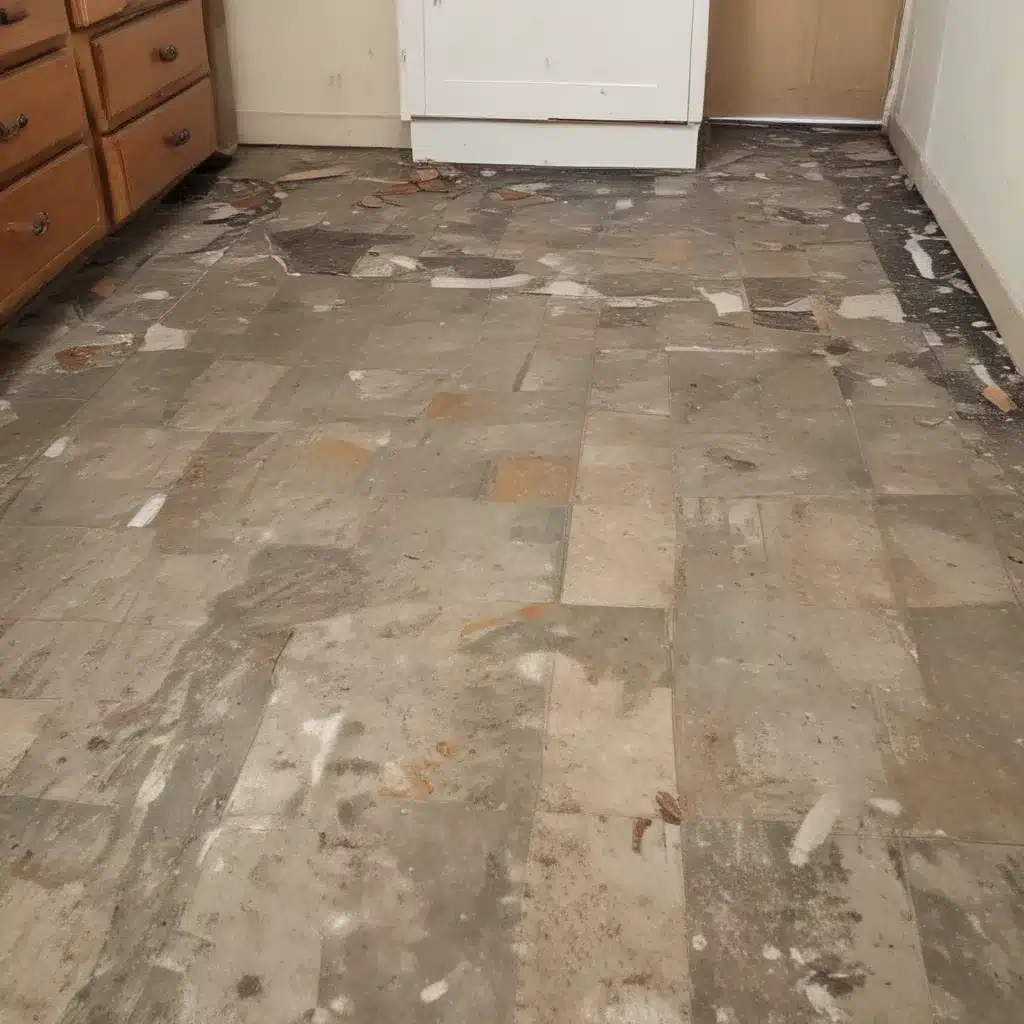
The Asbestos Scare: Separating Fact From Fiction
I’ll never forget the day I got the call from my client, Mrs. Wilkins. She was in a panic, her voice shaking as she described the scene in her newly purchased home. “There’s asbestos everywhere!” she cried. “In the tiles, the insulation, the ceiling – I don’t know what to do!” Poor Mrs. Wilkins had fallen victim to the great asbestos scare of the 21st century. As the owner of a building and renovation company in Aberdeen, UK, I’ve seen this scenario play out time and time again.
You see, the mere mention of the “A-word” is enough to send homeowners into a frenzy. Images of hazmat suits and biohazard signs come to mind. But the truth is, not all asbestos is created equal. In fact, the type of asbestos found in older vinyl or linoleum flooring is generally considered low-risk, provided it’s in good condition. Yet, many people assume the worst and end up spending a small fortune on unnecessary abatement.
That’s why I’ve made it my mission to educate homeowners on the realities of asbestos – when it’s a genuine threat, and when it’s simply being blown out of proportion. Over the years, I’ve seen firsthand how a little knowledge can go a long way in quelling those asbestos-fueled anxieties. And today, I’m excited to share my expertise with you.
Understanding Asbestos: A Brief History Lesson
To properly address the asbestos issue, we first need to understand its history and the risks it poses. Asbestos is a naturally occurring mineral that was once widely used in construction materials due to its impressive heat-resistant and insulating properties. From the 1920s to the 1970s, it was a staple in everything from pipe insulation to ceiling tiles.
However, the dark side of asbestos soon came to light. Exposure to certain types of asbestos fibers was found to cause serious health issues, including lung cancer and a fatal respiratory disease called mesothelioma. This led to a nationwide ban on the use of asbestos in new construction, and a massive effort to identify and remove it from existing buildings.
Understandably, this sparked a nationwide panic. Suddenly, the word “asbestos” became a four-letter word, synonymous with danger and impending doom. Homeowners were on high alert, and any sign of the dreaded mineral would send them into a tailspin. But here’s the thing – not all asbestos is created equal.
The Asbestos Spectrum: Understanding the Risks
You see, there are two main types of asbestos: friable and non-friable. Friable asbestos is the stuff that really poses a genuine health risk. These are the crumbly, easily airborne fibers that can be easily inhaled and cause serious harm. This type of asbestos is typically found in older insulation, ceiling tiles, and other materials that have deteriorated over time.
Non-friable asbestos, on the other hand, is much less of a concern. This includes asbestos that is firmly embedded in other materials, like vinyl flooring or roofing tiles. As long as the material is in good condition and not disturbed, the asbestos fibers are unlikely to become airborne and pose a threat to human health.
Now, you might be wondering, “But how can I tell the difference?” Well, that’s where things can get a little tricky. The only way to be 100% sure is to have a professional inspection and testing done. But there are some telltale signs you can look out for.
Friable asbestos is typically crumbly, powdery, and easily broken apart with your hands. Non-friable asbestos, on the other hand, is much more durable and firmly embedded in the material. If you can’t easily break it apart, it’s likely the less dangerous, non-friable variety.
Vinyl and Linoleum Flooring: A Closer Look
Now, let’s talk specifically about vinyl and linoleum flooring – the focus of this article. These types of flooring were incredibly popular in homes built between the 1920s and 1970s, and they often contained small amounts of asbestos.
The asbestos in these floors was used to provide strength, flexibility, and fire resistance. But unlike the friable asbestos found in insulation or ceiling tiles, the asbestos in vinyl and linoleum is firmly locked into the material. As long as the floor is in good condition, with no cracks or damage, the asbestos poses very little risk.
In fact, the U.S. Environmental Protection Agency (EPA) has classified asbestos-containing vinyl and linoleum flooring as a “Category 1” material, meaning it’s considered non-friable and low-risk. The key is to avoid any activities that could disturb the floor and release the asbestos fibers, such as sanding, grinding, or cutting.
Asbestos Inspection and Testing: When to Worry
So, when should you start to worry about asbestos in your vinyl or linoleum flooring? Well, the answer really depends on the condition of the floor. If the material is in good shape, with no visible damage or deterioration, then there’s generally no need for concern.
However, if you notice cracks, holes, or other signs of wear and tear, it’s definitely worth getting a professional inspection. A trained asbestos inspector can assess the material, collect samples, and determine the level of risk. They’ll also be able to advise you on the best course of action, whether that’s leaving the floor as-is, encapsulating it, or proceeding with full-scale abatement.
It’s important to note that asbestos testing and removal can be a costly and disruptive process. That’s why it’s crucial to have a qualified professional assess the situation before jumping to any conclusions. In my experience, many homeowners end up spending thousands of pounds on unnecessary abatement, all because they panicked at the first sign of the “A-word.”
The Abatement Dilemma: Weighing the Risks and Costs
Speaking of abatement, let’s talk about the potential pitfalls of removing asbestos-containing materials. While it’s true that proper asbestos removal is essential in certain high-risk situations, it’s a process that shouldn’t be taken lightly.
The asbestos abatement process can be incredibly disruptive, often requiring the complete evacuation of a building for days or even weeks. It also comes with a hefty price tag, with the average cost ranging from £5,000 to £15,000 or more, depending on the scale of the project.
And here’s the kicker – the act of removing asbestos can actually create more of a hazard than leaving it alone. If the asbestos-containing material is in good condition and not being disturbed, it’s generally safer to leave it be. But when you start ripping it out, you run the risk of releasing harmful asbestos fibers into the air, putting both workers and occupants at risk.
That’s why it’s so important to have a trained professional assess the situation and determine the best course of action. Sometimes, the most prudent solution is to simply encapsulate the asbestos, sealing it in place to prevent any future disturbance. Other times, full abatement may be necessary, but only if the risks outweigh the significant costs and disruption.
The Asbestos Anxiety: Overcoming Your Fears
I know, I know – it’s easy for me to sit here and tell you not to worry about asbestos. After all, I’m not the one staring at a potential health hazard in my own home. The panic and anxiety that comes with discovering asbestos is completely understandable.
But I want you to know that you’re not alone. Time and time again, I’ve seen homeowners succumb to the “asbestos scare,” only to find out that the material in question was actually low-risk and manageable. It’s a common phenomenon, fueled by our natural tendency to assume the worst.
That’s why it’s so important to arm yourself with knowledge and seek out professional guidance. Don’t let the “A-word” send you into a tailspin. Instead, take a deep breath, and remember that not all asbestos is created equal. With the right information and the help of a qualified expert, you can make an informed decision that prioritizes your health and your wallet.
And who knows, maybe you’ll even come out of this experience with a newfound appreciation for the history and quirks of your home. After all, those old vinyl floors might just have a story to tell – one that doesn’t have to end in a costly and disruptive abatement project.
The Path Forward: Practical Tips for Homeowners
So, what’s the takeaway here? Well, if you’re a homeowner with old vinyl or linoleum flooring, here are a few key things to keep in mind:
-
Don’t Panic: Just because your floors contain asbestos doesn’t mean you’re in immediate danger. As long as the material is in good condition and left undisturbed, the risks are generally low.
-
Inspect and Assess: Carefully examine your floors for any signs of damage or deterioration. If the material is in good shape, you may be able to leave it as-is. But if you notice cracks, holes, or other issues, it’s time to call in a professional.
-
Hire a Pro: When it comes to asbestos, you don’t want to take any chances. Hire a licensed and experienced asbestos inspector to assess the situation and provide guidance on the best course of action.
-
Weigh Your Options: If the asbestos is deemed a genuine threat, work with your inspector to explore your options. Sometimes, encapsulation or isolation may be a more cost-effective and less disruptive solution than full-scale abatement.
-
Trust Your Gut: Remember, not all asbestos is equal. If your inspector tells you the material is low-risk and can be safely managed, trust their expertise. Don’t let the “asbestos scare” cloud your better judgment.
At the end of the day, the key is to approach the situation with a level head and a practical mindset. Asbestos may be a four-letter word, but it doesn’t have to be the end of the world. With the right guidance and a little bit of patience, you can navigate this challenge and come out the other side with your home – and your sanity – intact.
So, take a deep breath, and let’s get to work. Together, we can conquer the great asbestos scare, one vinyl floor at a time.