Braving the Frost: Why Frozen Pipes Are a Wintertime Woe
Ah, the joys of winter in Aberdeen – the crisp air, the twinkling lights, and the perpetual threat of frozen pipes. As a lifelong resident, I’ve seen my fair share of “ice-capades” when it comes to our plumbing. It’s a problem that can strike fear into the heart of even the most seasoned homeowner. After all, who wants to deal with a burst pipe and a flooded basement in the dead of winter?
But fear not, my friends! Today, I’m here to share my hard-earned wisdom and practical tips to help you outsmart Old Man Winter and keep your pipes flowing freely. So, grab a hot toddy, get cozy, and let’s dive into the ins and outs of preventing frozen pipes.
Understanding the Freeze: What Causes Pipes to Freeze?
To tackle this chilly conundrum, we first need to understand what causes pipes to freeze in the first place. It’s a simple matter of science, really. When the temperature drops below freezing, the water inside your pipes can turn to solid ice, expanding and putting tremendous pressure on the pipe walls.
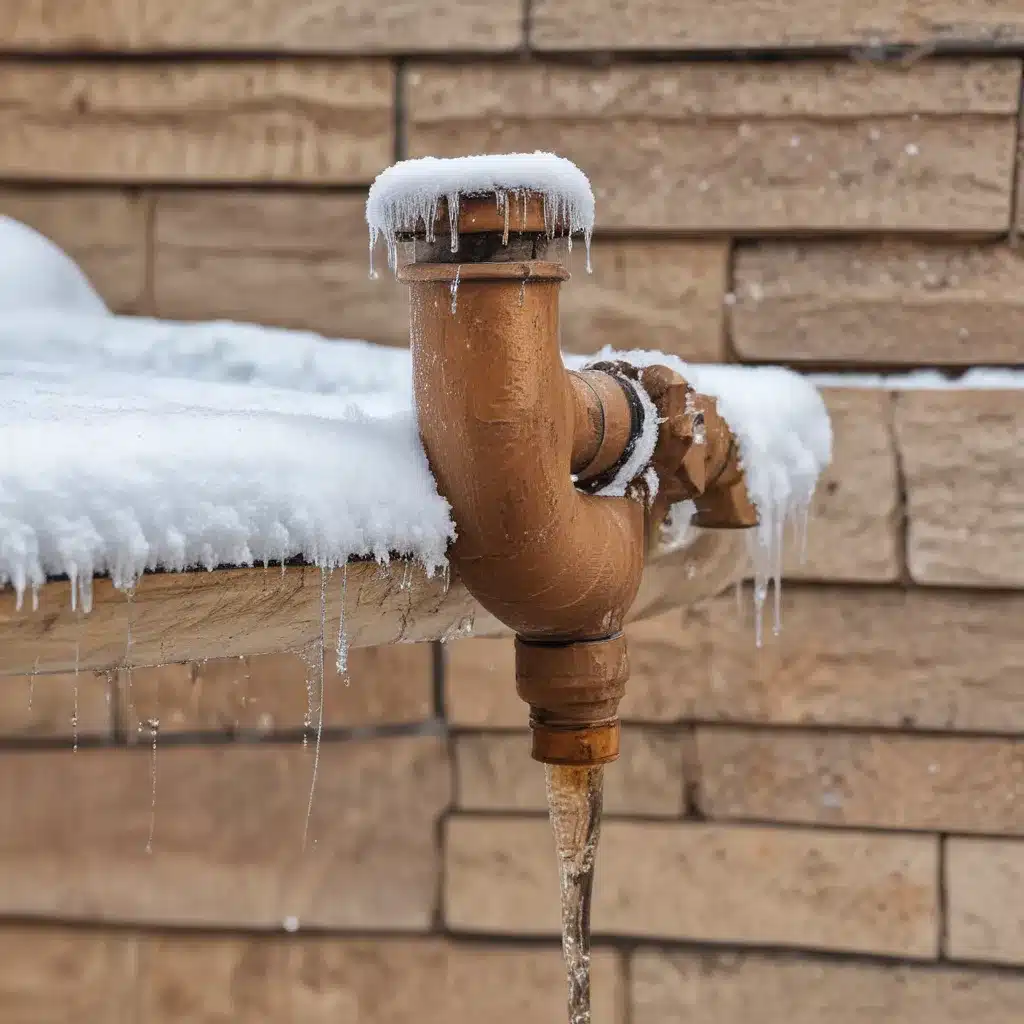
What materials and locations are most prone to freezing? Well, as a general rule, any exposed pipes – whether they’re located in an unheated crawl space, an attic, or the dreaded outdoor hose bib – are the most vulnerable. Pipes made of plastic or copper are also more susceptible to freezing than their sturdier, iron-clad counterparts.
But it’s not just the pipes themselves that can succumb to the winter chill. Did you know that even a small crack in your home’s foundation or walls can let in the cold air and contribute to frozen pipes? Yep, those pesky drafts can wreak havoc on your plumbing, so it’s important to seal up any cracks or openings before the mercury starts to plummet.
Battling the Freeze: Practical Tips to Prevent Frozen Pipes
Now that we understand the science behind frozen pipes, let’s talk about what you can do to keep your home’s plumbing working smoothly all winter long.
Insulate, Insulate, Insulate
The first and most crucial step is to ensure that all exposed pipes are properly insulated. This could involve wrapping them in foam insulation, heat tape, or even good old-fashioned rags and towels. Did you know that even a simple layer of newspaper can provide a surprising amount of protection? It’s true!
But it’s not just the pipes themselves that need attention. Have you checked the insulation in your attic, crawl space, or basement? These areas can be major sources of heat loss, which in turn can lead to frozen pipes. Make sure to seal any gaps or cracks and consider adding extra insulation for good measure.
Keep the Heat On
Another essential tip is to never let your home’s temperature drop too low, even when you’re away. Did you know that letting your thermostat dip below 55°F (13°C) can put your pipes at serious risk of freezing? It’s a common mistake that many homeowners make, thinking they’re saving on energy costs. But trust me, the cost of a burst pipe and the resulting water damage is far more than any savings you’ll see on your heating bill.
Let the Taps Drip
Speaking of thermostats, here’s a nifty little trick: Did you know that letting your faucets drip, even just a trickle, can actually help prevent your pipes from freezing? The constant movement of the water makes it much harder for ice to form. So, on those bitterly cold nights, make sure to turn on the taps just enough to keep a steady, slow drip going.
Monitor and Protect Outdoor Faucets
Of course, we can’t forget about those pesky outdoor faucets and hose bibs. These are often the first to succumb to the winter chill, and a burst pipe here can quickly turn into a costly and messy disaster. To prevent this, make sure to shut off the indoor water supply to these outdoor fixtures and drain any remaining water. You can also invest in insulated covers or “faucet jackets” to provide an extra layer of protection.
Thawing the Freeze: What to Do If Pipes Are Already Frozen
Alright, so you’ve done everything in your power to prevent frozen pipes, but lo and behold, you wake up to the sound of water trickling (or gushing) where it shouldn’t be. What do you do?
First and foremost, don’t panic! There are a few steps you can take to thaw out those frozen pipes and minimize the damage.
Act Quickly
Time is of the essence when it comes to frozen pipes, so the sooner you can identify and address the problem, the better. Did you know that a frozen pipe can burst in as little as 6 to 8 hours? That’s not a lot of wiggle room, my friends.
Locate the Freeze
Your first order of business is to locate the exact section of pipe that’s frozen. This can be tricky, as the frozen area may not be immediately visible. Start by checking the pipes in the most vulnerable areas – attics, crawl spaces, and outdoor faucets. You might even be able to hear the telltale sound of water struggling to flow.
Apply Gentle Heat
Once you’ve identified the frozen spot, it’s time to apply some gentle heat to thaw it out. You can try using a space heater, a heating pad, or even a hair dryer (on the lowest setting, of course). Just be sure to keep a close eye on the process and never leave the area unattended, as the rapid thawing can sometimes cause the pipe to burst.
Avoid Dangerous Methods
Whatever you do, steer clear of open flames, blowtorches, or any other extreme heating methods. These can easily damage the pipe and lead to even bigger problems. Trust me, it’s just not worth the risk.
Keep the Water Flowing
As the pipe begins to thaw, be sure to turn on the faucet at the affected area. This will allow the water to flow freely and help prevent further freezing. And if you happen to discover a burst pipe, act quickly to shut off the main water supply and call in a professional plumber.
Protecting Your Home: The Importance of Regular Maintenance
Of course, the best way to deal with frozen pipes is to prevent them from happening in the first place. That’s why regular home maintenance is so crucial, especially as the winter months approach.
Inspect and Insulate
Take the time to thoroughly inspect your home’s plumbing system, paying close attention to any exposed pipes or areas that may be vulnerable to the cold. Don’t just focus on the obvious suspects – even a small crack in your foundation can let in the chill and contribute to freezing. And remember, proper insulation is key, so make sure to wrap those pipes and seal those drafts.
Upgrade and Winterize
If you’ve got some older, more susceptible pipes in your home, consider upgrading to more durable, freeze-resistant materials. PEX tubing, for example, is a popular choice that can withstand the rigors of winter much better than traditional copper or plastic.
And don’t forget about those pesky outdoor faucets and hose bibs. Investing in insulated covers or shut-off valves can go a long way in protecting these vulnerable areas. Trust me, it’s a small price to pay compared to the cost of a burst pipe.
Enlist Professional Help
If you’re not the DIY type, or if you’re simply not sure where to start, don’t be afraid to call in the experts. A reputable plumber or home maintenance company can conduct a thorough inspection, identify any problem areas, and recommend the best course of action to keep your pipes safe and sound all winter long.
Frozen Pipes: A Cautionary Tale (and a Happy Ending)
Now, I promised you a real-life example, and I always keep my word. Let me tell you about the time my next-door neighbor, Mrs. Wilkins, learned the hard way about the importance of winterizing her home.
It was a bitterly cold December night when Mrs. Wilkins came home to find her basement in a veritable winter wonderland. Pipes had burst, water was gushing everywhere, and poor Mrs. Wilkins was in a state of pure panic. Turns out, she’d neglected to insulate her crawl space and hadn’t even thought to winterize her outdoor faucets.
Needless to say, the cleanup and repairs were a costly and time-consuming endeavor. But the silver lining? Mrs. Wilkins learned her lesson and became a zealous advocate for preventative maintenance. She had her home thoroughly inspected, upgraded her plumbing, and now takes great pride in her frost-proof pipes.
So, take it from Mrs. Wilkins (and me!): an ounce of prevention is worth a pound of frozen, water-logged cure. Trust me, you’ll thank yourself later when you can cozy up by the fire, sipping hot cocoa, and listening to the wind howl outside – without a care in the world about your pipes.
Conclusion: Keeping the Chill at Bay
Well, there you have it, folks – my comprehensive guide to preventing frozen pipes in the chilly winters of Aberdeen. From understanding the science behind the freeze to implementing practical, proven prevention strategies, I’ve covered all the bases.
Remember, a little bit of preparation and vigilance can go a long way in keeping your home warm, dry, and free of plumbing disasters. So, grab your toolbox, bundle up, and let’s get to work outsmarting Old Man Winter, one pipe at a time.
And if you need any help with your home’s plumbing, heating, or renovation needs, be sure to check out ABC Home. Their team of experienced professionals is always ready to lend a hand (or a heat lamp) to keep your Aberdeen home in tip-top shape, no matter the season.
Happy winterizing, my friends! Stay cozy, stay dry, and may your pipes never freeze.