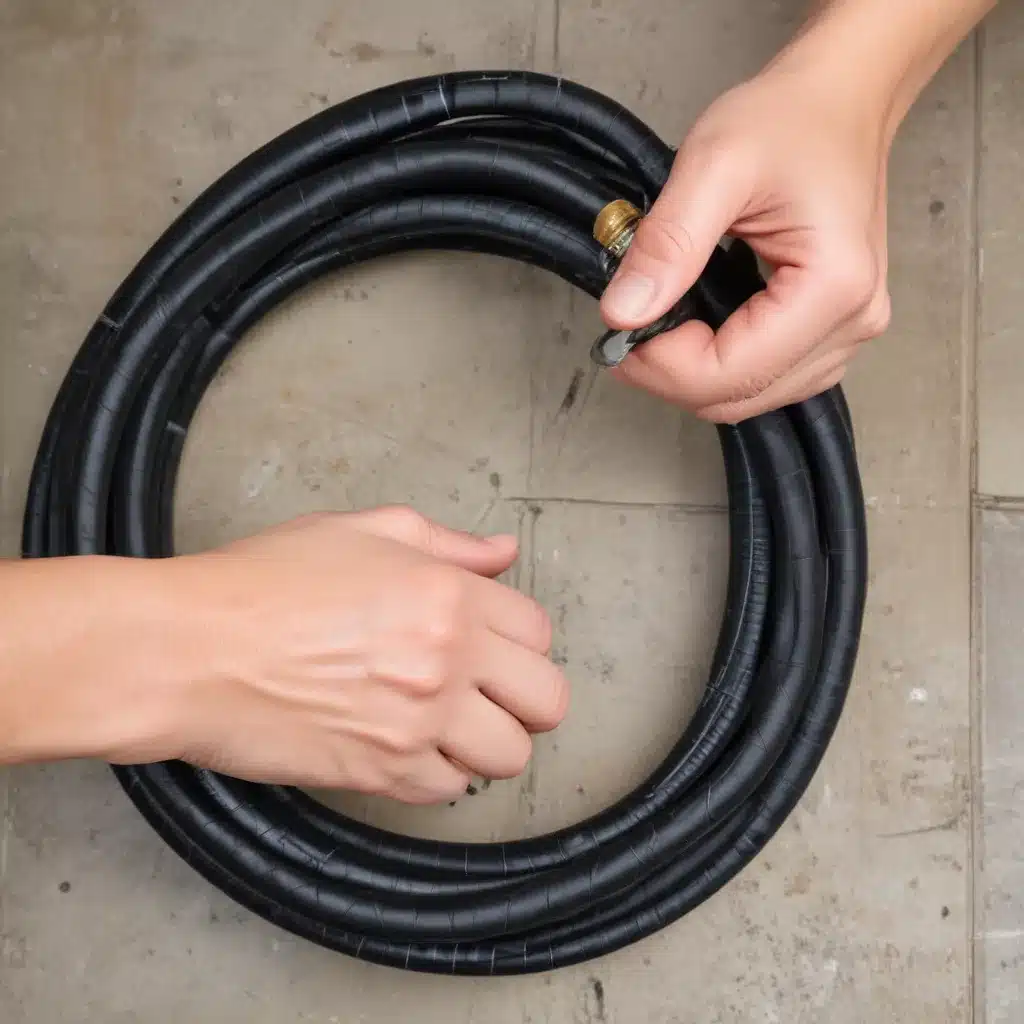
The Importance of Inspecting Your Washer Hoses
As a homeowner in Aberdeen, UK, I know all too well the importance of staying on top of home maintenance. One area that’s often overlooked but can have serious consequences is the humble washer hose. These unsung heroes of the laundry room may seem innocuous, but a little neglect can lead to big (and messy) problems.
You see, those thin, flexible hoses are the lifeline between your washing machine and the plumbing system. They ferry gallons of hot, soapy water back and forth, day in and day out. And over time, all that wear and tear can take its toll. Cracks, bulges, and even complete failures become more and more likely.
And let me tell you, when a washer hose blows, it’s not a pretty sight. Imagine coming downstairs to find your laundry room knee-deep in a flood, with water cascading everywhere. It’s a homeowner’s nightmare, one that can lead to costly water damage, mold, and even electrical hazards.
That’s why I make it a point to regularly inspect my washer hoses, and I recommend you do the same. It’s a quick and easy task that could save you a whole lot of heartache (and money) down the line.
How to Inspect Your Washer Hoses
Now, I know what you’re thinking – “But I’m not a plumber! How am I supposed to know what to look for?” Well, fear not, my friends. Inspecting those hoses is actually a pretty straightforward process.
First and foremost, I always recommend turning off the water supply to your washing machine before you start. That way, if you do discover any issues, you won’t end up with a geyser in your laundry room. Safety first, folks!
Next, take a good, close look at the hoses. Run your hands along the length of them, feeling for any bulges, cracks, or soft spots. Those are all signs that the hose is starting to wear down and could be at risk of failure.
While you’ve got your hands on the hoses, give them a gentle tug to check the connections. Make sure the hoses are securely attached to both the washing machine and the plumbing fittings. If anything feels loose or wobbly, it’s time to tighten things up.
And don’t forget to check the hose clamps as well. These little metal rings are what keep the hoses in place, and they can loosen over time. A quick tightening with a pair of pliers can go a long way in preventing leaks.
Finally, take a step back and look at the overall condition of the hoses. Are they kinked or excessively bent? That can also put stress on the material and lead to premature failure. If the hoses are looking a bit worse for wear, it might be time to consider replacing them.
When to Replace Your Washer Hoses
As a general rule of thumb, I like to replace my washer hoses every 3-5 years, or whenever I notice any signs of wear and tear. It’s a small investment that can pay big dividends in the long run.
Now, I know what you’re thinking – “But my hoses look fine! Why do I need to replace them?” Well, let me tell you, those hoses are a bit like tires on your car. They may look okay on the surface, but the internal structure can be slowly deteriorating. And just like with your car, it’s better to be proactive and replace them before a catastrophic failure.
Trust me, I’ve seen the aftermath of a busted washer hose, and it’s not pretty. Water damage can be an absolute nightmare to deal with, not to mention the potential for mold and mildew. And let’s not forget about the cost of repairs – it’s enough to make your head spin.
That’s why I always recommend replacing your washer hoses every few years, even if they seem to be in good shape. It’s a small price to pay for the peace of mind of knowing your laundry room is safe and secure.
Real-Life Case Studies: Washer Hose Disasters
Now, I know what you’re thinking – “Okay, I get it, washer hoses are important. But how bad can it really be?” Well, let me tell you, the stories I’ve heard from my friends and neighbors would make your hair stand on end.
Take my neighbor, Jill, for example. She was just going about her usual laundry routine when, suddenly, she heard a loud BANG. Turns out, the old hose on her washing machine had finally had enough and given way, sending a torrent of water cascading across her entire laundry room.
By the time Jill realized what was happening, the floor was already knee-deep in soapy water. She had to call in a professional water damage restoration crew, and the whole ordeal ended up costing her thousands of pounds. Not to mention the headache of having to replace all the damaged flooring and cabinetry.
And then there’s my good friend, Dave. He was on vacation with his family when he got a frantic call from his neighbor. Turns out, the washer hose in Dave’s house had sprung a leak, and the water had been running for days. By the time they got back, the entire basement was flooded, and they had to completely gut and rebuild the space.
Needless to say, both Jill and Dave wish they had taken the time to regularly inspect and replace their washer hoses. It’s a small investment that could have saved them a whole lot of time, money, and heartache.
Replacing Your Washer Hoses: A Step-by-Step Guide
Alright, now that I’ve thoroughly convinced you of the importance of staying on top of your washer hoses, let’s talk about how to actually replace them.
First, you’ll need to gather a few supplies. You’ll obviously need a new set of washer hoses, and I always recommend going with a high-quality, reinforced model. You can find them at any hardware store or home improvement center.
You’ll also want to have a pair of pliers or a hose clamp tool on hand to help you loosen and tighten the clamps. And don’t forget a towel or two – you’re going to be working with water, after all.
Once you’ve got everything you need, it’s time to get to work. Start by turning off the water supply to your washing machine and unplugging the appliance from the power source. Safety first, remember?
Next, locate the hoses and carefully disconnect them from the machine and the plumbing fittings. Be prepared for a bit of water to come spilling out, so have that towel ready.
With the old hoses out of the way, take a moment to inspect the plumbing connections. Make sure the threads are clean and free of any debris or buildup. If everything looks good, you’re ready to install the new hoses.
Simply slide the new hoses into place, being sure to align them properly with the connections. Then, use your pliers or hose clamp tool to tighten the clamps, securing the hoses in place.
Finally, turn the water supply back on and give the connections a quick check for any leaks. If all looks good, you’re all set! Your washing machine is now safely connected and ready to go.
Wrapping Up: A Small Investment for Peace of Mind
Well, there you have it, folks – everything you need to know about inspecting and replacing those crucial washer hoses. It may not be the most glamorous home maintenance task, but trust me, it’s one that can pay off in a big way.
I know it can be tempting to just ignore those hoses and hope for the best, but that’s a gamble I simply can’t recommend. The risk of a catastrophic failure is just too high, and the consequences can be truly devastating.
So, do yourself a favor and make checking those washer hoses a regular part of your home maintenance routine. It’s a small investment of time and money that can save you from a whole lot of headache down the line.
And hey, if you ever need a hand with any of your home renovation or maintenance projects, be sure to check out our services. We’re always here to lend a helping hand and make sure your house is running smoothly.
Until next time, happy laundrying!