Remember that time your grandma surprised you with a bouquet of vibrant wildflowers she had picked from her garden? Or when you stumbled upon a charming roadside stand, overflowing with fragrant peonies and cheerful zinnias, beckoning you to take some home? Well, my friend, those precious moments don’t have to be just memories – you can create your very own cutting garden and enjoy a never-ending supply of fresh blooms right in your own backyard!
As someone who has been utterly captivated by the magic of growing cut flowers, I’m thrilled to share my passion and expertise with you. Whether you’re a seasoned gardener or a complete novice, I’ll walk you through everything you need to know to cultivate your dream cutting garden, from selecting the right plants to ensuring your freshly-cut flowers last as long as possible in a vase.
The Joy of Growing Cut Flowers
Flowers have a way of bringing joy and beauty to our lives, don’t they? From the delicate scent of lilacs to the vibrant hues of sunflowers, there’s just something about the simple pleasure of having fresh-from-the-garden blooms in our homes. And when you’re the one who gets to nurture those flowers from seed to stunning bouquet, the sense of accomplishment is truly unmatched.
I’ll never forget the first time I saw the delicate, tissue-paper petals of my very first anemone unfurl. The pride and wonder I felt in that moment was just indescribable. Since then, I’ve grown countless varieties of flowers, each one more captivating than the last, and I find myself falling more in love with this aspect of gardening with every passing year.
What is a Cut Flower Garden?
So, what exactly is a cut flower garden, you ask? In a nutshell, it’s an area dedicated to growing flowers specifically for the purpose of cutting and arranging them into beautiful bouquets. Unlike traditional landscaping or bedding plants, which are often bred for their compact, eye-catching appearance in the garden, cut flowers are selected based on their long stems, vase-worthy blooms, and ability to stand up to the rigors of cutting and arranging.
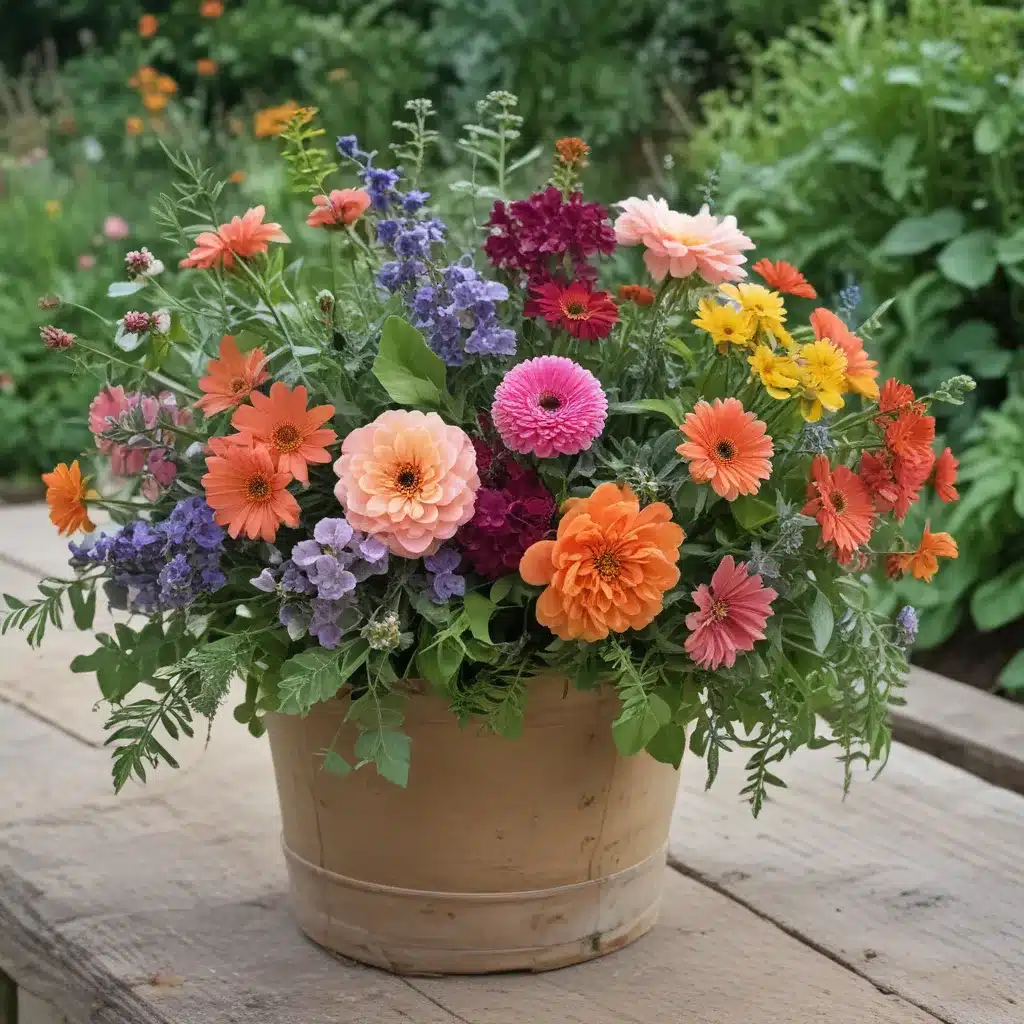
The beauty of a cut flower garden is that you can really let your creativity shine. By carefully curating a diverse array of annuals, perennials, and even flowering shrubs, you can craft one-of-a-kind arrangements that reflect your personal style and the changing seasons. Imagine being able to snip a few stems of fragrant lavender, vibrant zinnias, and wispy amberboa to create a gorgeous centerpiece for your dining table – all from your very own backyard oasis!
The Benefits of Growing Your Own Cut Flowers
Now, you might be wondering, “Why should I bother with a cutting garden when I can just buy pre-made bouquets from the store?” Well, my friend, let me tell you, the benefits of growing your own cut flowers are simply too good to pass up.
For starters, there’s the cost-saving factor. Purchasing fresh flowers on a regular basis can really add up, but by growing your own, you’ll be able to enjoy the beauty of seasonal blooms without breaking the bank. Plus, you’ll have the added bonus of knowing exactly what’s going into your flowers, since you’ll be in control of the growing process.
Speaking of which, growing your own cut flowers means you can say goodbye to the chemicals and preservatives that often come with commercially-grown blooms. When you cultivate your garden, you can rest assured that your flowers are free from any nasty additives, allowing you to bring a truly natural, eco-friendly touch to your home.
And let’s not forget the pure joy of being able to create your own custom bouquets and arrangements. With a cutting garden, the possibilities are endless! You can mix and match different colors, textures, and bloom types to your heart’s content, crafting stunning displays that reflect your unique style and taste.
Planning Your Cutting Garden
Now that you know all about the wonderful world of cut flowers, it’s time to start planning your very own cutting garden. The first step is to take a good, hard look at your growing space and climate. Are you dealing with hot, dry summers or cool, rainy springs? Do you have a dedicated bed or will your flowers be scattered throughout your landscape? Knowing the ins and outs of your growing conditions will help you choose the right plants and set yourself up for success.
Once you’ve got a handle on your environment, it’s time to start thinking about what kinds of flowers you want to grow. Do you have a favorite bloom, like vibrant zinnias or elegant peonies? Or maybe you’re drawn to the idea of creating a cutting garden that’s full of surprises, with a mix of annuals, perennials, and even flowering shrubs. Whichever route you choose, the key is to aim for a diverse array of plants that will keep your bouquets looking fresh and interesting all season long.
As the experts at Gardenary recommend, it’s a good idea to think about the different “types” of cut flowers you want to include – focal flowers, spiky blooms, fluffy discs, filler plants, and airy accents. This will help you craft arrangements that are visually stunning and well-balanced.
Cutting Garden Essentials
Once you’ve got your plan in place, it’s time to start planting! But before you get your hands dirty, let’s talk about the must-have essentials for any cutting garden.
First and foremost, you’ll want to make sure you’ve got rich, well-draining soil. Cut flowers are heavy feeders, so amending your garden beds with compost or other organic matter will give your plants the nutrients they need to thrive. And when it comes to sunlight, most cut flowers will want at least 6-8 hours of direct rays per day, so keep that in mind as you’re mapping out your garden.
Depending on the flowers you choose to grow, you may also need to provide some extra support, like trellises or stakes, to keep those tall, top-heavy stems standing tall. And don’t forget about protection from the elements – a little wind or rain can really do a number on delicate blooms, so see if you can give your cutting garden a bit of shelter.
With the practical stuff out of the way, let’s talk about the fun part: selecting your plants! As I mentioned before, the key is to go for a mix of annuals, perennials, and maybe even a few flowering shrubs to keep your bouquets looking fresh and vibrant all season long. Some of my personal favorites include:
- Annuals: Zinnias, sunflowers, cosmos, marigolds
- Perennials: Dahlias, peonies, coneflowers, yarrow
- Flowering Shrubs: Hydrangeas, lilacs, viburnum
And don’t forget about those all-important filler plants and greenery, like amberboa, basil, and ornamental grasses – they’re the unsung heroes that really pull a bouquet together.
Planting and Caring for Your Cutting Garden
Alright, now that you’ve got your plant lineup all sorted out, it’s time to get those flowers in the ground (or pots, if that’s more your style)! When it comes to planting, the experts at Three Acre Farm recommend looking for varieties that have long, sturdy stems – after all, those are the blooms that will make the best cut flowers.
As you’re getting your beds ready, don’t forget to work in plenty of that nutrient-rich compost or other organic matter. Cut flowers are hungry plants, so giving them a nice, fertile foundation will pay off in spades when it comes to lush, bountiful blooms.
And speaking of bountiful blooms, let’s talk about maintenance. One of the keys to keeping your cutting garden thriving is regular deadheading and pinching. By snipping off spent flowers and giving your plants a little trim, you’ll encourage them to put their energy into producing even more beautiful blooms. And don’t be afraid to get a little aggressive – the more you cut, the more they’ll grow!
Of course, keeping those flowers well-watered is also crucial, especially during hot, dry spells. Try to water in the morning or evening to minimize evaporation, and be sure to give your plants a deep, thorough soaking rather than just a quick sprinkle on the surface.
As the folks at Discovering Anew advise, it’s also a good idea to keep an eye out for any pests or diseases that might try to sneak into your cutting garden. A little preventative care, like picking off aphids or spraying for powdery mildew, can go a long way in keeping your flowers happy and healthy.
Harvesting and Arranging Your Blooms
Alright, now for the fun part – harvesting and arranging your very own cut flower bouquets! When it comes to cutting your blooms, the key is to do it at the right time of day. As the experts at Garden Design recommend, the early morning or late evening hours are best, when the flowers are nice and hydrated and the temperatures are cooler.
Be sure to use a sharp, clean pair of scissors or pruners, and always make your cuts at an angle to help the stems soak up as much water as possible. And don’t forget to strip off any leaves that will fall below the water line in your vase – that will help prevent bacterial growth and keep your flowers fresh for longer.
Once you’ve got your freshly-cut blooms, it’s time to start arranging! The key here is to think about creating balance and visual interest. Try to incorporate a variety of shapes, textures, and colors to really make your bouquets pop. And don’t be afraid to get creative – mix in some foliage, herbs, or even unexpected elements like dried seedpods or curvy branches.
As the team at Discovering Anew suggests, you can even try your hand at making more formal, structured arrangements, like a classic French-style bouquet or a lush, cascading centerpiece. The sky’s the limit when you’ve got a cutting garden at your fingertips!
And of course, don’t forget the little details that will help your flowers last as long as possible. Be sure to use clean, chilled vases, and consider adding a floral preservative to the water to give your blooms an extra boost. And remember to change that water every few days, trimming the stems as needed to keep them thirsty and happy.
Bringing it All Together
Well, there you have it, my friend – everything you need to know to create your very own cutting garden oasis. From planning the perfect plant lineup to harvesting and arranging your beautiful blooms, I hope you’re feeling inspired and ready to get your hands dirty.
Remember, the key to a successful cutting garden is all about embracing your creativity and having fun. So don’t be afraid to experiment, try new things, and let your personal style shine through. Who knows, you might just end up with a new favorite hobby (and a house full of stunning, fresh-from-the-garden bouquets)!
And if you ever need a little extra guidance or inspiration, be sure to check out the amazing resources available from the team at ABC Home & Renovation. They’ve got everything you need to transform your outdoor spaces, from expert landscaping advice to top-notch building and renovation services.
So what are you waiting for? It’s time to get planting and start creating your very own cutting garden oasis. Happy gardening, my friend!