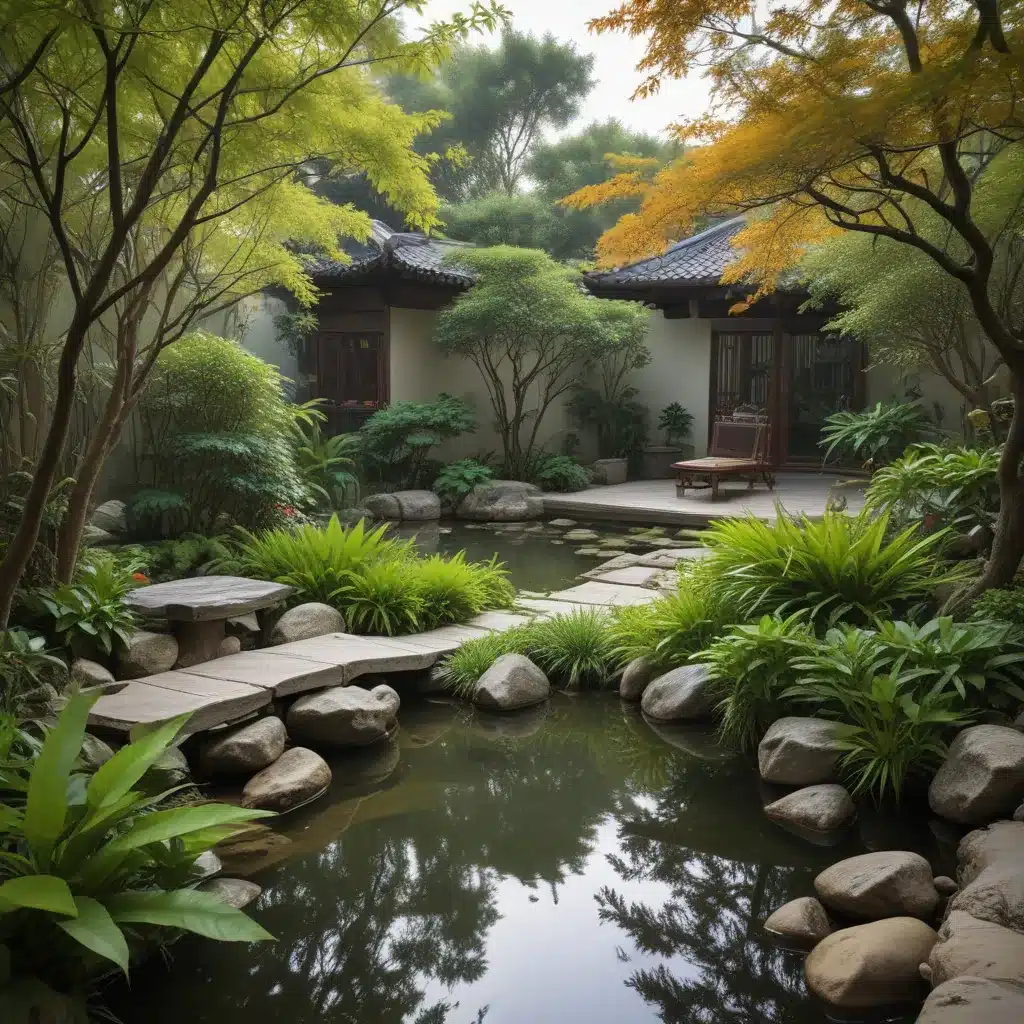
Unlocking the Secrets of Zen-Inspired Oases
Have you ever stepped into a tranquil Asian-style garden and felt an instant sense of calm wash over you? The soothing sounds of flowing water, the delicate rustling of bamboo leaves, and the captivating interplay of light and shadow all work together to create a profoundly peaceful atmosphere. As someone who has always been fascinated by the allure of Zen-inspired outdoor spaces, I’m thrilled to share my insights on how you can cultivate your own tranquil Asian garden retreat right at home.
The Philosophy Behind Zen Gardens
To truly understand the essence of an Asian-inspired garden, we must first dive into the Zen philosophy that serves as its foundation. Originating in Japan, Zen gardens, also known as “dry landscape gardens” or “rock gardens,” are deeply rooted in the principles of Zen Buddhism. The underlying goal of these thoughtfully designed spaces is to promote mindfulness, meditation, and a profound connection with the natural world.
At the heart of the Zen garden lies a philosophy of simplicity and minimalism. Rather than overwhelming the senses with a cacophony of colors and textures, these serene sanctuaries focus on carefully selected, symbolic elements that encourage contemplation and self-reflection. Rock formations, raked gravel or sand, and strategically placed plants work together to create a sense of harmony and balance, inviting visitors to slow down, clear their minds, and find inner peace.
As the blog post from ForDragonfliesmandMe suggests, the essence of a Zen garden is not about grandiose displays or elaborate designs; it’s about creating a space that resonates with the soul, allowing you to find solace in the beauty of nature’s simplicity.
Designing Your Tranquil Asian Retreat
Now that we’ve explored the philosophical underpinnings of Zen gardens, let’s dive into the practical elements of creating your own tranquil Asian-inspired oasis. Whether you have a sprawling backyard or a compact urban space, the key is to thoughtfully curate each component to foster a sense of serenity and balance.
Embracing Minimalism
One of the cardinal rules of Zen garden design is to embrace minimalism. Resist the temptation to cram every corner with a dizzying array of plants, ornaments, and water features. Instead, focus on a few carefully selected elements that work in harmony to create a sense of tranquility.
A prime example of this minimalist approach can be found in the Chinese Garden of Friendship in Sydney, Australia. Designed to evoke the essence of traditional Chinese scholar’s gardens, this urban sanctuary features a serene lake, delicate pagodas, and strategically placed boulders – all working together to create a soothing, contemplative atmosphere.
Incorporating Natural Elements
At the heart of any successful Asian-inspired garden lies a deep appreciation for the beauty of nature. By incorporating natural elements such as rocks, water, and carefully selected plants, you can cultivate a sense of tranquility that resonates with the Zen philosophy.
Rock formations, for instance, can serve as the centerpiece of your garden, symbolizing stability, strength, and the enduring presence of the natural world. As the article from OutdoorCraftsmen suggests, carefully placed boulders and pebbles can create a serene “dry stream” effect, mimicking the flow of a river without the need for running water.
Complementing the rock formations, the strategic placement of water features – such as a small pond, a trickling fountain, or a zen-inspired rock garden – can add a mesmerizing, calming element to your outdoor retreat. The soothing sounds of water, combined with the reflections that dance across the surface, can truly transport you to a state of inner peace.
Curating the Plant Palette
While minimalism is a key principle in Zen garden design, the carefully curated selection of plants plays a vital role in establishing the overall atmosphere. Opt for species that embody the essence of Asian-inspired aesthetics, such as delicate Japanese maples, graceful bamboo, and ornamental grasses that sway gently in the breeze.
The Housetrends article on Asian-inspired garden design highlights the importance of incorporating plants that evoke a sense of tranquility, such as the elegant Japanese maple or the whimsical and resilient bamboo. These species not only contribute to the visual appeal of your garden but also help to create a soothing, meditative ambiance.
Incorporating Zen-Inspired Elements
To truly capture the essence of a Zen-inspired garden, consider incorporating additional elements that reflect the philosophy of mindfulness and inner peace. This could include the addition of a stone lantern, a carefully raked gravel or sand garden, or even a simple wooden bench that invites visitors to pause and reflect.
As the blog post from Ginny Prior suggests, the inclusion of spiritual and contemplative elements, such as a meditation labyrinth or a pagoda-inspired structure, can further enhance the Zen-like atmosphere of your garden retreat.
Bringing it all Together: The Harmonious Oasis
With a solid understanding of the Zen philosophy and the key design elements that define an Asian-inspired garden, it’s time to start visualizing your own tranquil outdoor oasis. Imagine stepping out of your ABC Home and being immediately enveloped in a serene, meditative atmosphere – the gentle rustling of bamboo, the soothing sounds of a water feature, and the captivating interplay of light and shadow.
As you wander through your thoughtfully curated space, you’ll find yourself naturally slowing down, your mind clearing of the day’s stresses and your senses awakening to the beauty that surrounds you. It’s in these moments of quiet contemplation that you’ll truly unlock the transformative power of a Zen-inspired garden retreat.
So, whether you have a sprawling backyard or a compact urban space, I encourage you to embrace the principles of Asian garden design and create your own sanctuary of tranquility. With a little bit of planning, a touch of creativity, and a deep appreciation for the natural world, you can transform your outdoor area into a rejuvenating oasis that nourishes both your mind and your soul.