As someone who’s always loved working in the garden, I know firsthand how the right landscaping choices can make a big difference in keeping your home comfortable all year round. Growing up in the temperamental climate of Aberdeen, UK, I learned early on that a well-designed outdoor space is crucial for managing those hot summer days and chilly winter nights.
Over the years, I’ve become something of an expert on passive solar design and seasonal landscaping strategies. And let me tell you, the team at ABC Home is doing some really impressive work in this area. Their approach goes way beyond just planting a few trees and shrubs – it’s all about creating a harmonious relationship between your home and the great outdoors.
The Power of Passive Solar Design
One of the key things I’ve learned is that passive solar design is the way to go if you want to keep your home cool and comfortable without breaking the bank on energy bills. As the folks at the U.S. Department of Energy explain, this approach “takes advantage of a building’s site, climate, and materials to minimize energy use.”
The basic idea is to optimize your home’s orientation, glazing, and thermal mass to harness the power of the sun’s rays. By strategically placing south-facing windows and incorporating materials that absorb and store heat, you can significantly reduce your reliance on mechanical heating and cooling systems.
Shading is Everything
Of course, passive solar design isn’t just about soaking up those winter rays – you also need to be mindful of summer sun exposure. As the Department of Energy cautions, “it is very important to avoid oversizing south-facing glass and ensure that south-facing glass is properly shaded to prevent overheating and increased cooling loads in the spring and fall.”
This is where a well-designed landscape can work wonders. Carefully placed trees, trellises, and other shading elements can block unwanted solar gain while still allowing in natural light and warmth when you need it most. It’s all about finding the right balance and playing to the strengths of your particular site and climate.
Thermal Mass: The Secret Ingredient
Another key element of passive solar design is the use of thermal mass – materials that can absorb, store, and release heat. The most common examples are masonry walls, floors, and even water-filled containers. As the sun heats these thermal mass elements during the day, they gradually release that warmth into the living spaces at night, helping to maintain a comfortable indoor temperature.
Seasonal Landscaping Strategies
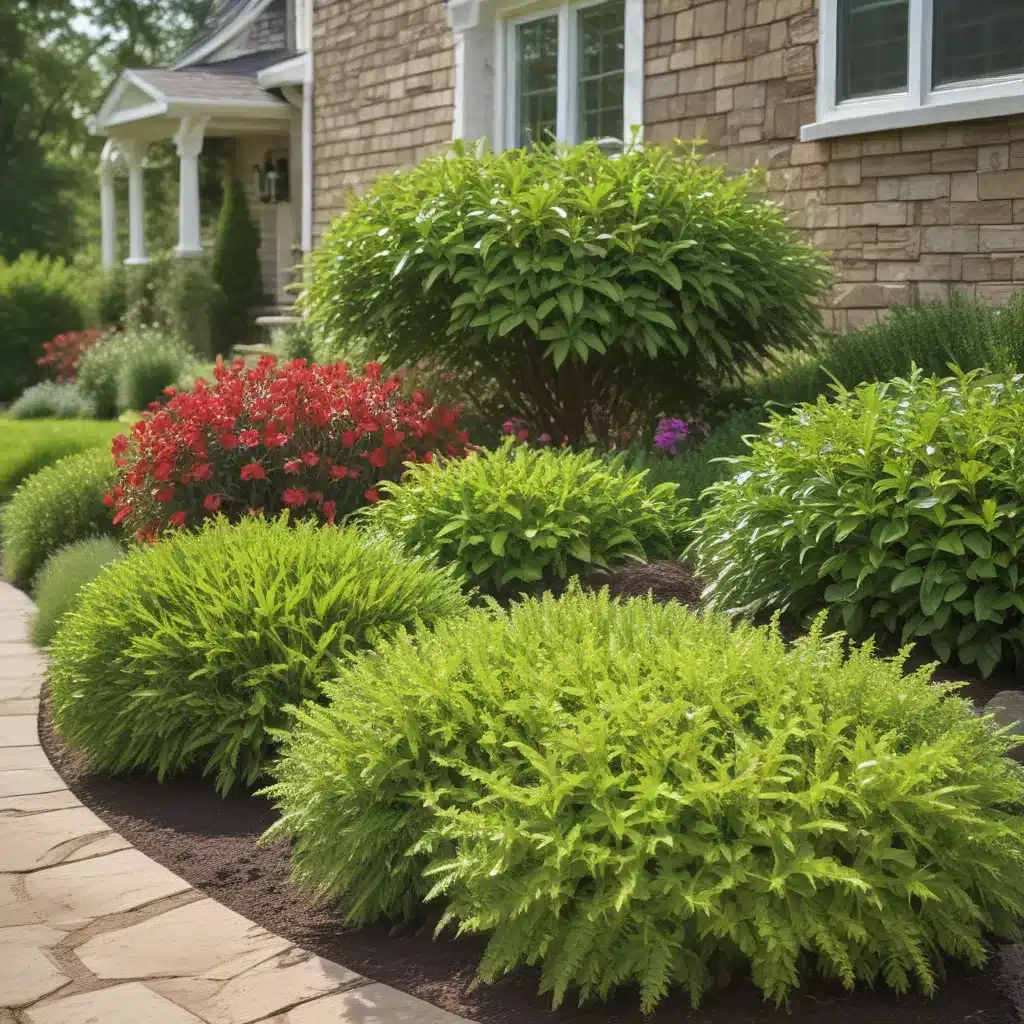
But it’s not just about the architecture – your outdoor landscaping choices can also have a big impact on your home’s thermal performance. For example, evergreen trees and shrubs on the north side of your property can act as a natural wind break, shielding your home from chilly winter gusts. And deciduous trees with broad, leafy canopies on the south and west sides can provide essential shading during the summer months while allowing the sun’s rays to filter through in winter.
And let’s not forget about the humble garden bed. Strategically placed vegetable and flower gardens can actually help regulate the microclimate around your home, absorbing and dissipating heat in a way that keeps things feeling refreshingly cool. The Australian government’s YourHome initiative has some great tips on using landscaping for passive cooling.
The Importance of Siting and Zoning
Of course, none of these landscaping strategies will work if your home isn’t properly oriented and situated on the lot. As the Department of Energy emphasizes, “a portion of the south side of your house must have an unobstructed ‘view’ of the sun.” That means carefully considering the potential for future development on neighboring properties that could block your solar access.
Some regions even have zoning laws or other regulations in place to protect homeowners’ rights to sunlight. So be sure to do your research and work closely with your architect and landscaper to find the perfect spot for your new home or renovation project.
Putting it All Together
Ultimately, creating an energy-efficient, comfortable home through passive solar design and seasonal landscaping is all about striking the right balance. It’s a delicate dance of carefully calibrated elements – from window placement and thermal mass to strategic planting and shading solutions.
But when it all comes together, the results can be truly remarkable. Imagine a home that stays cool and comfortable in the sweltering summer heat, yet cozy and warm even on the chilliest winter nights. All without racking up sky-high utility bills or leaving a massive carbon footprint.
It’s the kind of dream home that the team at ABC Home helps make a reality every day. Their expertise in passive solar design and seasonal landscaping is truly impressive, and I can’t recommend them enough if you’re looking to create a truly sustainable, energy-efficient living space.
So why not give them a call and start planning your dream home today? With a little bit of forward-thinking and some creative outdoor magic, you could be well on your way to keeping your home cool and comfortable all year round.
Passive Cooling Techniques to Try
Here’s a quick rundown of some of the top passive cooling strategies to consider for your home:
| Technique | Description |
|---|---|
| Shading | Use trees, trellises, awnings, and other elements to block direct sunlight and reduce heat gain. |
| Natural Ventilation | Strategically place windows and doors to allow for cross-breezes and convective air flow. |
| Thermal Mass | Incorporate materials like concrete, stone, and water that can absorb and store heat. |
| Evaporative Cooling | Use fountains, misters, or vegetation to leverage the cooling power of evaporation. |
| Reflective Surfaces | Choose light-colored roofing and exterior materials to bounce heat away from your home. |
No matter which approach (or combination of approaches) you choose, the key is to work closely with your design team to create a seamless integration of your home and landscape. It’s all about finding that perfect balance to keep your living spaces feeling cool, comfortable, and energy-efficient all year round.