Home Insulation Options
Are you tired of constantly adjusting your home’s thermostat, trying to find that sweet spot between comfortable and affordable? Well, let me tell you a little secret – the key to a cozy, energy-efficient abode might be hiding right under your nose (or in your walls, attic, and floors). That’s right, my friends, the answer lies in the wonderful world of home insulation.
As a homeowner in Aberdeen, UK, you know all too well the challenges of maintaining a comfortable indoor climate. With our unpredictable weather patterns, it can be a never-ending battle to keep the cold out and the warmth in during the winter, and vice versa in the summer. But fear not, because I’m here to guide you through the ins and outs of home insulation, helping you make an informed decision that will have your energy bills singing a sweet, money-saving tune.
Let’s start with the basics, shall we? Insulation is essentially any material that helps reduce the transfer of heat. It acts as a barrier, slowing down the movement of heat from one area to another. The effectiveness of insulation is measured by its R-value, which represents its resistance to heat flow. The higher the R-value, the better the insulation.
Now, you might be wondering, “But how do I know which type of insulation is right for my home?” Well, my friend, that’s where the real fun begins. There are several different types of insulation to choose from, each with its own unique features and benefits. Let’s dive in, shall we?
Blanket Insulation: The Classic Choice
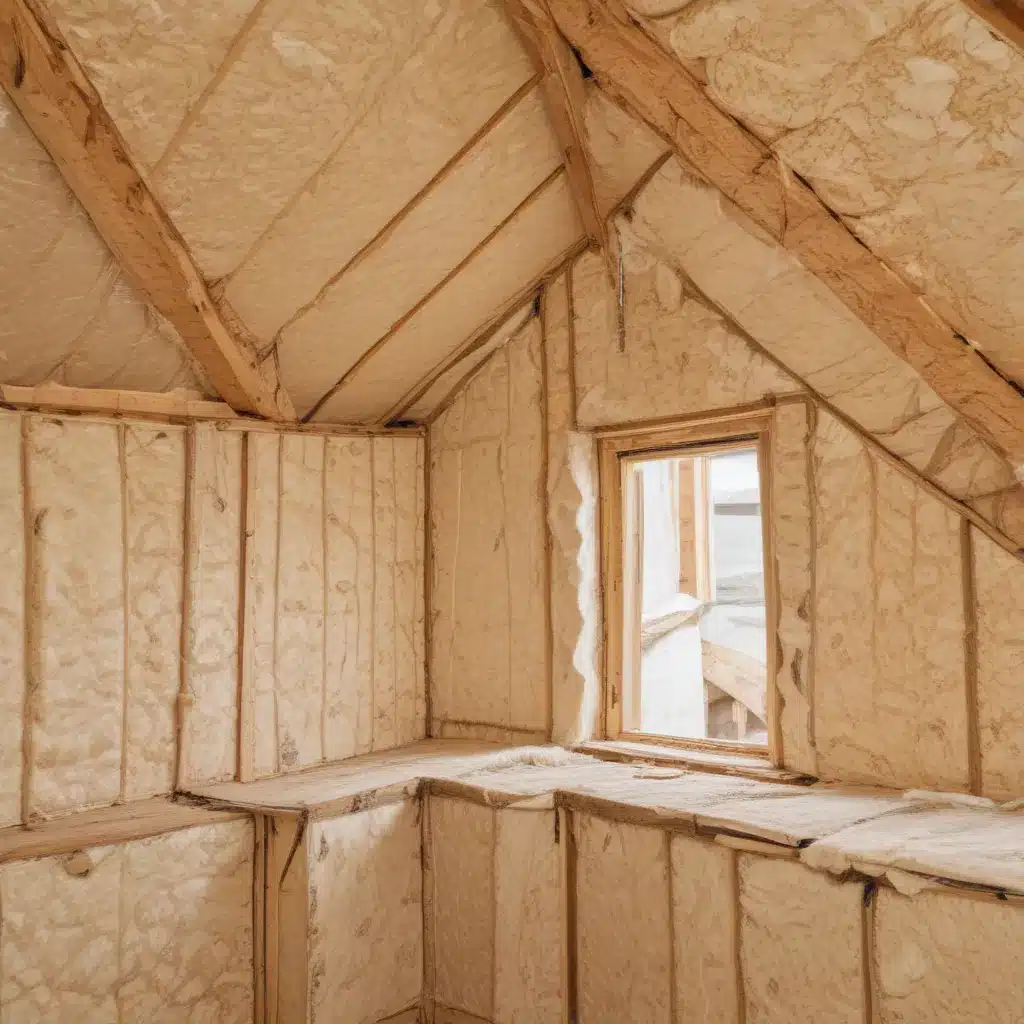
One of the most common and widely available types of insulation is the good old-fashioned blanket insulation, also known as batts or rolls. These flexible fibers, typically made from fiberglass, mineral wool, plastic, or even natural materials like cotton and sheep’s wool, are designed to fit snugly between the standard wall studs, attic trusses, and floor joists.
The beauty of blanket insulation is its versatility. You can find it in a variety of widths to fit your specific framing, and it’s often available with a handy facing, like kraft paper or foil, to act as a vapor barrier. Plus, it’s a relatively inexpensive option, making it a popular choice for DIY enthusiasts and budget-conscious homeowners alike.
But don’t let the simplicity of blanket insulation fool you – it’s a workhorse when it comes to keeping your home cozy. With the right R-value, you can effectively reduce heat transfer and keep your energy bills in check. Just be sure to measure carefully and install it properly to avoid any pesky gaps or air leaks.
Concrete Block Insulation: The Solid Solution
If your home has a concrete block foundation or walls, you’ve got another insulation option to consider. Concrete block insulation can take the form of foam boards or even foam beads mixed directly into the concrete mix, helping to boost the thermal resistance of those solid walls.
One of the key benefits of concrete block insulation is its ability to moderate indoor temperatures by containing the thermal mass of the concrete within the conditioned space. This can be a real game-changer in helping maintain a comfortable and consistent climate throughout your home.
However, it’s worth noting that concrete block insulation often requires specialized skills and equipment for proper installation, so it may not be the best DIY project for the average homeowner. But if you’re building a new home or tackling a major renovation, it’s definitely an option worth exploring.
Foam Board Insulation: The Sleek and Efficient Choice
If you’re looking for a high-performance insulation option that can be used in a variety of applications, foam board insulation might be right up your alley. These rigid panels, made from materials like polystyrene, polyisocyanurate, and polyurethane, offer excellent thermal resistance and can be used to insulate everything from exterior walls to interior sheathing and even attic hatches.
The beauty of foam board insulation lies in its versatility and efficiency. It can provide up to twice the insulating power of traditional materials, helping to significantly reduce heat conduction through structural elements like wood and steel studs. Plus, the seamless installation process can help create a tighter, more airtight envelope for your home, further enhancing its energy performance.
Now, I know what you’re thinking – “But won’t foam boards be a nightmare to install?” Well, fear not, my handy friend. While some types of foam insulation do require professional installation, many foam board varieties are perfectly suited for the DIY enthusiast. Just be sure to follow the manufacturer’s instructions carefully and always prioritize safety when working with these materials.
Loose-Fill Insulation: The Adaptable Option
If you’re dealing with irregularly shaped spaces or hard-to-reach areas in your home, loose-fill insulation might be the way to go. These small, lightweight particles of fiber, foam, or other materials can be blown or poured into enclosed cavities, conforming to the unique contours of your space and filling in any nooks and crannies.
The most common types of loose-fill insulation include cellulose, fiberglass, and mineral wool, all of which are produced using recycled materials. These insulation options are especially well-suited for retrofitting existing homes, as they can be easily installed in walls, attics, and other hard-to-reach areas without the need for major construction.
One thing to keep in mind with loose-fill insulation is that proper installation is key to achieving the desired R-value. Be sure to work with experienced professionals or follow the manufacturer’s instructions closely if you’re tackling this project yourself. And don’t forget to check your local building codes – some areas may have specific requirements when it comes to loose-fill insulation.
Spray Foam Insulation: The Air-Sealing Superstar
If you’re looking to take your home’s energy efficiency to the next level, spray foam insulation might be the answer you’ve been searching for. This versatile material can be applied as a liquid and then expands to fill and seal even the smallest cracks and crevices, creating a highly effective air barrier.
Spray foam insulation comes in two main varieties: open-cell and closed-cell. Open-cell foam is lighter and less expensive, but it’s not as effective at blocking air and moisture as its closed-cell counterpart. Closed-cell foam, on the other hand, is denser, has a higher R-value, and provides superior air and moisture resistance – making it a popular choice for many homeowners.
One of the standout features of spray foam insulation is its ability to adapt to irregular shapes and penetrations, ensuring a seamless and airtight seal. This can be a game-changer when it comes to improving your home’s energy efficiency and comfort.
However, it’s important to note that spray foam insulation typically requires professional installation, as the application process can be tricky and the materials can be hazardous if not handled properly. But for those who are willing to invest in a high-performance insulation solution, spray foam can be a true game-changer.
Structural Insulated Panels (SIPs): The Engineered Efficiency
If you’re building a new home or tackling a major renovation, you might want to consider the remarkable world of structural insulated panels, or SIPs for short. These prefabricated insulated structural elements are designed to provide superior and uniform insulation, with energy savings of up to 14% compared to traditional construction methods.
SIPs are essentially made up of a foam board insulation core sandwiched between two layers of structural facing material, such as oriented strand board (OSB) or other custom options. This unique design not only boasts impressive R-values but also impressive strength-to-weight ratios, making them a popular choice for both walls and roofs.
One of the key advantages of SIPs is their ability to create a highly airtight and energy-efficient building envelope. When installed properly, these panels can help reduce air leakage and improve overall comfort and climate control throughout your home. And let’s not forget the potential time and cost savings that come with the streamlined installation process – a major plus for homeowners tackling a new build or extensive renovation.
Now, I know what you’re thinking: “But wait, SIPs sound too good to be true!” And you’d be partially right – these engineered marvels do come with a higher upfront cost compared to some traditional insulation methods. However, the long-term energy savings and improved overall performance can make them a worthwhile investment, especially for those building a new home from the ground up.
Radiant Barriers and Reflective Insulation: The Heat-Reflecting Duo
While the insulation types we’ve discussed so far are primarily focused on reducing heat transfer through conduction and convection, there’s another class of insulation materials that tackle the problem from a different angle – radiant barriers and reflective insulation.
These innovative systems work by reflecting radiant heat, rather than simply resisting it. Radiant barriers, often installed in attics, are designed to reduce the amount of heat that radiates down from a hot roof into the living spaces below. Reflective insulation, on the other hand, incorporates reflective surfaces, like aluminum foil, into a variety of backings to help redirect heat away from your home.
Now, you might be thinking, “But wait, aren’t these just fancy versions of regular insulation?” Well, yes and no. While radiant barriers and reflective insulation can certainly be used in conjunction with other insulation materials, they offer a unique approach to thermal management that can be particularly beneficial in hot climates – like the one we enjoy here in Aberdeen.
The key advantage of these heat-reflecting systems is their ability to help lower cooling costs during the summer months. By reflecting the sun’s radiant energy back out of your home, they can reduce the strain on your air conditioning system and keep your energy bills from skyrocketing. Just be mindful that in cooler climates, they may not be as effective as traditional insulation at preventing heat loss.
Eco-Friendly Insulation: The Sustainable Solution
As we become increasingly conscious of our environmental impact, it’s no surprise that the world of home insulation has also embraced the sustainable movement. Enter the world of eco-friendly insulation materials, such as recycled denim, sheep’s wool, cork, and cellulose.
These innovative insulation options not only offer excellent thermal performance but also help reduce waste and minimize the carbon footprint of your home improvement projects. Recycled denim, for example, is made from discarded jeans, while cellulose insulation is primarily composed of recycled newsprint.
But don’t let the “eco-friendly” label fool you – these insulation materials are just as effective as their more traditional counterparts. In fact, many of them boast impressive R-values and can be installed in a variety of ways, from batts and rolls to loose-fill applications.
Of course, the downside to these sustainable insulation options is that they tend to come with a slightly higher price tag. But for homeowners who are passionate about reducing their environmental impact, the added cost may be a small price to pay for the peace of mind that comes with a greener home.
Choosing the Right Insulation: A Tailored Approach
Now that you’ve gotten a taste of the various insulation options available, you might be feeling a bit overwhelmed. After all, how do you know which one is the best fit for your home?
The truth is, there’s no one-size-fits-all solution when it comes to home insulation. The type of insulation you choose will depend on a variety of factors, including the specific areas of your home that need insulating, your budget, your DIY capabilities, and the current insulation system (if any) already in place.
As a general rule of thumb, it’s a good idea to start by assessing your home’s existing insulation levels. Use an R-value calculator to determine the current and needed R-values for different areas, and then use that information to guide your decision-making process.
If you’re tackling a new build or major renovation, you might have more flexibility in terms of insulation options, with SIPs, ICFs, and concrete block insulation all on the table. But for those of us working with an existing home, the choices may be a bit more limited – though that doesn’t mean you can’t make a significant impact.
Blanket insulation, foam boards, and loose-fill materials are all great options for DIY-ers, while spray foam and rigid fiber board insulation may require professional installation. And don’t forget about those heat-reflecting radiant barriers and reflective insulation systems – they could be just the ticket for keeping your home comfortable and energy-efficient, especially during those long, hot Aberdeen summers.
Ultimately, the key is to do your research, consult with professionals (if needed), and choose the insulation solution that best meets the unique needs of your home and your budget. With a little bit of planning and the right insulation strategy, you can wave goodbye to those pesky energy bills and say hello to a cozy, comfortable, and efficient abode.
So, are you ready to take the first step towards a more insulated, energy-efficient home? ABC Home & Building Solutions in Aberdeen is here to help. Give us a call, and let’s chat about how we can transform your living space into a true haven of comfort and efficiency.