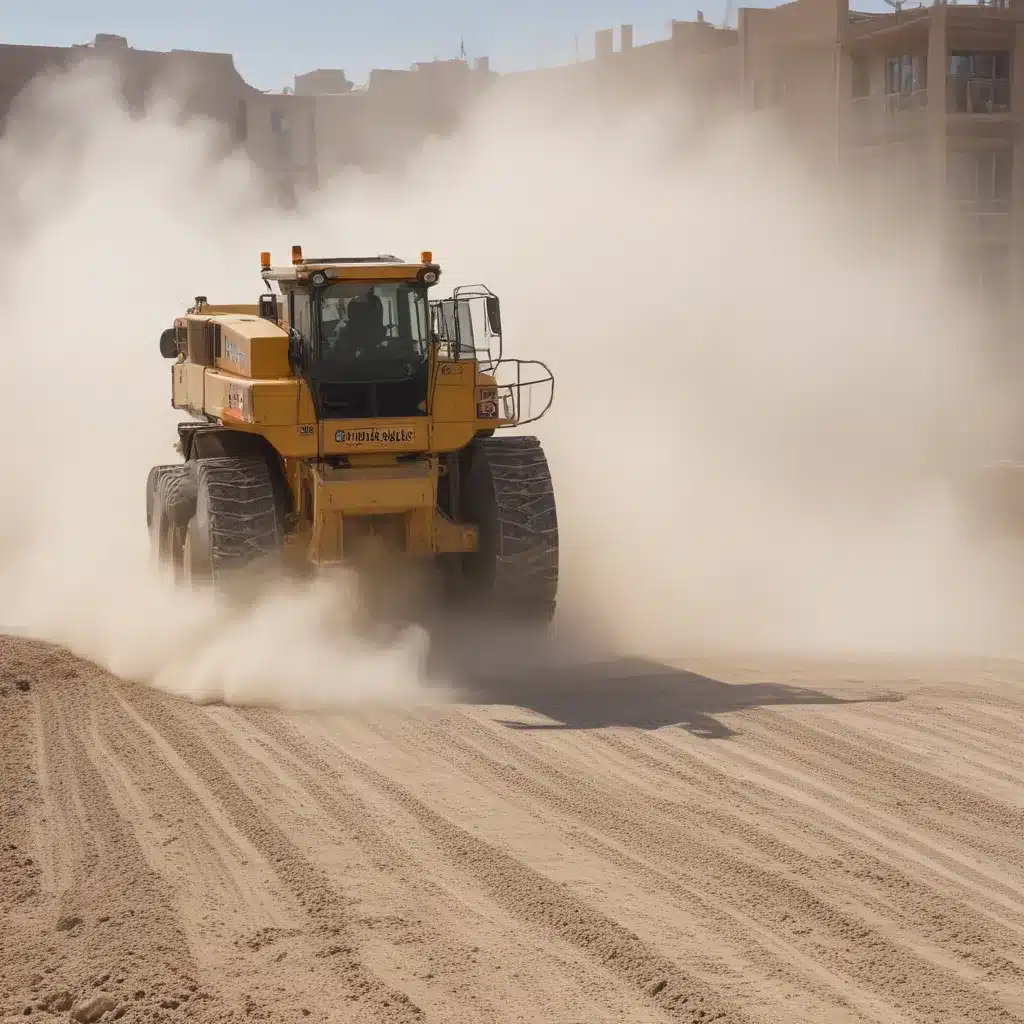
As a proud Aberdonian, I’ve seen my fair share of construction projects over the years. From the gritty renovations of historic stone buildings to the sleek, modern builds popping up around the city, one thing is constant – the inevitable cloud of dust that seems to envelop the entire job site. And let me tell you, that’s no laughing matter.
You see, construction dust isn’t just an annoyance – it can pose some serious health risks, especially for those of us working on-site day in and day out. That’s why I’m here today to dive deep into the world of construction dust control, and share some crucial insights that could make all the difference for the team at ABC Home.
Understanding the Dangers of Construction Dust
Before we can tackle the problem, we need to understand what we’re dealing with. Particulate matter, or PM, is the term used to describe the complex mixture of solid particles and liquid droplets found in construction dust. These particles come in all shapes and sizes, and can be made up of hundreds of different chemicals.
Now, you might be thinking, “It’s just a bit of dust, how bad can it be?” Well, my friends, the answer might surprise you. According to the California Air Resources Board, particles less than 2.5 micrometers in diameter, known as PM2.5, pose the greatest risk to our health. These tiny particles can get deep into our lungs and even find their way into our bloodstream, causing all sorts of problems.
But it’s not just the size that matters – the composition of the dust is equally important. Construction dust can contain everything from soot and smoke to heavy metals and toxic chemicals. Yikes! Exposure to this cocktail of pollutants has been linked to a laundry list of health issues, including premature mortality, heart and lung diseases, and even lung cancer.
And it’s not just the workers who are at risk. The EPA warns that particle pollution can also affect the surrounding community, reducing visibility and potentially impacting the climate and ecosystems.
So, we’ve established that construction dust is no laughing matter. But fear not, my fellow dust-busters, because there are ways to get this problem under control.
Tackling the Dust: Strategies for Effective Control
As the saying goes, “an ounce of prevention is worth a pound of cure.” When it comes to construction dust, the key is to implement a comprehensive dust control strategy from the very beginning. Here are some of the top tactics to consider:
Dust Suppression
One of the most effective ways to reduce dust is to simply keep it from becoming airborne in the first place. This can be achieved through various dust suppression techniques, such as:
- Wetting down work areas and stockpiles with water or chemical suppressants
- Covering or enclosing material stockpiles and transfer points
- Using misting systems or fog cannons to create a fine water mist that settles the dust
Ventilation and Filtration
Proper ventilation and filtration systems can also play a crucial role in controlling construction dust. By ensuring adequate airflow and filtering out particulates, you can create a safer, healthier work environment for your team. Look into:
- High-efficiency particulate air (HEPA) filtration systems
- Negative air machines to create a controlled, dust-free work zone
- Strategically placed exhaust fans to remove contaminated air
Personal Protective Equipment (PPE)
Of course, no dust control strategy would be complete without the right personal protective equipment. Equipping your workers with the proper gear, such as:
- N95 or P100 respirators
- Protective coveralls and goggles
- Gloves and steel-toed boots
Not only does this safeguard your team’s health, but it also demonstrates your commitment to their safety and well-being.
Monitoring and Compliance
To ensure your dust control measures are truly effective, you’ll need to implement a robust monitoring and compliance program. This might include:
- Continuous air quality monitoring to track PM levels
- Implementing a formal dust control plan and training workers
- Regularly inspecting and maintaining your dust control equipment
By staying on top of the data and actively enforcing your dust control protocols, you’ll be able to identify and address any issues before they become a problem.
Navigating the Regulatory Landscape
Of course, construction dust control isn’t just about protecting your workers – it’s also a matter of compliance. As outlined in Rule 1466 from the South Coast Air Quality Management District, there are a number of regulations and requirements that must be met when it comes to earth-moving activities and the management of toxic air contaminants.
These include things like:
- Ambient PM10 monitoring
- Detailed notification and recordkeeping requirements
- Specific dust control measures and signage
- Potential fees and penalties for non-compliance
And that’s just one example – the regulatory landscape can vary widely depending on your location and the specific nature of your project. It’s crucial that you stay up-to-date on all the relevant rules and regulations, and ensure that your dust control efforts are aligned with the latest standards.
The Bottom Line: Investing in Dust Control
Okay, I know what you’re thinking – all of this dust control stuff sounds great, but it’s also going to be a major pain in the neck, not to mention a significant investment of time and money, right? Well, hear me out.
While it’s true that implementing an effective dust control program can be complex and require some upfront costs, the long-term benefits far outweigh the challenges. Studies have shown that proper dust control can not only safeguard the health of your workers, but also reduce the risk of costly fines and legal issues down the line.
Plus, let’s not forget about the positive impact it can have on your company’s reputation and client relationships. When your clients see that you’re taking dust control seriously and going above and beyond to protect the well-being of your team and the surrounding community, it can go a long way in building trust and strengthening those all-important partnerships.
At the end of the day, construction dust control isn’t just a nice-to-have – it’s a necessity. And by embracing a proactive, comprehensive approach, you can not only keep your workers safe, but also position your business for long-term success. So, what are you waiting for? Let’s get to work and show this dust who’s boss!