Engineered Wood Flooring: The Best of Both Worlds
As a homeowner in Aberdeen, UK, I’ve always been fascinated by the world of flooring. The choices can be overwhelming – from sleek, modern tiles to cozy carpets and the timeless beauty of wood. But when it comes to wood flooring, the decision between engineered and solid wood often leaves people scratching their heads.
Allow me to shed some light on this conundrum. Engineered wood flooring has become increasingly popular in recent years, and for good reason. It offers the stunning aesthetic of real wood, combined with enhanced durability and stability. The core of engineered wood is typically composed of several layers of wood or other materials, topped with a thin veneer of high-quality hardwood.
This innovative construction provides a number of benefits. Firstly, it’s less susceptible to the natural expansion and contraction that solid wood can experience due to changes in temperature and humidity. This means your floor is less likely to warp, cup or crack over time. Engineered wood is also more resistant to moisture, making it an excellent choice for areas like the kitchen or bathroom where solid wood may not be the best fit.
But the advantages don’t stop there. Engineered wood flooring is generally more budget-friendly than its solid wood counterpart, without sacrificing that luxurious, natural aesthetic. And the installation process is often quicker and easier, as engineered planks can be floating or glued down, rather than the more labor-intensive nailing required for solid wood.
Solid Wood Flooring: Timeless Elegance
Now, I know what you’re thinking – if engineered wood is so wonderful, why would anyone choose solid wood? Well, my friends, solid wood flooring has a certain je ne sais quoi that keeps it firmly in the hearts of many homeowners.
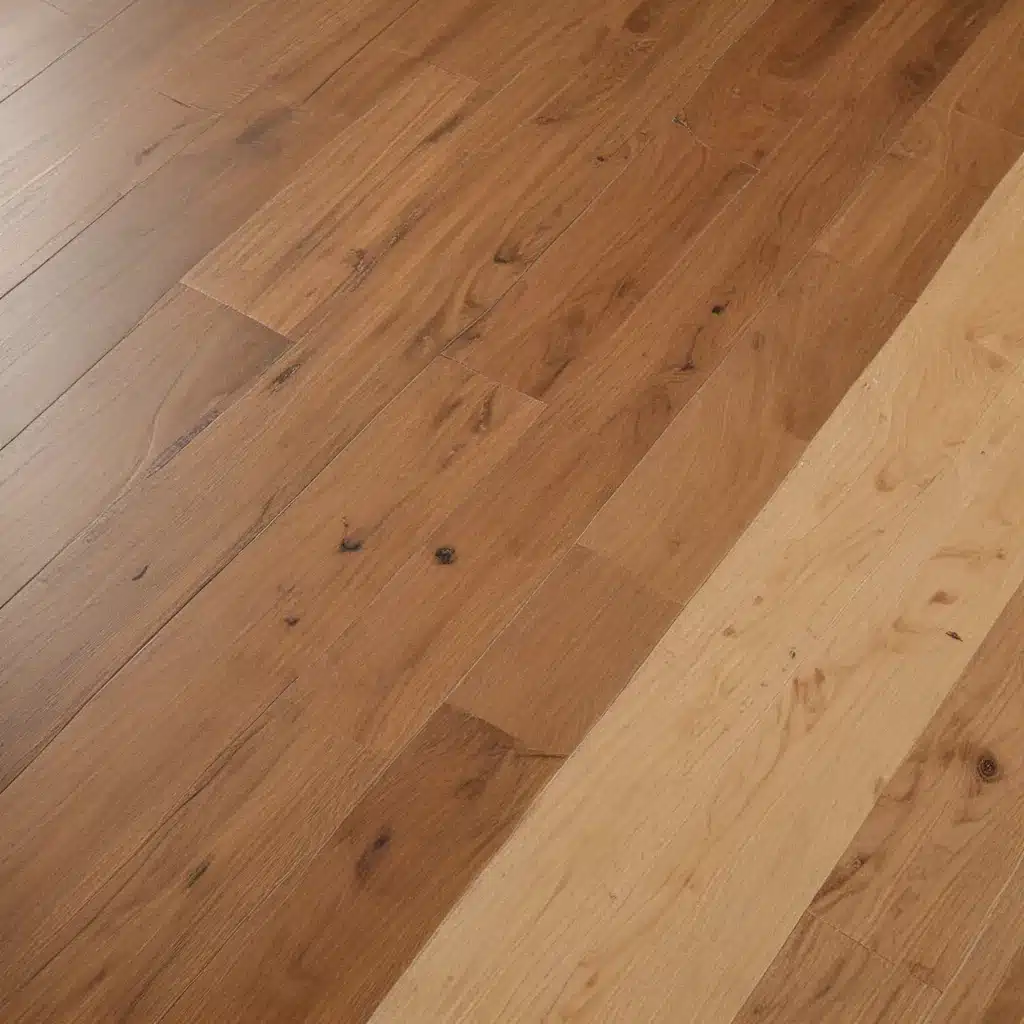
For starters, solid wood is the epitome of classic, timeless style. There’s something about the warm, organic feel of genuine hardwood underfoot that simply can’t be replicated. Each plank is unique, with its own distinctive grain patterns and color variations. It’s a true reflection of the natural world, and a testament to the skill of the craftsmen who harvested and milled the timber.
Solid wood floors also have an unparalleled longevity. With proper care and maintenance, they can last for decades – even centuries in some cases. And if they do become worn or damaged over time, they can be sanded and refinished, giving them a brand new lease on life. This makes solid wood a fantastic long-term investment for your home.
But the real clincher for many homeowners is the sheer depth of customization options available with solid wood. You can choose from a wide variety of species, from the rich, chocolatey tones of oak to the elegant, honey-hued maple. The plank width, length, and even the finish can all be tailored to your personal style and the aesthetic of your home.
The Great Flooring Showdown: Engineered vs. Solid Wood
So, now that we’ve explored the merits of both engineered and solid wood flooring, it’s time to put them head-to-head and see which one comes out on top. Let’s break it down:
| Feature | Engineered Wood | Solid Wood |
|---|---|---|
| Durability | Excellent – less susceptible to warping and cupping | Good – can be refinished multiple times |
| Moisture Resistance | Excellent | Average – more prone to damage from water |
| Installation | Easy – can be floated or glued down | Moderate – requires nailing or gluing |
| Cost | More budget-friendly | Higher-end investment |
| Customization | Limited – fewer species and finish options | Extensive – wide variety of species, widths, lengths, and finishes |
| Lifespan | 20-30 years with proper care | 50-100 years with proper care |
When it comes to making the final decision, there’s no one-size-fits-all answer. It really boils down to your specific needs, budget, and personal preferences. If you’re looking for a beautiful, long-lasting floor that can withstand the test of time, solid wood may be the way to go. But if you’re after a more budget-friendly option with enhanced stability and moisture resistance, engineered wood could be the perfect fit.
Ultimately, the choice between engineered and solid wood flooring is a deeply personal one. I encourage you to weigh the pros and cons, visit showrooms, and even consult with a reputable flooring specialist to help you make the best decision for your home. After all, your floors will be the foundation upon which you build your dream living space.
And if you’re in the Aberdeen area and in need of a reliable building and renovation company to help bring your vision to life, I’d be more than happy to tell you about our services at ABC Home. We’ve been proudly serving the local community for years, and we’d be honored to work with you on your next home improvement project.