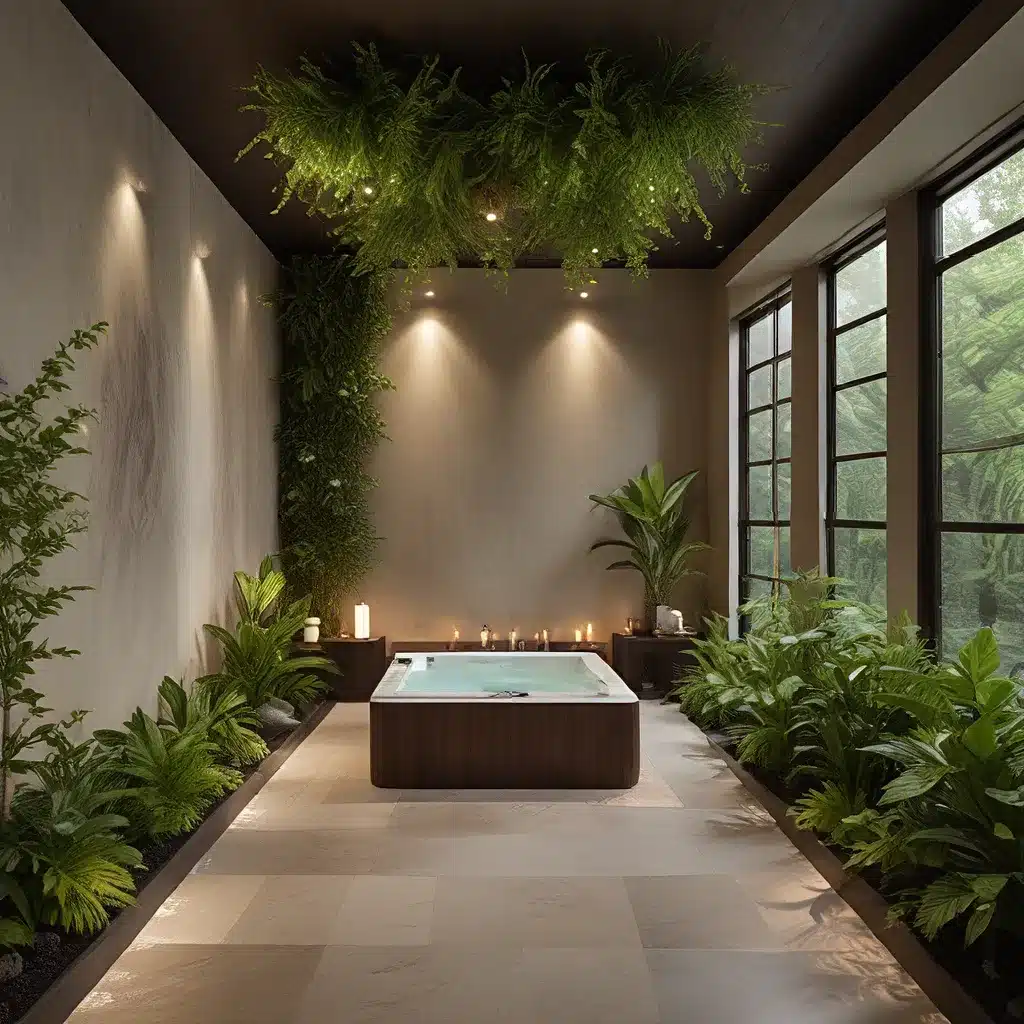
Embracing Biophilia: Bringing the Outdoors In with Spa-Inspired Designs
Unlocking the Power of Nature’s Restorative Essence
Have you ever stepped outside on a beautiful day and felt an instant wave of calm wash over you? Or found yourself utterly captivated by the hypnotic dance of a flickering fireplace? These natural phenomena – the sights, sounds, and sensations that draw us in and soothe our senses – are rooted in something called biophilia.
Biophilia, a term coined by renowned biologist Edward Wilson, describes our innate human tendency to seek connections with nature and other living systems. It’s a primal instinct that has evolved over millennia, shaping our preferences, responses, and even our very well-being. And as our lives have become increasingly urbanized and disconnected from the natural world, the importance of embracing biophilia in our built environments has never been greater.
Terrapin Bright Green’s groundbreaking research on the 14 Patterns of Biophilic Design has shed light on the profound impact that integrating nature can have on our cognitive function, stress levels, and overall health. By thoughtfully incorporating these biophilic design strategies into our homes, workplaces, and communities, we can unlock a transformative power – one that has the potential to enhance our mood, boost our creativity, and even expedite the healing process.
Rediscovering the Restorative Essence of Nature
As a society, we’ve come a long way since the days when our ancestors lived in close harmony with the natural world. Nowadays, the majority of us spend our time cocooned in urban environments, surrounded by concrete, glass, and steel. But our bodies and minds haven’t yet caught up to this dramatic shift.
In fact, research suggests that our brains are hardwired to crave and respond to the sights, sounds, and sensations of nature. Neuroscientists have discovered that exposure to natural elements can trigger a cascade of positive physiological and psychological effects, from lowered stress hormones and blood pressure to improved mood and cognitive function.
And it’s not just about the big, sweeping landscapes – even small, seemingly insignificant connections with nature can have a profound impact. The gentle flutter of leaves, the soothing gurgle of a water feature, the warm embrace of natural textures and materials… these are the sensory cues that can transport us to a state of tranquility and rejuvenation.
Designing for Wellness: Spa-Inspired Biophilic Sanctuaries
So, how can we harness the restorative power of nature and weave it seamlessly into our built environments? The answer lies in the principles of biophilic design – an approach that celebrates the innate human-nature connection and places it at the heart of the design process.
One of the most powerful applications of biophilic design is in the realm of spa-inspired home design. Think about it – spas are sanctuaries specifically designed to help us unwind, recharge, and reconnect with our senses. And the key to their success? A deep understanding and integration of biophilic elements.
Luxurious home design trends for 2023 are taking cues from the spa experience, embracing biophilic principles to create truly transformative spaces. From the soothing visual connection with nature, achieved through expansive windows and lush greenery, to the calming, tactile experience of natural materials like wood and stone, these design strategies are designed to nurture our innate biophilic needs.
But it’s not just about the visual and tactile elements – the auditory and olfactory senses play a crucial role as well. The gentle sound of flowing water, the earthy aroma of essential oils, and the soft, diffuse lighting that mimics the natural rhythms of the day… these sensory experiences work in harmony to create a holistic, restorative environment.
Customizing Biophilic Design to Suit Your Lifestyle
Of course, every individual is unique, with their own preferences, needs, and lifestyle factors to consider. That’s why the true power of biophilic design lies in its flexibility and customization. By understanding the nuances of the 14 Patterns of Biophilic Design, we can tailor our approach to create spaces that cater to our unique desires and well-being requirements.
For example, someone who craves a sense of refuge and sanctuary might gravitate towards design elements that foster a cozy, protected atmosphere, like a nook with a view or a sunken seating area. Meanwhile, a nature-loving extrovert might be drawn to more open, prospect-rich spaces that offer a visual connection to the outdoors and opportunities for exploration.
The key is to strike a balance – to weave together the various biophilic patterns in a way that creates a harmonious, holistic experience. It’s about finding the right combination of visual, auditory, tactile, and olfactory cues that resonate with you on a deep, almost primal level.
Embracing Biophilia: A Journey of Self-Discovery and Wellness
As we continue to grapple with the stresses and challenges of modern life, the importance of biophilic design becomes increasingly clear. By inviting nature back into our homes and lives, we’re not just enhancing the aesthetics of our spaces – we’re tapping into a powerful, innate connection that can profoundly improve our physical, mental, and emotional well-being.
So, whether you’re embarking on a full-scale home renovation or simply looking to infuse your living space with a touch of natural magic, I encourage you to embrace the principles of biophilic design. Explore the 14 Patterns, experiment with different materials and textures, and let your senses guide you on a journey of self-discovery and wellness.
After all, our connection to nature is not just a luxury – it’s a fundamental part of what makes us human. And by nurturing that connection, we can unlock a wellspring of restorative power that can transform our lives, our homes, and our communities for the better.
Discover how biophilic design can elevate your bathroom experience and create a true spa-like sanctuary in the comfort of your own home.