Embracing the Joy of Play: Unlocking Your Child’s Potential
As a parent, the decision to create the perfect nursery for your little one can feel like a high-stakes endeavor. After all, this sacred space will serve as the backdrop for their formative years, shaping their development in countless ways. But beyond the aesthetics and functional considerations, there’s an often overlooked yet vital element that deserves our fullest attention: the power of play.
You see, play is not merely a frivolous pastime, but a fundamental pillar of healthy childhood growth. As the American Academy of Pediatrics eloquently states, “Play is essential to development because it contributes to the cognitive, physical, social, and emotional well-being of children and youth.” It’s a natural mode of exploration, creativity, and learning that allows kids to truly thrive.
Nurturing the Whole Child
When we create an environment that fosters unstructured, child-driven play, we’re not just providing entertainment – we’re cultivating the building blocks of a well-rounded individual. Through play, children develop crucial skills like problem-solving, communication, and emotional intelligence. They learn to navigate social dynamics, manage their impulses, and build the resilience needed to tackle life’s challenges.
As a child development specialist, I’ve witnessed firsthand the transformative power of play. Take the story of little Sophia, for instance. When she first arrived at my office, her parents were concerned about her social anxiety and difficulty expressing her feelings. But after encouraging Sophia to engage in free play with age-appropriate toys, a remarkable change began to unfold.
Sophia would lose herself in the imaginary world she created, seamlessly weaving narratives with her dolls and building intricate block structures. And as she played, I observed her gradually becoming more confident, more articulate, and more attuned to the emotions of those around her. It was as if the act of play had unlocked a hidden wellspring of creativity and self-awareness within her.
Striking the Right Balance
Of course, in our fast-paced, achievement-oriented society, the importance of play is often overshadowed by the relentless pursuit of academic and extracurricular excellence. Families are increasingly pressured to fill their children’s schedules with a dizzying array of activities, leaving little room for the unstructured, child-directed exploration that is so crucial to development.
It’s a delicate balance, to be sure. We want our children to have every opportunity to thrive, to develop the skills and knowledge that will set them up for future success. But in our zeal to provide the “best” for our kids, we run the risk of overlooking the fundamental importance of play.
Finding the Sweet Spot
As parents, we must resist the temptation to overschedule our children’s lives. While organized activities like sports, music lessons, and enrichment classes can certainly be valuable, they should not come at the expense of the pure, unbridled joy of play.
Research has shown that children who have ample unstructured playtime tend to be more resilient, more adaptable, and more emotionally well-adjusted. They develop the crucial skills and traits that will serve them well not just in their academic pursuits, but in all facets of their lives.
So, as you design and curate your child’s nursery, I encourage you to prioritize the incorporation of play-centric elements. Fill the space with toys that inspire imagination, like blocks, dress-up clothes, and art supplies. Create cozy nooks where your little one can lose themselves in make-believe. And most importantly, carve out time in your family’s schedule for uninterrupted, child-led play – a haven from the constant demands of modern life.
Embracing the Unexpected
Remember, the true beauty of play lies in its unpredictability. When we allow our children to lead the way, we open the door to endless possibilities. A simple block tower might transform into an elaborate castle, or a tea party might suddenly become a daring adventure across uncharted territories.
By embracing this sense of spontaneity and wonder, we not only nurture our children’s development, but we also reconnect with our own inner child. After all, play is not just for the young – it’s a fundamental human need that transcends age. When we engage in playful activities alongside our kids, we create lasting memories, deepen our bonds, and unlock our own creativity.
So, as you embark on the journey of enhancing your child’s nursery, keep the spirit of play at the forefront of your mind. Transform this sacred space into a vibrant, imaginative oasis where your little one can thrive, and in doing so, you’ll unlock the true essence of a happy, well-rounded childhood. Who knows – you might even rediscover a bit of that childlike wonder in yourself along the way.
Designing for Developmental Milestones
As you meticulously plan the layout and decor of your child’s nursery, it’s crucial to consider not just the aesthetics, but the developmental needs that will unfold over time. After all, a well-designed space isn’t just about creating a visually appealing environment – it’s about fostering growth, learning, and exploration.
Newborns: A Cozy Cocoon
In those early months, your newborn’s world is incredibly small, yet infinitely complex. Their senses are heightened, and they’re constantly taking in the sights, sounds, and textures of their surroundings. When designing a nursery for a newborn, focus on creating a cozy, calming environment that soothes and comforts.
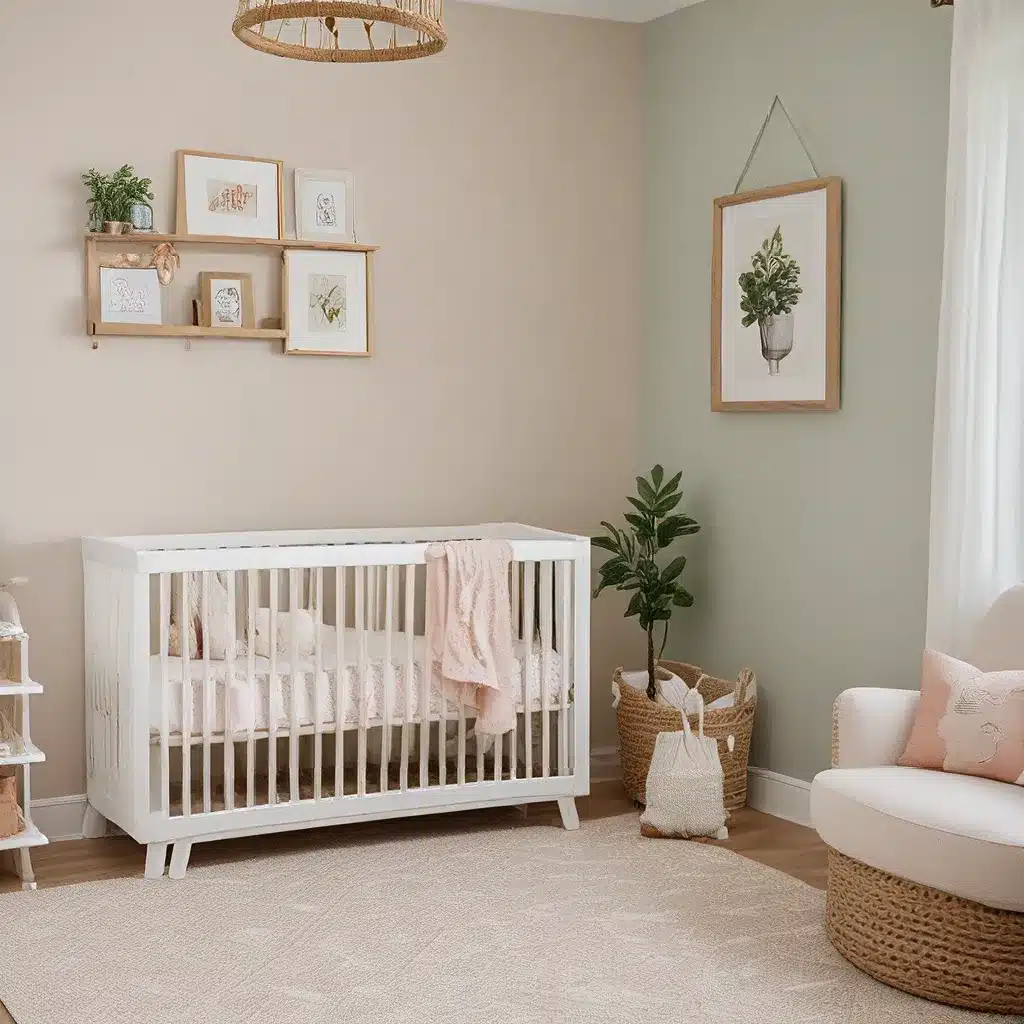
Soft, natural fabrics, muted color palettes, and gentle lighting can all contribute to a serene atmosphere. Incorporate elements that appeal to your baby’s developing senses, like black-and-white contrast patterns, simple mobiles, and soothing sound machines. And don’t forget the importance of a comfortable, supportive sleeping area – after all, quality rest is crucial for a newborn’s growth and well-being.
Infants and Toddlers: A World to Explore
As your little one transitions into the infant and toddler stages, their innate curiosity and desire to explore begins to blossom. This is the perfect time to introduce elements that encourage sensory exploration and motor skill development.
Incorporate toys and textures that stimulate the senses, like colorful rattles, soft building blocks, and plush, tactile-rich materials. Create designated play areas with low, sturdy furniture that allows your child to safely pull themselves up and practice their budding mobility. And don’t forget to childproof your nursery thoroughly, ensuring that every corner is safe and secure.
Preschoolers: Fostering Imagination
By the time your child reaches the preschool years, their imagination has truly taken flight. This is the stage where play becomes a vital tool for cognitive, social, and emotional development. When designing a preschooler’s nursery, focus on creating an environment that nurtures their burgeoning creativity.
Incorporate dress-up clothes, play kitchens, and other open-ended toys that encourage imaginative role-playing. Dedicate a cozy nook for reading, where your child can lose themselves in captivating stories. And don’t be afraid to infuse the space with pops of color and whimsical decor that spark their sense of wonder.
School-Age Children: A Multifunctional Haven
As your child transitions into their school-age years, their needs and interests will continue to evolve. The nursery must now serve as a multifunctional haven – a space for learning, relaxation, and personal expression.
Designate areas for homework and study, with ample shelving and storage to keep their supplies organized. Include a designated workspace, complete with a comfortable chair and adequate lighting. But don’t forget to balance the functional elements with opportunities for play and self-expression, such as a cozy reading nook or a wall dedicated to their ever-changing artwork.
Embracing Flexibility and Growth
The key to designing a nursery that truly stands the test of time is to embrace flexibility and adaptability. Choose furnishings and decor that can grow with your child, allowing you to easily transition and reconfigure the space as their needs evolve.
And remember, the true beauty of a child’s nursery lies not just in its aesthetics, but in the love, care, and attention you pour into creating it. By designing a space that nurtures their development and sparks their imagination, you’re laying the foundation for a lifetime of growth, discovery, and cherished memories.
Navigating the Nursery Trends: Finding the Balance
As you embark on the journey of designing your child’s nursery, it’s easy to get swept up in the ever-changing tide of trends and must-have products. From the latest color palettes to the “revolutionary” toys that promise to boost your little one’s IQ, the options can feel overwhelming.
But before you succumb to the siren call of the latest nursery fads, it’s essential to take a step back and ask yourself a fundamental question: What truly matters when it comes to creating an environment that nurtures your child’s well-being and development?
Cutting Through the Noise
In today’s fast-paced, social media-driven world, it’s all too easy to get caught up in the hype surrounding the latest nursery trends. Glossy magazines and slick marketing campaigns bombard us with images of perfectly curated spaces, leaving us feeling like our own efforts just don’t measure up.
But as a seasoned child development specialist, I’ve learned that the true value of a nursery lies not in its adherence to the latest design trends, but in its ability to foster a sense of comfort, security, and joy for your child.
So, how do you navigate this ever-evolving landscape of nursery design without losing sight of what really matters? The answer lies in striking a delicate balance between form and function, while always keeping your child’s developmental needs at the forefront of your mind.
Prioritizing Function Over Aesthetics
It’s important to remember that your child’s nursery is not just a showpiece, but a living, breathing space that will shape their experience of the world. While creating a visually appealing environment is certainly important, it should never come at the expense of your child’s comfort, safety, and opportunities for growth.
When choosing furnishings, decor, and toys, consider their practical applications first and foremost. Does that crib provide a safe, supportive sleeping environment? Are the toys designed to stimulate your child’s senses and encourage exploration? Will the layout of the room allow for ample, uninterrupted play?
By prioritizing function over pure aesthetics, you’ll cultivate a nursery that not only looks beautiful, but truly serves the needs of your growing child.
Embracing Timeless Essentials
In the ever-changing landscape of nursery trends, it can be tempting to constantly chase the latest fads. But the most enduring and meaningful spaces are often those that incorporate timeless, versatile elements that can grow and evolve alongside your child.
Rather than investing in passing trends, focus on building a foundation of high-quality, multifunctional furnishings and toys. Opt for natural, durable materials that will stand the test of time, and choose pieces that can be easily repurposed or reconfigured as your child’s needs change.
This approach not only ensures that your nursery will remain relevant and useful for years to come, but it also promotes a sense of stability and continuity that can be so vital for a child’s development.
Striking the Right Balance
Ultimately, the key to creating a truly remarkable nursery lies in finding the perfect balance between form and function, trend and tradition. By prioritizing your child’s developmental needs while selectively incorporating elements of modern design, you can craft a space that is both visually appealing and deeply meaningful.
Remember, your child’s nursery should be a reflection of your family’s unique values, interests, and experiences. Don’t be afraid to infuse the space with personal touches that celebrate your child’s individuality and the richness of your shared journey.
And as you navigate the ever-evolving world of nursery trends, remember to trust your instincts and focus on what truly matters most: creating a nurturing, joyful environment that will support your child’s growth and unlock their boundless potential.
Conclusion: Embracing the Magic of the Nursery
As we reach the end of our journey through the world of nursery design and child development, I hope you’ve gained a deeper appreciation for the profound impact that this sacred space can have on your child’s well-being.
From the power of play to the importance of adaptable, function-focused design, we’ve explored the multifaceted considerations that go into creating a nursery that truly shines. But beyond the practical elements, there’s a certain magic that lies at the heart of this endeavor – a chance to nurture the boundless potential of your little one and foster a lifelong love of learning and exploration.
As you embark on the next steps of this exciting journey, remember to approach the process with a spirit of openness, creativity, and unwavering commitment to your child’s needs. Embrace the unexpected, celebrate the imperfections, and never lose sight of the simple joys that make this time so truly special.
Whether you’re meticulously crafting the perfect nursery or simply carving out moments of unstructured play, know that you are laying the foundation for a future filled with wonder, resilience, and boundless possibilities. Your child’s nursery is not just a room – it’s a canvas for their dreams, a sanctuary for their growth, and a testament to the profound love that guides your every step.
So, take a deep breath, trust your instincts, and let the magic of the nursery unfold. For in this sacred space, you hold the power to nurture a child’s spirit, unlock their potential, and create a lifetime of cherished memories. The journey may not always be easy, but the rewards, my friend, are truly beyond measure.