Picture this: you’re standing in your loft, surrounded by boxes, cobwebs, and a whole lot of untapped potential. It’s easy to overlook that dusty attic, but my friends, the humble loft is about to have its moment in the spotlight.
As a self-proclaimed home improvement enthusiast, I’ve been fascinated by the growing trend of loft conversions. What was once considered a mere storage space is now being transformed into functional, light-filled havens that can add significant value to your home. And let me tell you, I’ve seen some pretty incredible loft transformations that have left me in awe.
Recently, I had the chance to chat with my good friend Faye, who had just completed a loft conversion in her London home. Listening to her story was like opening a treasure trove of design inspiration and practical insights. Faye’s journey is a testament to the incredible potential that lies in those unused attic spaces, and I’m excited to share her experience with you.
Unlocking the Loft’s Potential
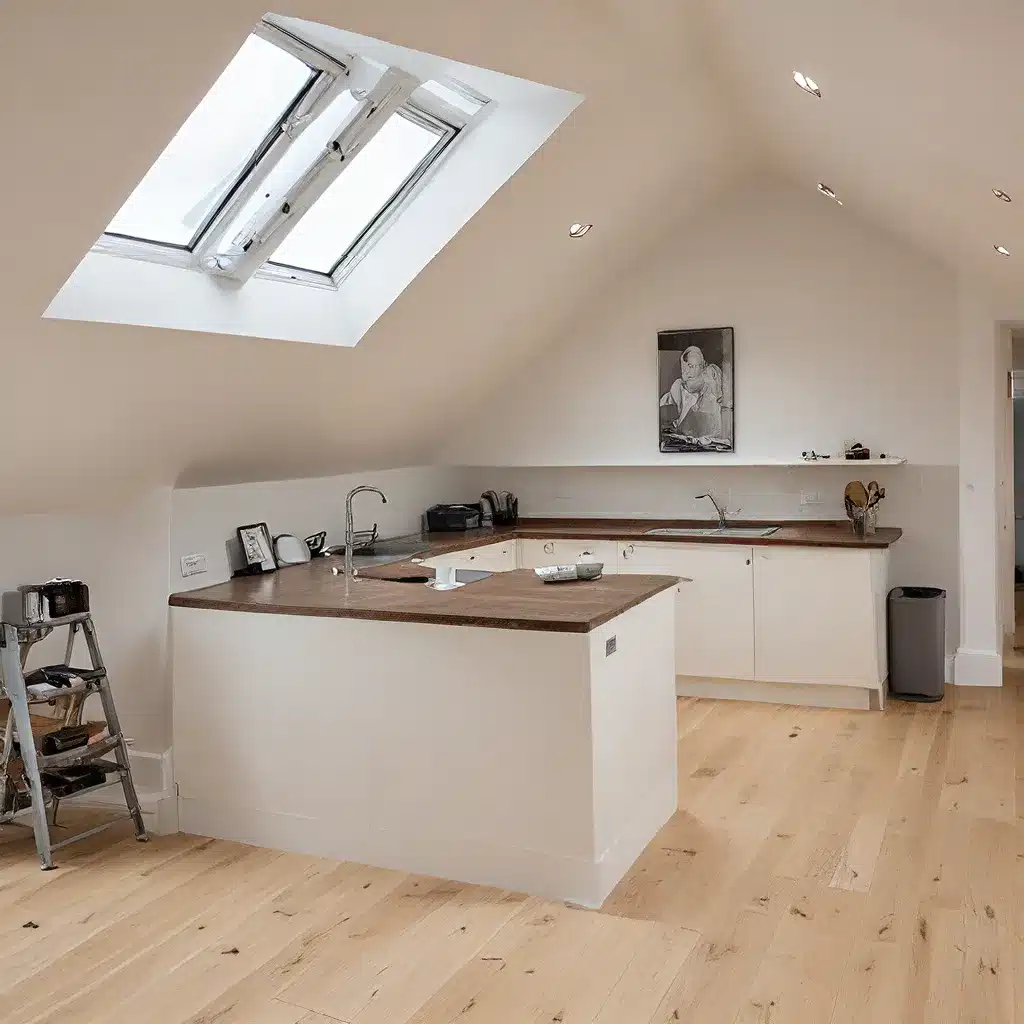
Faye’s loft conversion was a true game-changer. She had long dreamed of creating an airy, welcoming space that would seamlessly integrate with the rest of her home, and the loft conversion was the perfect solution. As she explained, “What were once unused spaces are transformed into light and airy additional accommodation.”
The trend of loft conversions has significantly increased in recent years, driven by the desire for more living space without the substantial cost of moving. As housing prices continue to rise and the need for flexible living arrangements becomes more prevalent, homeowners are looking upward towards the untapped potential of their lofts.
Faye’s experience echoes this sentiment perfectly. “The beauty of converting a loft is that it adds square footage to the home and adapts to many uses from serene bedrooms to dynamic workspaces,” she shared. “This practical solution has become a buzzword in home improvement circles with its ability to offer both aesthetic appeal and functionality while also being a savvy investment strategy.”
Navigating the Loft Conversion Journey
Of course, a loft conversion is no small undertaking. It requires meticulous planning, design, and construction work, often involving architects, structural engineers, and specialized builders. But Faye navigated the process with grace, and her experience offers valuable insights for anyone considering a loft conversion.
The first step, according to the experts, is assessing the loft’s suitability for conversion. This includes considering factors like the available headroom, roof pitch, and the overall structural integrity of the building. Faye worked closely with a professional to ensure her loft was up to the task.
“Engaging with an architect or surveyor can provide valuable insights into your space’s design possibilities and limitations,” Faye explained. “Once the feasibility is confirmed, understanding and adhering to local building regulations and planning permissions is paramount to ensure the conversion is legal and safe.”
Budgeting is another critical aspect of the process. Faye emphasized the importance of having a clear budget that accounts for all aspects of the conversion, from construction to interior finishes. “It’s essential to have a clear budget that accounts for all aspects of the conversion from construction to interior finishes,” she advised.
Designing for Function and Aesthetics
With the groundwork laid, Faye delved into the design aspects of her loft conversion, and let me tell you, the results are nothing short of stunning. She meticulously considered every detail, from the placement of windows to the integration of storage solutions.
“The design must consider the attic’s natural structure, utilizing sloping ceilings and natural light to enhance the room’s ambiance,” Faye shared. “Decisions on window placement, such as installing skylights or dormer windows, will significantly impact the light and feel of the room.”
One of the challenges Faye faced was the narrow width of the stairs leading up to the loft. “We looked at different textures including sisal and various carpet weaves – loops, twists, etc.,” she recalled. “Faye opted for a classic and stylish twist in a light colour which complemented the painted balusters and bannisters and really opened up the stairwell.”
Faye’s design choices didn’t stop there. She also carefully considered the loft’s intended use, ensuring the layout and features were tailored to her needs. “It’s also important to consider the loft’s intended use when making design choices,” Faye explained. “A bedroom may require a different layout and features than a home office or a lounge area.”
The Transformation Unfolds
As the construction phase unfolded, Faye witnessed the magic of her loft conversion come to life. The process typically involves reinforcing the floor, adding windows, and insulating the walls to create a cozy and inviting space. Faye’s loft was no exception, and the results were nothing short of breathtaking.
“The collaborative process requires ongoing communication between the homeowner, builders, and possibly architects or project managers to ensure the final space meets the envisioned functionality and design aesthetics,” Faye shared. “If you’re considering expanding your living space with a loft conversion, booking a consultation is the ideal first step.”
As Faye walked me through her newly transformed loft, I couldn’t help but feel a sense of awe. The once-forgotten space had been infused with an abundance of natural light, carefully curated design elements, and a palpable sense of warmth and functionality.
The Loft Conversion Advantage
Faye’s loft conversion journey is a testament to the incredible potential that lies within those underutilized attic spaces. And she’s not alone in her enthusiasm. Across the UK and beyond, the trend of loft conversions has been on the rise, with more and more homeowners recognizing the benefits of this practical and versatile home improvement project.
From the added square footage to the potential for increased property value, the advantages of a loft conversion are hard to ignore. And as Faye’s experience has shown, the design possibilities are endless, allowing homeowners to tailor the space to their unique needs and preferences.
Whether you dream of a peaceful bedroom retreat, a vibrant playroom, or an efficient home office, a loft conversion could be the key to unlocking your home’s true potential. So, if you’re ready to embark on an exciting home improvement journey, I’d encourage you to explore the possibilities of transforming your loft. Who knows, your own “light and airy additional accommodation” could be just around the corner.
And if you’re in the Aberdeen area, I’d highly recommend connecting with the team at ABC Home. Their expertise in loft conversions and other home improvement services could be the perfect starting point for your own transformative project.