The Surprising Benefits of Rainwater Harvesting
Picture this: you’re out in your garden on a warm summer day, meticulously tending to your prized plants and flowers. As you water them, you can’t help but feel a twinge of guilt, knowing that precious treated drinking water is being used for horticultural purposes. Wouldn’t it be great if there was a more sustainable way to keep your garden lush and thriving?
Well, my friends, the solution may be closer than you think – in the form of a rainwater collection system. Now, I know what you’re thinking: “Rainwater collection? Isn’t that just for people living off-grid in the middle of nowhere?” Well, let me tell you, even those of us with well-established homes in the heart of Aberdeen can benefit greatly from harvesting the rain.
The Environmental and Financial Perks of Rainwater Harvesting
For starters, let’s talk about the environmental impact. By using rainwater to water your garden, you’re not only reducing your reliance on treated municipal water, but you’re also helping to alleviate the strain on our precious freshwater resources. As climate change continues to impact weather patterns and put a squeeze on water supplies, every little bit of conservation counts.
But the benefits don’t stop there. Did you know that rainwater is actually better for your plants than treated tap water? It’s true! Rainwater is naturally slightly acidic, which helps to make important nutrients more readily available to your plants. Plus, it’s free of the chlorine and other additives found in treated water, which can sometimes have a negative effect on delicate foliage and soil health.
And let’s not forget the financial aspect. Depending on the size of your garden and how much water it requires, using rainwater could translate to some serious savings on your utility bills. Just imagine – no more forking over a small fortune to the water company every quarter, all while keeping your garden lush and vibrant.
The Ins and Outs of Rainwater Collection Systems
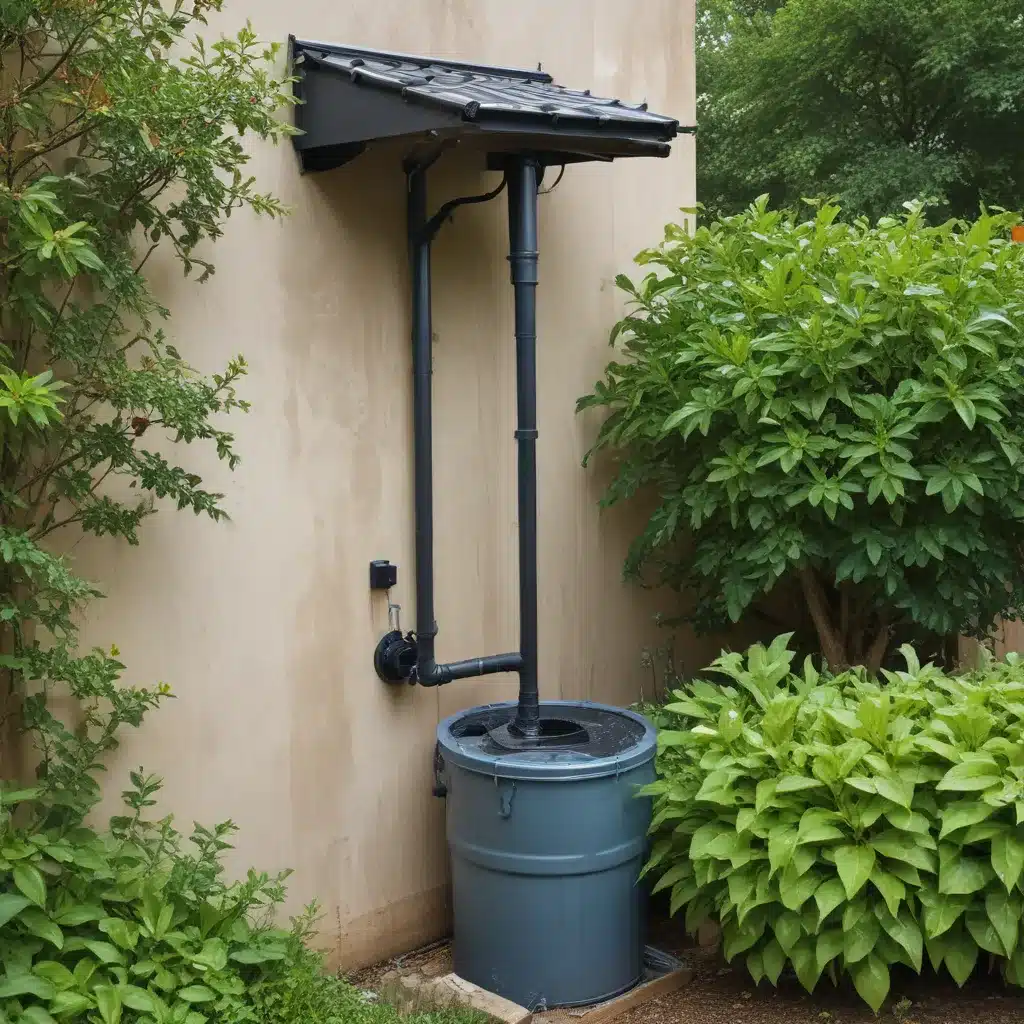
Okay, so we’ve covered the why, but now let’s dive into the how. Setting up a rainwater collection system may sound like a daunting task, but I can assure you, it’s actually quite straightforward. The basic components include a catchment surface (usually the roof of your home or a dedicated structure), a storage tank, and a distribution system to get the water where it needs to go.
The size and complexity of the system will depend on the size of your garden and your specific needs. For a smaller setup, you might go with a simple rain barrel placed under a downspout. But for larger-scale operations, you could look into an underground cistern or even a series of interconnected tanks.
One important consideration is the quality of the water being collected. Depending on the materials used and the surrounding environment, rainwater can sometimes pick up contaminants like bird droppings or dust and debris. That’s why it’s crucial to have a proper filtration system in place to ensure the water is safe for plant use.
Real-Life Examples of Successful Rainwater Harvesting
But don’t just take my word for it – let’s look at some real-life examples of folks in the Aberdeen area who have reaped the rewards of rainwater harvesting. Take the case of the Andersons, a family living in the Dyce neighborhood. They installed a 2,500-gallon underground cistern a few years ago, and the results have been nothing short of impressive.
“Before, we were spending a small fortune on municipal water to keep our vegetable garden and flower beds thriving,” says Mrs. Anderson. “Now, we rely almost entirely on the rainwater we collect, and our utility bills have gone down by a good 30%.” She also notes that her plants have never looked healthier, thanks to the nutrient-rich rainwater.
Then there’s the story of the Macdonald’s, who live just down the road in Cults. They opted for a more modest above-ground setup, with a series of interconnected rain barrels strategically placed around their property. “It was a bit of an investment upfront,” Mr. Macdonald admits, “but the long-term savings have been well worth it. Plus, the kids love watching the barrels fill up after a good storm.”
Debunking the Myths About Rainwater Harvesting
Of course, no discussion of rainwater collection would be complete without addressing some of the common misconceptions. One of the biggest is that it’s only for rural or off-grid living. As we’ve seen, even city-dwellers can benefit greatly from harvesting the rain.
Another myth is that it’s overly complicated or requires a ton of specialized equipment. While there are certainly more sophisticated setups out there, the basic principles are within reach of the average homeowner. With a little research and some elbow grease, you can have a functional system up and running in no time.
And what about the quality of the water? Surely rainwater can’t be as clean and pure as the stuff that comes straight from the tap, right? Wrong! With the proper filtration and treatment, rainwater can be just as safe and healthy for your plants as municipal water – if not more so. It’s all about doing your due diligence and making sure your system is well-maintained.
Bringing it All Together: Your Rainwater Harvesting Journey Awaits
So, there you have it, my fellow green-thumbed friends – the ins and outs of rainwater harvesting, from the benefits to the practicalities. It’s a simple, sustainable solution that can save you money, reduce your environmental impact, and help your garden thrive.
If you’re feeling inspired and ready to take the plunge, I’d encourage you to reach out to the team at ABC Home – they’re the local experts when it comes to all things rainwater collection and garden irrigation. They can help you design and install a system that’s tailored to your specific needs and property.
Who knows, with a little rainwater magic, your garden might just become the envy of the entire neighborhood. So what are you waiting for? The rainy season is just around the corner, and your plants are thirsty!