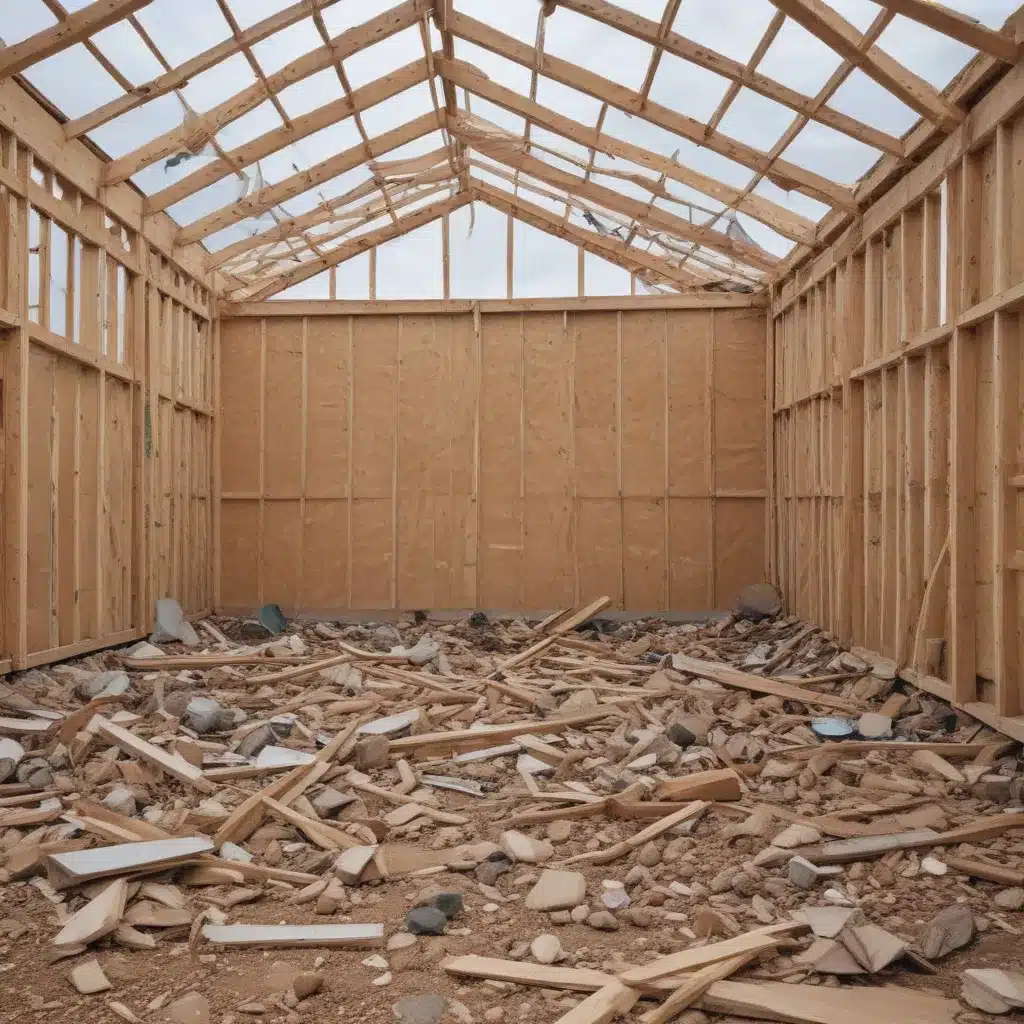
The Plastic Problem: A Tidal Wave of Waste
Let’s face it, the construction industry has a bit of a plastic problem. You know what I’m talking about – those mountains of shrink wrap, bubble wrap, and polystyrene packing that seem to accumulate on every job site. It’s enough to make even the most hardened contractor want to throw in the trowel and call it a day. But fear not, my fellow builders! There is a way to stem the tide of construction waste and create a truly zero waste building site.
You see, I used to be just like you – drowning in a sea of single-use plastics and feeling utterly powerless to stop it. But then I had a lightbulb moment. What if we could rethink the whole way we approach construction materials and packaging? What if we could find clever, sustainable alternatives that not only reduce waste, but actually save us money in the long run?
It was a pipe dream at first, I admit. After all, the construction industry is notoriously set in its ways. But then I started doing some research, talking to suppliers, and experimenting with new eco-friendly products. And you know what I found? There’s a whole world of innovative, cost-effective solutions out there just waiting to be discovered. From biodegradable insulation to reusable pallets, the possibilities are endless.
Of course, making the switch to a zero waste building site isn’t going to happen overnight. It’s going to take some trial and error, some creative problem-solving, and a whole lot of perseverance. But I can tell you from experience, it’s more than worth it. Not only are you doing your bit for the planet, but you’re also setting your business up for long-term success. Because let’s be honest, in this day and age, clients are more eco-conscious than ever before. They want to know that the companies they’re hiring are taking sustainability seriously.
So buckle up, my friends, because we’re about to embark on a journey towards a cleaner, greener, and more cost-effective future for the construction industry. Are you ready to ditch the plastic and embrace the power of zero waste? Let’s dive in!
Rethinking Packaging: Breaking Free from Single-Use Plastics
One of the biggest culprits when it comes to construction waste is packaging. Think about it – every time a new shipment of materials arrives on site, there’s a whole host of plastic, foam, and cardboard just waiting to be discarded. And let’s not even get started on the nightmare that is shrink wrap.
But what if I told you there’s a better way? A way to reduce your reliance on single-use plastics and actually save money in the process? It all starts with rethinking the way we approach packaging.
Now, I know what you’re thinking – “But what about all the convenience and protection that plastic provides?” Well, let me tell you, there are some seriously impressive alternatives out there that can do the job just as well, if not better. Take reusable pallets, for example. These sturdy, durable platforms can be used over and over again, eliminating the need for all that pesky shrink wrap. And the best part? They’re often cheaper in the long run than constantly buying new disposable pallets.
Or how about biodegradable insulation? Instead of wrapping your fragile materials in layer upon layer of bubble wrap, why not try an insulation made from renewable, compostable materials? Not only does it protect your goods just as effectively, but it also breaks down safely at the end of its life cycle.
And let’s not forget about the power of good old-fashioned reusable containers. From sturdy toolboxes to stackable crates, there are so many ways to store and transport your materials without generating a single scrap of plastic waste. Plus, these solutions often come with the added bonus of keeping your site organized and your tools safe.
The key is to get creative and think outside the box. What materials do you use the most? What kind of packaging do they typically come in? There’s bound to be a more sustainable alternative out there if you’re willing to do a little digging.
Trust me, I know it can be tempting to just stick with what you know. After all, plastic is cheap, convenient, and readily available. But the long-term benefits of embracing a zero waste approach far outweigh the initial hassle. Not only will you be doing your part to protect the planet, but you’ll also be setting your business up for success in an increasingly eco-conscious world.
So what are you waiting for? Let’s start rethinking packaging and putting an end to the reign of single-use plastics on our building sites. The future is bright, my friends, and it’s decidedly less plastic-y.
Materials Matter: Choosing Sustainable Alternatives
Now that we’ve tackled the packaging problem, it’s time to turn our attention to the materials we actually use on site. Because let’s be honest, the construction industry has a bit of a reputation when it comes to sustainability. From energy-guzzling concrete to toxic paints and solvents, there’s a lot of room for improvement.
But fear not, my fellow builders! There’s a whole world of innovative, eco-friendly materials just waiting to be discovered. And the best part? Many of these sustainable alternatives are not only better for the environment, but they can also save you money in the long run.
Take insulation, for example. Conventional fiberglass and polystyrene insulation may be cheap and readily available, but they come with a hefty environmental price tag. Think about it – these materials are essentially non-biodegradable, petrochemical-based products that can release harmful toxins into the air and water.
But what if I told you there’s a better way? Enter the world of natural, renewable insulation materials like sheep’s wool, cellulose, and even hempcrete. Not only are these options more sustainable, but they often outperform their traditional counterparts when it comes to thermal and sound insulation. And the best part? They’re typically more affordable in the long run, thanks to their longevity and energy-saving properties.
Or how about flooring? Instead of going for the standard vinyl or laminate options, why not explore the world of bamboo, cork, or reclaimed wood? These materials not only look stunning, but they’re also incredibly durable and environmentally friendly. Plus, they can actually increase the value of your property, making them a smart investment for both you and your clients.
And let’s not forget about the importance of renewable energy. In today’s climate-conscious world, clients are actively seeking out buildings that incorporate sustainable power solutions like solar panels, wind turbines, and geothermal heating. Not only do these technologies reduce your carbon footprint, but they can also save your clients a significant amount on their energy bills – a win-win all around!
The key is to think creatively and be willing to step outside your comfort zone. Sure, it might take a little extra time and effort to research and source these sustainable materials, but trust me, the payoff is well worth it. Not only will you be doing your part to protect the planet, but you’ll also be positioning your business as a leader in the field of eco-friendly construction.
So what are you waiting for? Let’s start exploring the world of sustainable materials and put an end to the days of energy-guzzling, pollution-spewing construction. The future is green, my friends, and it’s time to jump on board.
The Supply Chain Challenge: Sourcing Sustainable Solutions
Now, I know what you’re thinking – “All this talk of zero waste and sustainable materials is all well and good, but how the heck am I supposed to actually find these products?” And let me tell you, you’re not alone. The supply chain challenge is one of the biggest hurdles that contractors and builders face when trying to embrace a more eco-friendly approach.
You see, the construction industry has long been dominated by a handful of big-name suppliers and manufacturers who have, shall we say, a less-than-stellar track record when it comes to sustainability. And let’s not even get started on the tangled web of international shipping and logistics that often comes with sourcing building materials.
But fear not, my friends! There is a way to navigate this seemingly daunting landscape and find the sustainable solutions you need to create a zero waste building site. And it all starts with a little bit of good old-fashioned legwork.
First and foremost, it’s crucial that you start exploring the world of local, independent suppliers. These small businesses are often at the forefront of the sustainability movement, offering everything from reclaimed lumber to custom-made insulation panels. And the best part? By supporting these local enterprises, you’re not only reducing your carbon footprint, but you’re also contributing to the growth and prosperity of your community.
But what if you simply can’t find what you need locally? Well, that’s where the power of the internet comes in. These days, there are all sorts of online marketplaces and directories dedicated to connecting eco-conscious businesses with the products and services they need. From green building material suppliers to waste management companies, the options are endless.
And let’s not forget about the importance of networking and building relationships. Attend industry events, join trade associations, and connect with other like-minded contractors and builders. You never know – one of your new connections might just hold the key to unlocking the sustainable solution you’ve been searching for.
Of course, I’d be remiss if I didn’t mention the crucial role that government programs and incentives can play in all of this. Many local and national authorities offer grants, tax credits, and other financial incentives to businesses that embrace sustainable practices. Do your research, reach out to relevant agencies, and see what kind of support might be available to you.
At the end of the day, sourcing sustainable building materials and services might take a bit more effort than the traditional approach, but trust me, it’s more than worth it. Not only will you be doing your part to protect the planet, but you’ll also be setting your business up for long-term success in an increasingly eco-conscious market.
So what are you waiting for? Let’s start scouring those supply chains and find the sustainable solutions that will help us build a better, greener future. The journey might be a little challenging, but the destination – a zero waste building site – is more than worth it.
Waste Management: Closing the Loop
Alright, let’s talk trash. No, not the kind of trash that comes straight out of your mouth (although I’m sure we’ve all been guilty of that from time to time). I’m talking about the literal, physical trash that accumulates on our building sites – the mountains of scrap materials, the piles of packaging, the leftover debris from demolition.
It’s a problem that plagues the construction industry, and one that we’ve all grappled with at one point or another. But you know what they say – where there’s a will, there’s a way. And when it comes to zero waste building, that way is all about effective waste management.
Now, I know what you’re thinking – “Waste management? Isn’t that just a fancy term for throwing everything in the bin?” Well, my friends, I’m here to tell you that there’s so much more to it than that. In fact, the key to creating a truly zero waste building site is all about closing the loop and finding ways to reuse, recycle, and repurpose as much of that waste as possible.
Take scrap materials, for example. Instead of just dumping those leftover bits of wood, metal, and drywall, why not explore the world of recycling and upcycling? There are all sorts of innovative companies out there that are turning construction waste into everything from furniture to building materials. And the best part? Not only does it keep that stuff out of the landfill, but it can actually generate some extra revenue for your business.
Or how about packaging? Remember those reusable pallets and containers we discussed earlier? Well, they’re not just great for reducing waste – they can also be an invaluable part of your waste management strategy. Once you’re done with them, simply send them back to the supplier to be cleaned, repaired, and reused.
And let’s not forget about the power of good old-fashioned composting. Did you know that a significant portion of construction waste, from untreated wood to cardboard, can be broken down and repurposed as nutrient-rich soil? It’s a simple, cost-effective way to give new life to all those materials that might otherwise end up in the dumpster.
Of course, I know what you’re thinking – “But what about the stuff that can’t be reused or recycled? Surely that’s just destined for the landfill?” Well, my friends, that’s where the concept of “waste-to-energy” comes into play. Thanks to the wonders of modern technology, there are now all sorts of innovative ways to convert even the most stubborn construction waste into clean, renewable energy.
From anaerobic digestion to thermal treatment, the possibilities are endless. And the best part? Not only does it help to reduce your reliance on traditional waste disposal methods, but it can also generate revenue for your business through the sale of that precious energy.
So there you have it, folks – the key to creating a truly zero waste building site is all about closing the loop and finding creative ways to reuse, recycle, and repurpose as much of that pesky construction waste as possible. It might take a bit of extra effort and some outside-the-box thinking, but trust me, the payoff is more than worth it.
After all, who doesn’t love the idea of turning their trash into treasure? So let’s get to work, my friends, and let’s show the world that the construction industry can be a true champion of sustainability.
Overcoming the Challenges: Strategies for Success
Now, I know what you’re thinking – “Alright, this all sounds great in theory, but how the heck am I supposed to actually make it happen in the real world?” And let me tell you, I hear you loud and clear. Transitioning to a zero waste building site is no easy feat, and there are certainly going to be a few hurdles along the way.
But fear not, my fellow builders! I’ve been there, I’ve done that, and I’m here to share some of the key strategies and lessons I’ve learned along the way. Because trust me, if I can do it, so can you.
First and foremost, it’s all about mindset. You’ve got to be willing to embrace change and step outside your comfort zone. Because let’s be honest, the construction industry has been doing things the same way for decades, and getting people to buy into a new, more sustainable approach can be a real challenge.
But you know what they say – the only way to eat an elephant is one bite at a time. Start small, focus on the quick wins, and use those successes to build momentum and buy-in from your team. Maybe it’s as simple as swapping out those disposable water bottles for reusable ones, or exploring the world of biodegradable insulation. Every little step counts, and before you know it, you’ll be well on your way to a full-blown zero waste revolution.
And let’s not forget about the importance of communication and collaboration. This isn’t a solo mission, my friends – it’s going to take the collective effort of your entire team to make it happen. So get everyone on board, share your vision, and encourage them to bring their own ideas and solutions to the table.
And let’s not forget about the crucial role that your suppliers and subcontractors can play. After all, they’re the ones providing all those materials and services that ultimately end up as construction waste. So make a point of reaching out, establishing open lines of communication, and working together to find sustainable solutions.
Of course, I’d be remiss if I didn’t mention the importance of tracking and measuring your progress. Because let’s be honest, how can you expect to improve if you don’t know where you’re starting from? Set some clear, measurable goals, keep detailed records of your waste outputs and recycling rates, and use that data to continually refine and optimize your strategies.
And finally, don’t be afraid to get a little creative. Because let’s be real, sometimes the most sustainable solutions are the ones that require a bit of outside-the-box thinking. Maybe it’s repurposing that old shipping container as a on-site workshop, or finding a local artist who can turn your scrap materials into one-of-a-kind art pieces. The possibilities are endless, my friends, and the more you embrace that spirit of innovation, the more successful your zero waste journey will be.
At the end of the day, creating a zero waste building site isn’t going to be easy. It’s going to take time, it’s going to take effort, and it’s going to take a whole lot of perseverance. But I can tell you from experience, it’s more than worth it. Not only will you be doing your part to protect the planet, but you’ll also be setting your business up for long-term success in an increasingly eco-conscious world.
So what are you waiting for, my friends? Let’s roll up our sleeves, embrace the challenges, and start building a brighter, greener future for the construction industry. The journey might be a bumpy one, but the destination – a truly zero waste building site – is more than worth it.
Conclusion: The Future of Sustainable Construction
Well, there you have it, folks – the ins and outs of creating a zero waste building site. It’s been quite a journey, hasn’t it? From rethinking our packaging and sourcing sustainable materials to mastering the art of effective waste management, we’ve covered a whole lot of ground.
But you know what? I wouldn’t have it any other way. Because at the end of the day, this isn’t just about saving the planet – it’s about setting our businesses up for long-term success in an increasingly eco-conscious world.
Think about it – clients these days are more environmentally aware than ever before. They want to know that the companies they’re hiring are taking sustainability seriously and doing their part to reduce their carbon footprint. And let’s not forget about the potential cost savings that can come with embracing a zero waste approach. From reduced waste disposal fees to energy-efficient materials, the financial benefits are truly impressive.
But it’s not just about the bottom line, my friends. It’s about the bigger picture – the