
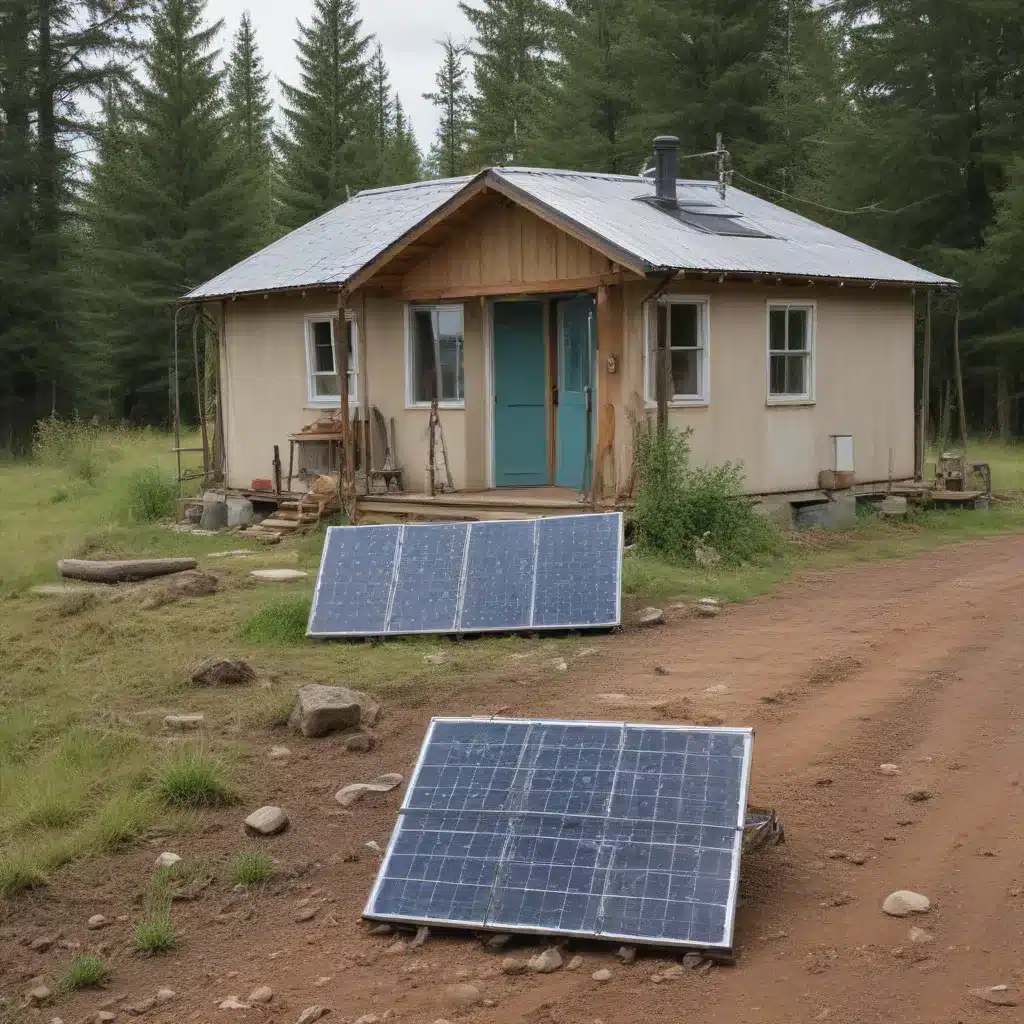
Unplugging from the Grid: A Journey of Self-Sufficiency
Ah, the allure of living off the grid – the idea of escaping the humdrum of modern life and embracing a more self-reliant, sustainable existence. As a building and renovation specialist in Aberdeen, UK, I’ve had the privilege of assisting clients who have taken the plunge into this unconventional way of living. And let me tell you, it’s a fascinating world to explore.
Picture this: you wake up to the sound of birdsong, the warm glow of the sun peeking through your windows, and the gentle hum of your renewable energy system powering your home. No more dependence on the whims of utility companies or the anxiety of looming energy bills. Instead, you’re in control, living in harmony with the natural rhythms of the land. Sounds pretty idyllic, doesn’t it?
But make no mistake, going off the grid is no easy feat. It requires a significant shift in mindset, a willingness to embrace new skills, and a deep commitment to the lifestyle. As I’ve discovered through my work, the journey is both exhilarating and challenging, with its fair share of surprises and lessons along the way.
Embracing the Off-Grid Lifestyle
So, what exactly does it mean to live off the grid? At its core, it’s about severing (or at least reducing) your dependence on centralized utility systems – electricity, water, and waste management. This can be achieved through a combination of renewable energy sources, self-sourced water supplies, and innovative waste treatment solutions.
For many of my clients, the decision to go off the grid is a deeply personal one, stemming from a desire for greater self-reliance, a commitment to environmental sustainability, or simply a longing for a simpler, more authentic way of life. And the benefits can be truly transformative.
Imagine waking up to the gentle hum of your solar panels or the rhythmic churning of your wind turbine, knowing that the energy powering your home is clean, renewable, and entirely under your control. No more worrying about power outages or fluctuating utility rates. It’s a liberating feeling, to say the least.
But the off-grid journey extends beyond just electricity. Water is another crucial component, and my clients have explored a range of innovative solutions, from rainwater harvesting systems to on-site well drilling and purification. Waste management, too, has become a focus, with eco-friendly composting toilets and greywater recycling systems helping to minimize the environmental impact.
Overcoming the Challenges
Of course, living off the grid isn’t without its challenges. It requires a significant investment of time, money, and effort, and there’s a steep learning curve involved. I’ve worked with clients who have struggled to find the right balance between their energy needs and their renewable systems, or who have encountered unexpected hurdles in sourcing and maintaining their water and waste management solutions.
One of the most common obstacles is simply the lack of familiarity with these alternative technologies and approaches. Many of my clients come from a more conventional background, and the transition to off-grid living can feel daunting at first. They may not know where to start, how to troubleshoot issues, or even how to integrate these systems into the design of their home.
That’s where I come in as a building and renovation specialist. My role is to guide my clients through the process, helping them navigate the technical details, identify the most appropriate solutions for their needs, and ensure that the integration of these systems is seamless and efficient. It’s a collaborative effort, one that requires a deep understanding of both the practical and the philosophical aspects of off-grid living.
The Off-Grid Community: A Network of Support
But the journey doesn’t have to be a solitary one. One of the most rewarding aspects of working with clients who have chosen the off-grid path is the sense of community and camaraderie that often emerges. These are individuals who are passionate about their chosen lifestyle, and they’re often eager to share their knowledge, experiences, and even their resources with others.
I’ve seen off-grid homeowners come together to troubleshoot issues, share best practices, and even lend a helping hand when it’s needed. It’s a tight-knit community, bound by a shared commitment to self-sufficiency and environmental stewardship. And for those who are just starting out, this network of support can be invaluable.
In fact, some of my clients have even taken it a step further, creating their own off-grid communities or “eco-villages” – intentional living spaces designed around the principles of sustainability, collaboration, and mutual support. These developments often feature shared resources, communal gardens, and even community-owned renewable energy systems, allowing residents to truly maximize the benefits of their off-grid lifestyle.
The Rewards of Off-Grid Living
But the true reward of going off the grid goes beyond the practical benefits. It’s about the sense of empowerment, the connection to the natural world, and the personal growth that can come from embracing this unconventional way of life.
I’ve seen my clients become more self-reliant, more attuned to the rhythms of the land, and more in tune with their own needs and desires. They’ve learned new skills, from solar panel maintenance to permaculture gardening, and they’ve developed a deeper appreciation for the simple pleasures in life.
And let’s not forget the financial benefits. By reducing or eliminating their reliance on utility companies, my off-grid clients have been able to achieve significant long-term savings, freeing up resources to invest in other aspects of their lives or to reinvest in their sustainable infrastructure.
The Future of Off-Grid Living
As a building and renovation specialist, I can’t help but wonder what the future holds for the off-grid movement. Will it continue to gain momentum, with more and more people seeking to unplug from the grid and embrace a more self-sufficient lifestyle? Or will it remain a niche pursuit, catering only to the most dedicated eco-warriors and self-reliance enthusiasts?
One thing is certain: the technologies and solutions that enable off-grid living are constantly evolving, becoming more efficient, more accessible, and more integrated into the mainstream. Solar panels are becoming cheaper and more powerful, water treatment systems are becoming more sophisticated, and waste management solutions are becoming more eco-friendly and user-friendly.
And as the world grapples with the pressing challenges of climate change, resource depletion, and the need for more sustainable living, the appeal of off-grid living may only continue to grow. After all, what could be more empowering than taking control of your own energy, water, and waste, and living in harmony with the natural world?
So, if you’re feeling the call of the off-grid life, I encourage you to explore the possibilities. It may not be an easy path, but the rewards can be truly transformative. And who knows – you might just find that the freedom and self-reliance of off-grid living is the perfect antidote to the stresses and uncertainties of modern life.
If you’re interested in learning more about our building and renovation services that can help you achieve your off-grid dreams, be sure to check out ABC Home. We’d be more than happy to chat about your vision and help you turn it into a reality.


