The Evolution of Bathroom Illumination
As a seasoned home construction specialist, I’ve witnessed firsthand the remarkable transformation of bathroom lighting over the years. Gone are the days when we relied solely on manual switches and pull cords to illuminate our bathrooms. Today, we’re entering an era of smart, automated lighting solutions that not only enhance convenience but also contribute to energy efficiency and safety.
The concept of automated bathroom lighting isn’t new, but recent advancements in sensor technology and smart home systems have revolutionized how we approach this aspect of home design. I remember the first time I installed a basic motion sensor light in a client’s bathroom back in the early 2000s. It was a game-changer then, but compared to what we can achieve now, it seems almost primitive.
In my experience, the key to successful automated bathroom lighting lies in understanding the unique challenges of the space and selecting the right combination of sensors and control systems. It’s not just about detecting motion; it’s about creating a seamless, intuitive lighting experience that adapts to the user’s needs throughout the day and night.
Understanding Motion Sensor Technologies
When it comes to motion sensors for bathroom lighting, we have several options at our disposal. Each type has its strengths and limitations, which I’ve come to appreciate through numerous installations and client feedback.
Passive Infrared (PIR) Sensors
PIR sensors are perhaps the most common type I’ve worked with. They detect changes in infrared radiation, which essentially means they’re sensitive to body heat. These sensors are excellent for general motion detection in open areas of the bathroom.
The advantages of PIR sensors include:
– Low power consumption
– Relatively low cost
– Good reliability in most conditions
However, they do have some limitations:
– Can be triggered by sudden temperature changes (like steam from a shower)
– May have difficulty detecting motion through shower curtains or glass doors
In my projects, I often use PIR sensors for the main bathroom area but complement them with other sensor types for more comprehensive coverage.
Microwave Sensors
Microwave sensors emit low-power microwave radiation and detect changes in the reflected signals. In my experience, these sensors offer some distinct advantages for bathroom applications:
- Can detect motion through non-metallic materials (like shower curtains)
- Less affected by temperature changes
- Generally have a longer range than PIR sensors
The drawbacks include:
– Higher power consumption
– Potential for false triggers due to sensitivity to any movement (including water in pipes)
– Higher cost compared to PIR sensors
I’ve found microwave sensors particularly useful in larger bathrooms or those with complex layouts where a single PIR sensor might not provide adequate coverage.
Ultrasonic Sensors
Ultrasonic sensors work by emitting high-frequency sound waves and measuring the time it takes for the waves to bounce back. While less common in residential applications, they offer some unique benefits:
- Can detect small movements very effectively
- Not affected by temperature or air currents
- Can work in areas where line-of-sight is obstructed
The main challenges with ultrasonic sensors are:
– Higher cost
– Potential for interference with other ultrasonic devices
– May be sensitive to hard surfaces that reflect sound waves
In my projects, I’ve used ultrasonic sensors in combination with other types to create highly responsive lighting systems, particularly in bathrooms with unusual layouts or specific coverage requirements.
Designing an Effective Sensor Layout
One of the most critical aspects of automated bathroom lighting is sensor placement. Over the years, I’ve developed a systematic approach to designing sensor layouts that ensure comprehensive coverage while minimizing false triggers.
Mapping the Space
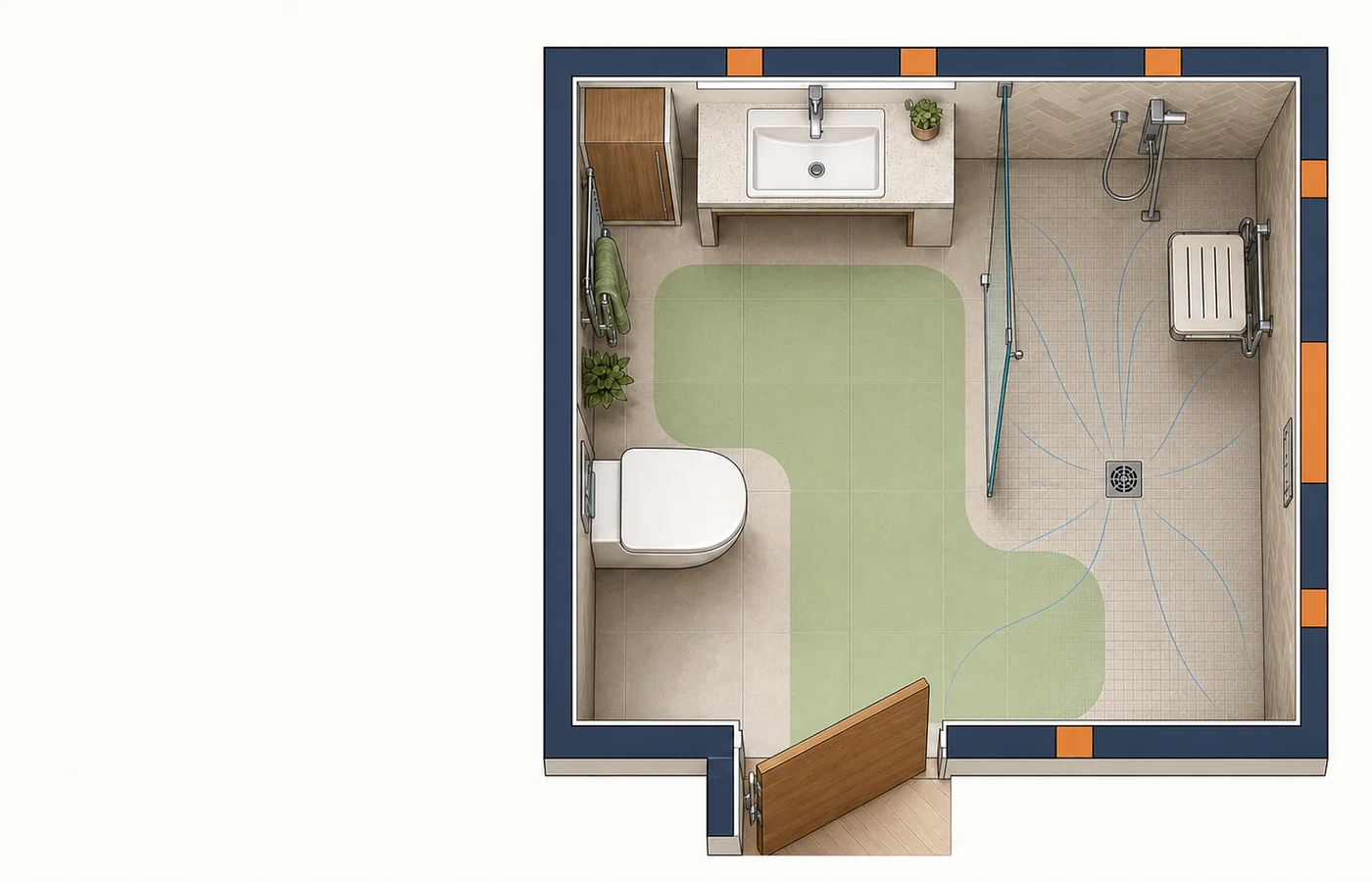
The first step I always take is to create a detailed map of the bathroom. This includes noting:
– Entry points
– Shower and bathtub locations
– Toilet area
– Vanity and sink placements
– Any obstacles or partitions
By visualizing the space, I can identify potential blind spots and determine the optimal locations for sensors.
Considering User Movements
It’s crucial to think about how people typically move through the bathroom. I ask myself questions like:
– Where do users enter and exit?
– What are the common paths between different areas of the bathroom?
– Are there spaces where users might remain stationary for extended periods?
This user-centric approach helps me position sensors to capture movement effectively without creating annoying situations where lights turn off while someone is still in the room.
Addressing Shower Areas
Shower areas present a unique challenge due to steam, curtains, and glass enclosures. My approach typically involves:
- Placing a sensor high on the wall above the shower head
- Using a combination of sensor types (e.g., PIR for general movement and microwave for detection through curtains)
- Incorporating humidity sensors to detect shower use and override standard motion detection timeouts
This multi-faceted approach ensures that lights don’t turn off prematurely during showers, a common complaint I’ve encountered in poorly designed systems.
Integrating with Smart Home Systems
While standalone motion sensor setups can be effective, I’ve found that integrating automated bathroom lighting with broader smart home systems offers enhanced functionality and user experience.
Hub-Based Systems
Many of my clients opt for hub-based smart home systems that can coordinate various devices and sensors. These systems allow for more complex automation scenarios, such as:
- Adjusting light color temperature based on time of day
- Coordinating bathroom ventilation fans with lighting
- Integrating with voice assistants for hands-free control
When working with hub-based systems, I ensure that all components are compatible and that the system can handle the specific requirements of bathroom lighting automation.
Wireless Protocols
Choosing the right wireless protocol is crucial for reliable operation. In my experience, the most common options for bathroom lighting automation are:
| Protocol | Advantages | Disadvantages |
|---|---|---|
| Zigbee | Low power consumption, mesh networking | Limited range, potential interference |
| Z-Wave | Good range, reliable mesh network | More expensive components |
| Wi-Fi | Widespread adoption, no need for additional hub | Higher power consumption, potential network congestion |
I typically recommend Zigbee or Z-Wave for bathroom applications due to their reliability and low power requirements. However, the choice often depends on the existing smart home infrastructure and the specific needs of the project.
Custom Programming and Scenes
One of the most exciting aspects of integrating automated bathroom lighting with smart home systems is the ability to create custom programming and scenes. I work closely with clients to develop lighting scenarios that suit their lifestyle and preferences. For example:
- “Night mode” that activates dim, warm lighting for late-night bathroom visits
- “Morning routine” scene that gradually increases light intensity and adjusts color temperature to help wake up the body
- “Relaxation” setting for long, luxurious baths with soft, calming light
These customized scenes add a layer of sophistication and personalization that truly elevates the bathroom experience.
Safety Considerations and Best Practices
As a construction specialist, safety is always at the forefront of my mind when implementing any new technology. Automated bathroom lighting is no exception, and there are several important considerations to keep in mind.
Electrical Safety
When installing sensors and smart lighting components, I always adhere to the following principles:
- Use only certified, waterproof components rated for bathroom environments
- Ensure all electrical connections are properly sealed and protected from moisture
- Follow local electrical codes and regulations for bathroom installations
- Install GFCI (Ground Fault Circuit Interrupter) protection for all circuits in the bathroom
It’s crucial to remember that bathrooms are wet environments, and electrical safety cannot be compromised.
Fall Prevention
One of the primary benefits of automated lighting is enhanced safety, particularly in preventing falls. I design systems with the following features:
- Immediate activation upon entering the bathroom to eliminate dark spots
- Gradual dimming rather than sudden shut-off to allow for safe exit
- Installation of subtle night lights or path lighting for nighttime use
These features are especially important for households with elderly members or young children.
Backup Systems
To ensure continuous functionality and safety, I always recommend incorporating backup systems:
- Battery-powered emergency lighting that activates during power outages
- Manual override switches for all automated lighting
- Regular testing and maintenance schedules for sensors and smart components
These redundancies provide peace of mind and ensure that the bathroom remains safe and functional under all circumstances.
Energy Efficiency and Sustainability
Automated bathroom lighting isn’t just about convenience and safety; it’s also an excellent tool for improving energy efficiency. Throughout my career, I’ve seen a growing emphasis on sustainable building practices, and smart lighting plays a significant role in this trend.
LED Integration
I always recommend LED lighting for automated bathroom systems due to their numerous benefits:
- Low energy consumption
- Long lifespan, reducing replacement frequency
- Ability to change color temperature
- Instant on/off without warm-up time
When combined with motion sensors, LED lights can significantly reduce energy waste by ensuring lights are only on when needed.
Daylight Harvesting
For bathrooms with natural light sources, I often implement daylight harvesting techniques:
- Installing light sensors to detect ambient light levels
- Automatically adjusting artificial lighting based on available natural light
- Integrating motorized blinds or smart windows for optimal light management
This approach not only saves energy but also creates a more pleasant and natural lighting environment throughout the day.
Monitoring and Optimization
Many smart home systems offer energy monitoring features, which I leverage to help clients understand and optimize their energy usage:
- Tracking lighting usage patterns
- Identifying opportunities for further efficiency improvements
- Providing reports and suggestions for energy-saving adjustments
By continuously monitoring and refining the system, we can achieve significant long-term energy savings.
Future Trends in Automated Bathroom Lighting
As someone who’s passionate about staying at the forefront of home construction technology, I’m always excited to explore emerging trends in automated lighting. Here are some developments I believe will shape the future of bathroom illumination:
AI-Powered Lighting Systems
Artificial intelligence is set to revolutionize how our homes understand and respond to our needs. In the context of bathroom lighting, AI could:
- Learn individual preferences and routines to predict lighting needs
- Adjust lighting based on biometric data (e.g., time to wake up, stress levels)
- Integrate with health monitoring systems to support wellbeing
While still in its early stages, AI-driven lighting has the potential to create truly personalized and adaptive bathroom environments.
Advanced Sensor Fusion
The integration of multiple sensor types is becoming more sophisticated, allowing for more accurate and nuanced control of lighting:
- Combining motion, occupancy, and air quality sensors for comprehensive environmental awareness
- Using facial recognition to identify individuals and apply personalized lighting preferences
- Incorporating gesture control for touchless operation
These advancements will lead to more responsive and intuitive lighting systems that can adapt to a wide range of scenarios.
Biophilic Lighting Design
There’s a growing recognition of the importance of connecting with nature in our built environments. In bathroom lighting, this translates to:
- Dynamic lighting that mimics natural daylight cycles
- Integration of plant growth lights to support bathroom greenery
- Use of natural materials and textures in lighting fixtures
By incorporating these elements, we can create bathroom spaces that are not only functional but also contribute to overall wellbeing and connection with nature.
Conclusion: The Bright Future of Bathroom Lighting
As we’ve explored the various aspects of automated bathroom lighting, it’s clear that this field is ripe with potential for innovation and improvement. From advanced sensor technologies to AI-driven systems, the future promises even more intuitive and efficient lighting solutions for our bathrooms.
Throughout my career, I’ve had the privilege of witnessing and participating in the evolution of home automation technologies. The bathroom, once a purely functional space, has become a focal point for technological integration and personalized experiences. As we continue to push the boundaries of what’s possible, I’m excited to see how automated lighting will further transform our daily routines and enhance our living spaces.
For homeowners and builders alike, staying informed about these advancements is crucial. Whether you’re planning a renovation or building from scratch, considering automated lighting options can significantly improve the functionality, safety, and enjoyment of your bathroom space.
If you’re interested in exploring automated bathroom lighting solutions for your home, I encourage you to consult with experienced professionals who can guide you through the process. At ABC Home, we specialize in cutting-edge bathroom installations that incorporate the latest in lighting automation technology. Our team can help you design a system that meets your unique needs and preferences, ensuring a bathroom that’s not just well-lit, but truly intelligent.
Remember, the key to successful automated bathroom lighting lies in thoughtful design, quality components, and expert installation. With the right approach, you can create a bathroom that’s not only functional and efficient but also a true reflection of modern living at its best.