The Art of Optical Illusion: Transforming Cramped Spaces into Inviting Oases
As the owner of a building and renovation company in Aberdeen, UK, I’ve seen my fair share of small rooms that feel more like claustrophobic cubbyholes than cozy sanctuaries. But fear not, my friends! I’m here to share my secrets on how to make even the tiniest of spaces feel like they’ve been touched by the magic wand of Mary Poppins herself.
You see, the key to creating the illusion of spaciousness lies in the art of deception – not in the shady, underhanded kind, but in the clever, design-savvy kind. It’s all about tricking the eye and mind into perceiving a room as larger than it actually is. And trust me, I’ve honed this skill to a fine art over the years.
Dare to Go Bright and Airy
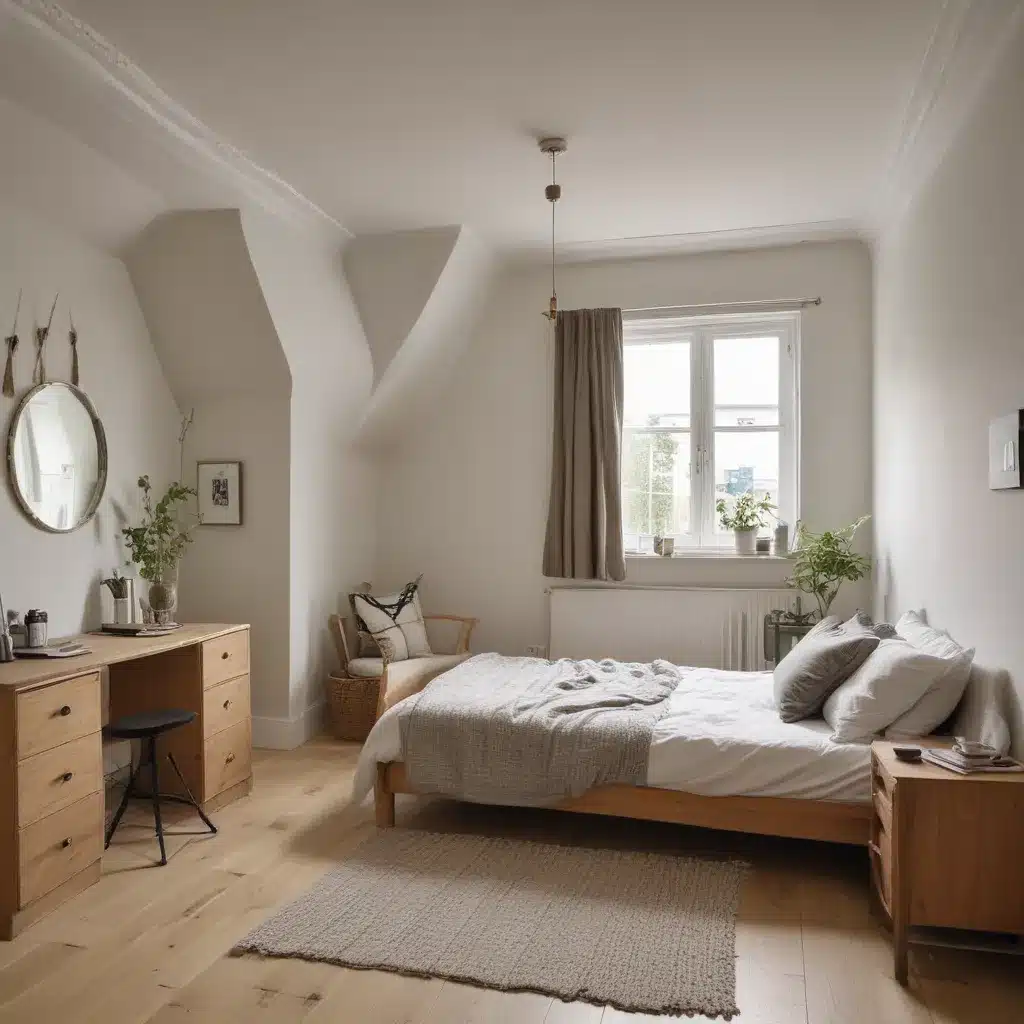
One of the quickest ways to make a room feel more expansive is to embrace the power of light and color. I always advise my clients to steer clear of dark, heavy hues and opt for a palette of crisp whites, soft grays, and soothing blues. These lighter tones have a way of reflecting light and creating the illusion of depth and openness.
But it’s not just about the paint on the walls, oh no. No, my friends, it’s about the way you layer your lighting. Think strategically placed recessed lighting, elegant wall sconces, and even a sparkling chandelier to draw the eye upwards and create a sense of airiness. And don’t forget the importance of natural light! Throw open those curtains and let the sunshine pour in, instantly making even the smallest of spaces feel like a sunny oasis.
The Allure of Mirrors: Doubling the Illusion
Ah, the humble mirror – the unsung hero of the small-space conundrum. These reflective beauties have the power to make a room feel twice its size, and I’ll be darned if I don’t take full advantage of that. Strategically placed mirrors can bounce light around the room, creating the illusion of depth and expansion.
But it’s not just about slapping a mirror on the wall and calling it a day. Oh no, my friends, there’s an art to it. I like to experiment with different shapes, sizes, and placements, using them to highlight architectural features or create the illusion of a doorway or window where there is none. And let’s not forget the power of mirrored furniture – a sleek, mirrored coffee table or dresser can do wonders for making a space feel more open and airy.
Embrace the Vertical: Going Up, Up, and Away
When you’re working with a small room, the key is to think vertically. Rather than sprawling out horizontally, which can make a space feel cluttered and cramped, I encourage my clients to go up, up, and away. Tall bookcases, floor-to-ceiling curtains, and even a lofted bed can all create the illusion of height and depth, drawing the eye upwards and making the room feel more expansive.
And let’s not forget the power of the humble ladder. No, I’m not talking about the rickety, creaky kind you find in your grandma’s attic. I’m talking about the sleek, modern ladders that double as decorative elements, adding a touch of industrial chic while also providing extra storage and display space. It’s a win-win, my friends!
Declutter and Streamline
Now, I know what you’re thinking – “But what about all my stuff? Where am I supposed to put it?” Well, my friends, the answer is simple: declutter and streamline. The more stuff you have crammed into a small space, the more cramped and claustrophobic it’s going to feel.
So, take a long, hard look at your belongings and ask yourself: “Do I really need this?” If the answer is no, then it’s time to say goodbye. Donate, sell, or recycle anything that’s not essential, and then get to work on streamlining the rest. Invest in multi-purpose furniture, hidden storage, and smart organizational solutions to keep your space feeling clean, clutter-free, and, most importantly, spacious.
The Power of Illusion: Tricks and Techniques
And now, my friends, let’s dive into the really juicy stuff – the tricks and techniques that can transform even the most minuscule of spaces into something truly magnificent.
One of my favorite tricks is to use striped or diagonal patterns on the walls or floors. These directional elements have a way of drawing the eye and creating the illusion of depth and expansion. It’s like an optical illusion, but one that’s entirely in your control.
Another technique I love to employ is the use of floating shelves or furniture. By suspending these elements off the ground, you create the illusion of more open space beneath them, making the room feel larger and more airy.
And let’s not forget the power of scale. By choosing furniture and decor that’s proportional to the size of the room, you can create a sense of balance and harmony that makes the space feel larger than it actually is. Oversized pieces can make a small room feel cramped, while delicate, streamlined items can make it feel more open and inviting.
Real-Life Transformations: Inspiring Case Studies
Now, I know what you’re thinking – “That all sounds great, but can it really work in the real world?” Well, my friends, let me tell you about a few of my favorite small-space transformations that prove just how powerful these techniques can be.
Take, for example, the case of the cozy little flat in the heart of Aberdeen. When my clients first bought the place, they were convinced it was too small to ever feel truly comfortable. But after a few strategic renovations, including the use of mirrored furniture, vertical storage, and a light, airy color palette, the once-cramped space was transformed into a bright, open oasis that felt twice its original size.
Or how about the charming little cottage in the countryside, where the master bedroom was little more than a glorified closet? With the addition of a lofted bed, recessed lighting, and some clever use of mirrors, we were able to create the illusion of a much larger, more inviting sleeping space that felt like a true retreat.
And let’s not forget the case of the cozy home office, where my clients struggled to find a way to fit all their work-from-home essentials without feeling like they were living in a glorified cubicle. By incorporating floating shelves, a streamlined desk, and a strategically placed mirror, we were able to create a workspace that felt open, airy, and incredibly productive.
The Transformative Power of Design
At the end of the day, the key to making even the smallest of rooms feel spacious is all about harnessing the power of design. It’s about understanding the principles of light, color, scale, and illusion, and then using them to your advantage.
And let me tell you, there’s nothing more satisfying than watching a client’s face light up as they step into a room that once felt cramped and claustrophobic, only to now feel like a serene, spacious oasis. It’s like a little bit of magic, and it’s all thanks to the transformative power of design.
So, my friends, if you’re struggling to make the most of your small spaces, don’t despair. Embrace the art of optical illusion, let your creativity run wild, and get ready to transform even the tiniest of rooms into a true sanctuary of spaciousness. And if you need a little help along the way, well, you know where to find me!
Visit our website to learn more about our building and renovation services.