
The Joys of Reclaiming and Reviving
As the owner of ABC Home Renovations in Aberdeen, UK, I’ve always had a deep fascination with the stories that lie within the materials and furniture we encounter during a project. Each weathered plank, tarnished doorknob, and well-worn sofa cushion whispers of a past life – a life that deserves to be celebrated and given new purpose.
That’s why, over the years, I’ve made it my mission to champion the art of mindful repurposing. It’s not just about saving money or being eco-friendly (although those are certainly added bonuses). No, for me, it’s about honoring the history and character of these once-cherished items, and breathing new life into them through thoughtful, creative renovation.
Just take the case of the Victorian-era dresser we found in an old farmhouse last summer. The poor thing had seen better days, with its drawers sticking and the veneer peeling off in places. But as I ran my hands over the intricate carvings on the front, I could practically feel the stories it held – tales of families growing up, cherished heirlooms being stored within its drawers, and perhaps even a few spilled tea stains from hurried breakfasts.
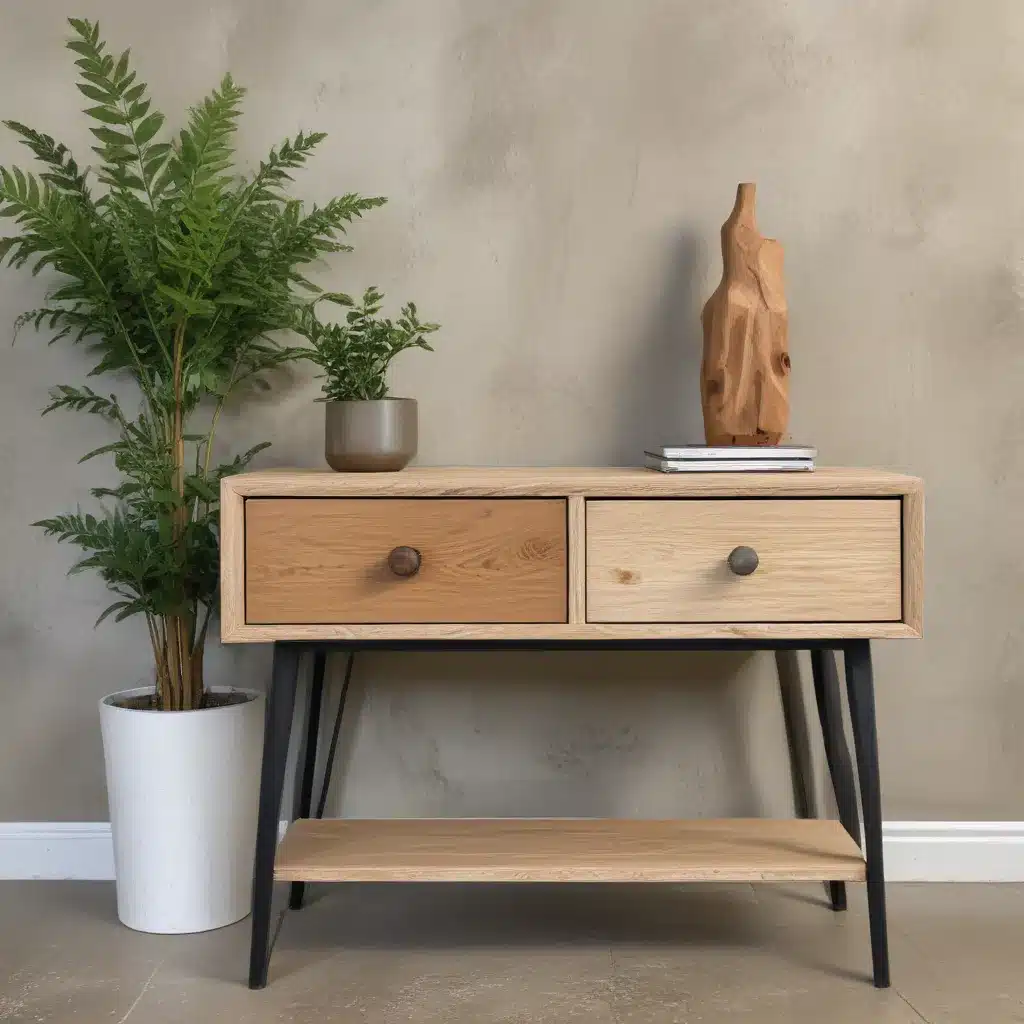
Rather than tossing it in a skip, I knew I had to give this dresser a second chance. So we meticulously restored the wood, replaced the hardware, and transformed it into a stunning bathroom vanity unit. Now, whenever a client steps into their newly renovated ensuite, they’re greeted by the warm, welcoming presence of this antique piece – a daily reminder of the rich history and timeless beauty that can be found in reclaimed materials.
The Art of Repurposing
Of course, the dresser is just one example of the many ways we’ve breathed new life into forgotten furnishings and building supplies. Over the years, I’ve seen my team work absolute wonders with everything from old barn beams to vintage typewriters. It’s a process that requires equal parts creativity, elbow grease, and a deep appreciation for the inherent character of these materials.
Take, for instance, the case of the 1950s coffee table we transformed into a stunning kitchen island. The original piece had seen better days, with its worn veneer and rickety legs. But when I saw it sitting forlornly in a corner of the client’s garage, I knew it had the potential to be so much more.
We started by stripping away the old finish, revealing the gorgeous, honey-toned wood underneath. Then, we reinforced the structure, added robust casters to the legs, and topped it with a thick, butcher block-style surface. The result was a truly one-of-a-kind kitchen island, brimming with vintage charm and functionality.
And the best part? The client was absolutely thrilled with the outcome. “I never would have thought to repurpose an old coffee table in this way,” she gushed. “But now, it’s the centerpiece of my entire kitchen. Everyone who comes over remarks on how unique and special it is.”
That’s the magic of mindful repurposing – taking something that’s been cast aside and, with a little bit of vision and elbow grease, transforming it into a cherished, show-stopping piece. It’s about honoring the past while creating something truly unique and beautiful for the future.
The Environmental Impact of Repurposing
Of course, the benefits of repurposing go far beyond just aesthetics and nostalgia. By giving new life to old materials and furniture, we’re also making a tangible impact on the environment.
Consider the staggering amount of waste generated by the construction and demolition industry each year. In the UK alone, it’s estimated that over 100 million tons of this waste ends up in landfills or incinerators annually. That’s a truly staggering figure, and one that only underscores the urgent need for more sustainable practices in our industry.
But by embracing the art of repurposing, we can do our part to stem this tide of waste. Instead of automatically sending old doors, windows, or floorboards to the skip, we meticulously assess each item to see how it can be given new purpose. Perhaps an antique door frame can be transformed into a stunning headboard, or those worn-out hardwood planks can be repurposed into a one-of-a-kind coffee table.
The environmental benefits of this approach are manifold. Not only does it divert tons of material from landfills, but it also reduces the demand for new, virgin resources to be extracted and processed. And let’s not forget the energy savings – by reusing existing materials, we eliminate the substantial carbon footprint associated with manufacturing brand-new products.
But the true beauty of mindful repurposing lies in the fact that it’s not just good for the planet – it’s also good for the soul. There’s something incredibly satisfying about taking something that’s been cast aside and lovingly restoring it to its former glory. It’s a tangible reminder that with a little creativity and elbow grease, we can breathe new life into the world around us.
The Joy of Discovery
Of course, the process of repurposing isn’t always a straightforward one. Sometimes, the true potential of a material or piece of furniture isn’t immediately obvious. That’s where the thrill of discovery comes in.
I’ll never forget the time we were called in to renovate an old farmhouse just outside of Aberdeen. The place was in dire need of some TLC, with peeling paint, sagging floorboards, and a musty, neglected feel throughout. But as my team and I began the painstaking work of stripping away the layers of decay, we started to uncover hidden gems.
In one of the upstairs bedrooms, we found a truly stunning set of wooden beams, their rustic charm only enhanced by the weathered patina of age. What had once been hidden behind drywall and insulation now stood proudly, a testament to the craftsmanship of a bygone era. Needless to say, we knew exactly what we had to do – carefully preserve and showcase these magnificent beams, incorporating them into the new design as the centerpiece of the room.
And that’s just the tip of the iceberg. As we dug deeper into the renovation, we uncovered all sorts of hidden treasures – from ornate cast-iron radiators to intricate plaster moldings. Each discovery felt like stumbling upon buried treasure, and we couldn’t wait to give these once-forgotten elements a new lease on life.
The process of repurposing isn’t just about salvaging materials – it’s about honoring the rich history and character of a building. It’s about peeling back the layers and celebrating the stories that lie within. And for me, that spirit of discovery is what makes this work so incredibly rewarding.
Collaboration and Creativity
Of course, mindful repurposing isn’t a solo endeavor. It takes a dedicated team of skilled craftspeople, designers, and visionaries to bring these projects to life. And at ABC Home Renovations, we’re fortunate to have assembled a truly remarkable group of individuals who share my passion for breathtaking, sustainable design.
Take our lead carpenter, for example. With his keen eye for detail and deep knowledge of traditional woodworking techniques, he’s able to transform even the most battered and weathered materials into true works of art. I’ll never forget the way he meticulously restored that Victorian-era dresser, coaxing out the hidden beauty of the wood and breathing new life into every intricate carving.
Or consider our interior designer, whose boundless creativity and knack for seeing the potential in the unexpected has led to some of our most innovative projects. It was her idea, for instance, to transform that 1950s coffee table into a showstopping kitchen island. And the way she seamlessly blends vintage and modern elements in her designs is truly inspiring.
But perhaps the most rewarding part of this collaborative process is the way it brings our clients into the fold. We don’t just impose our vision on them – instead, we work closely to understand their needs, their style, and their personal stories. It’s only by forging these genuine connections that we can truly create spaces that are both functionally and emotionally fulfilling.
After all, the true magic of repurposing isn’t just about the materials themselves. It’s about the human element – the stories, the memories, the personal touches that transform a house into a home. And when we’re able to weave those elements into our renovations, the results are truly breathtaking.
The Future of Repurposing
As I look ahead to the future of our industry, I can’t help but feel a deep sense of optimism. The tide is turning, and more and more homeowners are embracing the power of mindful repurposing. They’re recognizing the value in preserving the past, in honoring the rich history and character of the materials that surround us.
And why shouldn’t they? The benefits are so numerous and profound. Not only does repurposing allow us to create truly one-of-a-kind spaces that are brimming with personality, but it also has a tangible, positive impact on the environment. By reducing waste and minimizing the demand for new resources, we’re doing our part to build a more sustainable future.
But perhaps most importantly, the act of repurposing is a profoundly human endeavor. It’s about connecting with the stories of the past, about celebrating the inherent beauty and resilience of the materials that have stood the test of time. And in a world that can sometimes feel cold and impersonal, that sense of connection and meaning is more valuable than ever.
So as we look ahead, I’m excited to see how the world of repurposing and sustainable renovation continues to evolve. I can envision a future where every home renovation is a celebration of the past, where the bones of a building are honored and preserved, and where the joy of discovery and creative collaboration is at the heart of every project.
After all, the true magic of repurposing isn’t just about the materials themselves. It’s about the stories they tell, the memories they hold, and the connections they forge between the past, the present, and the future. And that, to me, is the true essence of mindful, sustainable design.


