
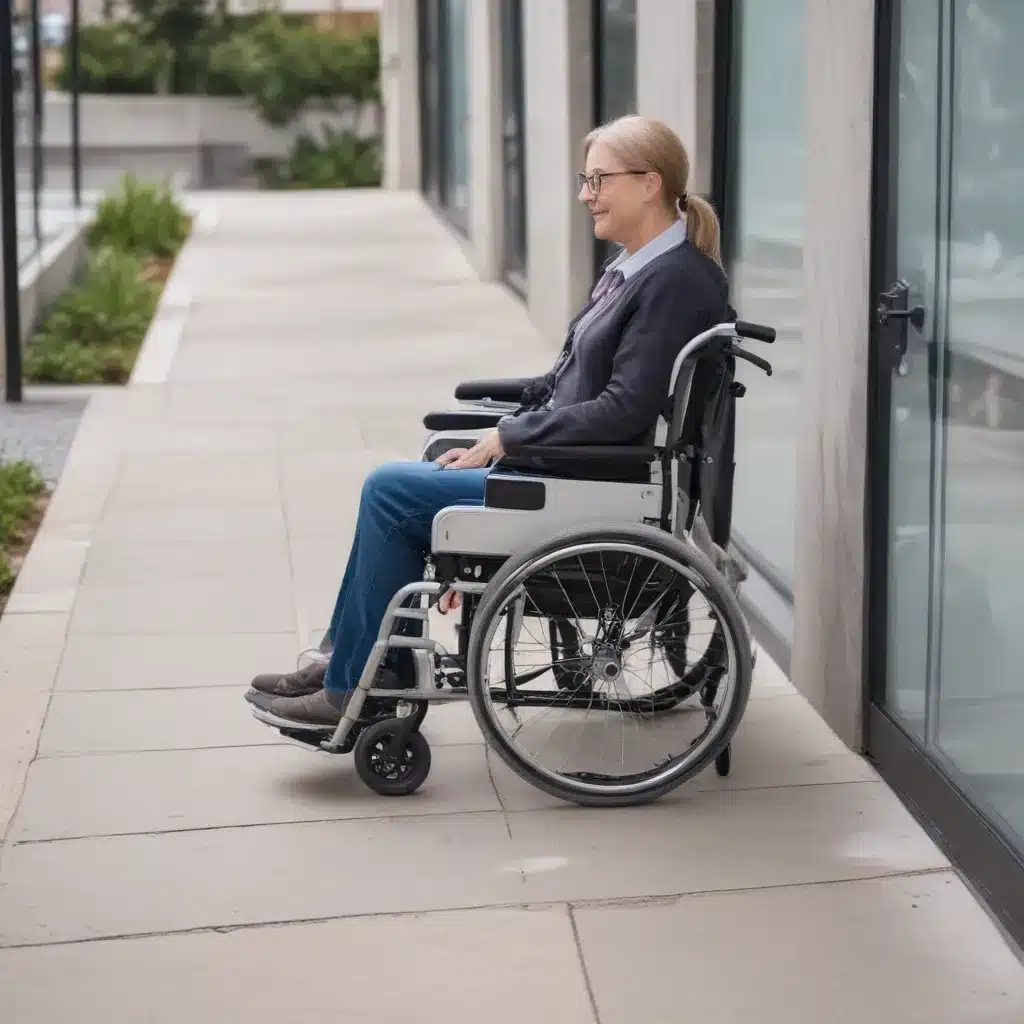
The Importance of Embracing Accessibility
As a proud resident of Aberdeen, UK, I’ve always been inspired by the resilience and innovation of this city. Over the years, I’ve witnessed firsthand how the community has evolved, adapting to the changing needs of its diverse population. One area that has become increasingly critical is the pursuit of accessibility – not just as a box to check, but as a fundamental pillar of truly inclusive design.
Recently, I had the chance to sit down with the team at ABC Home, a renowned building and renovation company in the heart of Aberdeen. They shared their vision for the future, and it was clear that accessibility was at the forefront of their minds. “Our goal is to create spaces that work for everyone,” explained the company’s lead architect, Sarah. “We understand that accessibility isn’t just about compliance; it’s about empowering individuals and fostering a sense of belonging.”
Embracing the Accessibility Landscape
As I delved deeper into the topic, I was struck by the breadth and complexity of the accessibility landscape. The 20-Year Needs Assessment from the New York Metropolitan Transportation Authority (MTA) provided a fascinating glimpse into the challenges and opportunities that lie ahead. The assessment highlighted the critical need to invest in aging infrastructure, mitigate the impacts of climate change, and adapt to the evolving transportation needs of the modern era.
While the MTA’s focus was on the transportation sector, the underlying principles resonate across industries. “It’s not just about ramps and wider doorways,” Sarah noted. “It’s about creating holistic environments that cater to the diverse needs of our community – from the aging population to those with physical, sensory, or cognitive disabilities.”
Redefining Accessibility: Beyond Compliance
The team at ABC Home is acutely aware that accessibility is not just about checking off a list of requirements. It’s about redefining the very concept of accessibility, pushing beyond the minimum standards and embracing a future-focused, user-centric approach.
“We’re not interested in the bare minimum,” Sarah emphasized. “We want to create spaces that not only meet the needs of today but also anticipate the evolving demands of tomorrow. That means staying ahead of the curve, constantly exploring new technologies and design solutions that can enhance the user experience.”
One area that has captured their attention is the rapid advancements in electric vehicle (EV) infrastructure. Drawing inspiration from the Minnesota Department of Transportation’s roadwork initiatives, the team at ABC Home is exploring innovative ways to integrate accessible EV charging stations into their projects, ensuring that the transition to electric mobility is inclusive and empowering for all.
Collaborative Efforts for Holistic Solutions
Accessibility, however, is not a solo endeavor. It requires a collaborative approach, with input and expertise from a diverse range of stakeholders. Sarah and her team have been actively engaging with local authorities, disability advocacy groups, and industry professionals to ensure that their projects truly reflect the needs of the community.
“We can’t do this alone,” Sarah acknowledged. “By working closely with our partners, we can identify the pain points, understand the unique challenges, and develop holistic solutions that make a tangible difference in people’s lives.”
The Future is Accessible
As I walked through the corridors of ABC Home’s state-of-the-art design studio, I couldn’t help but feel a sense of excitement and optimism. The team’s unwavering commitment to accessibility was palpable, and their vision for the future was both ambitious and inspiring.
“Accessibility isn’t just a box to check; it’s a guiding principle that should be woven into the very fabric of our built environment,” Sarah concluded. “By embracing this mindset, we can create spaces that empower, inspire, and bring people together, regardless of their abilities. That’s the kind of future we’re working towards, and we’re excited to make it a reality.”
As I left ABC Home, I couldn’t help but feel a renewed sense of purpose. Accessibility, once seen as an afterthought, is now at the forefront of the construction industry’s agenda. And with visionary companies like ABC Home leading the charge, I’m confident that the future of Aberdeen, and indeed, the world, will be one where everyone can thrive, no matter their needs or abilities.


