
Embracing the Flexible Lifestyle: Furnishing for the Modern World
Have you ever found yourself staring at your living room, scratching your head, wondering why on earth that couch you just bought a year ago no longer seems to “fit” your space? Or maybe you’ve experienced the frustration of trying to cram your growing family into a home that was perfect for your needs just a few years ago. If these scenarios sound all too familiar, let me assure you that you’re not alone. In fact, the need for adaptable, flexible pieces that can evolve alongside our changing lifestyles is a challenge that I, as the owner of a building and renovation company in Aberdeen, UK, see my clients grappling with on a regular basis.
You see, the modern world is in a constant state of flux. Our homes, our families, our jobs – everything seems to be in a perpetual state of change. Just when you think you’ve finally got it all figured out, life throws you a curveball. Perhaps you decide to start working from home full-time, or your elderly parents move in, or your kids suddenly hit that growth spurt and need more space. Whatever the case may be, the spaces we inhabit need to be able to adapt and morph to suit our shifting needs.
That’s where the concept of “adaptable pieces” comes into play. These are furnishings and design elements that are designed with flexibility in mind – pieces that can be rearranged, repurposed, or even completely transformed to address the evolving demands of our lives. Whether it’s a modular sofa that can be configured in a dozen different ways, or a coffee table with hidden storage compartments, the goal is to create living spaces that can keep up with our ever-changing lifestyles.
The Beauty of Multi-Functional Furniture
One of the key principles of adaptable design is the embrace of multi-functional furniture. After all, who has the time or the budget to be constantly replacing their home furnishings every time their needs shift? Not me, and I’m guessing not you either. That’s why I’ve become such a big advocate for pieces that can serve multiple purposes.
Take, for example, the humble ottoman. In the not-so-distant past, the ottoman was little more than a glorified footrest – a simple padded cube that lived at the end of the couch, waiting to prop up weary feet. But today, the modern ottoman has evolved into a veritable Swiss Army knife of home decor. Not only can it still serve as a comfy place to put your feet up, but many ottomans now come equipped with hidden storage compartments, transforming them into handy catch-all spaces for everything from extra blankets to board games. Some even feature built-in trays that can be used as makeshift coffee tables or dining surfaces. It’s like getting two (or three, or four!) pieces of furniture in one.
And the ottoman is just the tip of the iceberg when it comes to multi-functional wonders. I’ve seen coffee tables with built-in shelves, desks that fold up into the wall, and even beds with integrated nightstands and dressers. The possibilities are truly endless, limited only by the creativity of the designers and the needs of the homeowner.
Embracing the Modular Movement
But adaptable pieces don’t just have to be singular furniture items – they can also come in the form of modular systems that allow you to mix, match, and rearrange to your heart’s content. Take, for example, the latest crop of modular shelving units. These are essentially building blocks of storage that can be configured and reconfigured in countless ways to suit your ever-changing needs.
Want to create a massive entertainment center one day and a sleek home office the next? No problem – just rearrange the individual shelves, cubbies, and drawers to suit your fancy. Need to squeeze in some extra storage when the in-laws come to visit? Simply add on another module or two. The beauty of these modular systems is that they grow and evolve alongside your life, providing a flexible foundation that can adapt to your shifting needs.
And it’s not just shelving systems that are embracing the modular revolution. I’ve seen the same principles applied to everything from seating arrangements to kitchen islands. Imagine a sectional sofa that can be broken down into individual loveseats and chairs, or a kitchen island that can be expanded with extra counter space and storage when needed. The potential for customization and personalization is truly boundless.
Designing for Flexibility: Tips and Tricks
Of course, incorporating adaptable pieces into your home isn’t as simple as just filling your space with multi-functional furniture. There’s a bit of an art to designing for flexibility, and it’s a skill that I and my team of renovation experts have honed over the years.
One of the key things we always stress to our clients is the importance of creating a “blank canvas” – a living space that serves as a flexible foundation, allowing you to easily rearrange, repurpose, and reimagine your furnishings as your needs evolve. This often means opting for neutral color palettes and minimalist designs that can accommodate a wide range of styles and aesthetics.
It’s also crucial to think carefully about the flow and layout of a space. When arranging adaptable pieces, you want to ensure that there’s ample room for reconfiguration and rearrangement. That might mean leaving a bit of extra floor space around your modular sofa, or positioning your multi-functional coffee table in a way that allows for easy access from multiple angles.
And of course, let’s not forget about the importance of storage. Adaptable pieces are only as useful as the space you have to store them. That’s why we often recommend incorporating clever storage solutions – think ottomans with hidden compartments, beds with built-in drawers, and wall-mounted shelving systems that can be expanded as needed.
Embracing the Unexpected: Case Studies in Adaptable Design
But enough with the theory – let’s dive into some real-world examples of adaptable design in action. One of my favorite case studies comes from a client of ours who had recently downsized from a large family home to a cozy city apartment. They were struggling to find furnishings that could accommodate their new, more compact living space, as well as the needs of their growing teenage kids.
Enter the modular sofa. We worked with them to select a sleek, minimalist sectional that could be broken down into individual pieces as needed. When the kids were home, they could configure the sofa into a sprawling L-shape that provided ample seating. But when it was just the two of them, they could rearrange the pieces into a more intimate conversation area. And when the grandparents came to visit, they could even add an extra loveseat module to create even more seating.
But the real genius of this setup came into play when the kids went off to university. Suddenly, those extra sofa modules became the perfect solution for outfitting their dorm rooms – a practical, versatile piece of furniture that could grow and change alongside their evolving living situations.
Another case study that really stuck with me was a young family who had just purchased their first home – a charming but compact row house in the heart of Aberdeen. With a baby on the way and limited square footage, they knew they needed to get creative with their furnishings.
Enter the multi-functional coffee table. We selected a piece that not only served as a stylish centerpiece, but also featured hidden storage compartments for stashing away toys, books, and other family necessities. As the baby grew into a curious toddler, the storage compartments became a lifesaver, keeping all those tiny, easily-lost items out of reach. And when the family expanded again a few years later, the coffee table’s generous surface area provided a perfect spot for puzzle-building, arts and crafts, and family game nights.
The beauty of these adaptable pieces lies in their ability to seamlessly integrate into our lives, evolving alongside our changing needs and circumstances. They’re not just furnishings – they’re versatile tools that help us make the most of our living spaces, no matter how our lifestyles may shift and transform over time.
Cultivating a Flexible Mindset: The Key to Adaptable Living
Of course, embracing adaptable design is about more than just filling your home with multi-functional furniture. It’s also about cultivating a flexible mindset – a willingness to let go of rigid ideas about how a space “should” look or function, and instead, approach your living environment with an open, experimental attitude.
After all, the beauty of adaptable design is that it empowers you to take an active role in shaping your surroundings. Instead of feeling beholden to a single, static layout or aesthetic, you can continuously rearrange, repurpose, and reimagine your space to suit your evolving needs and preferences.
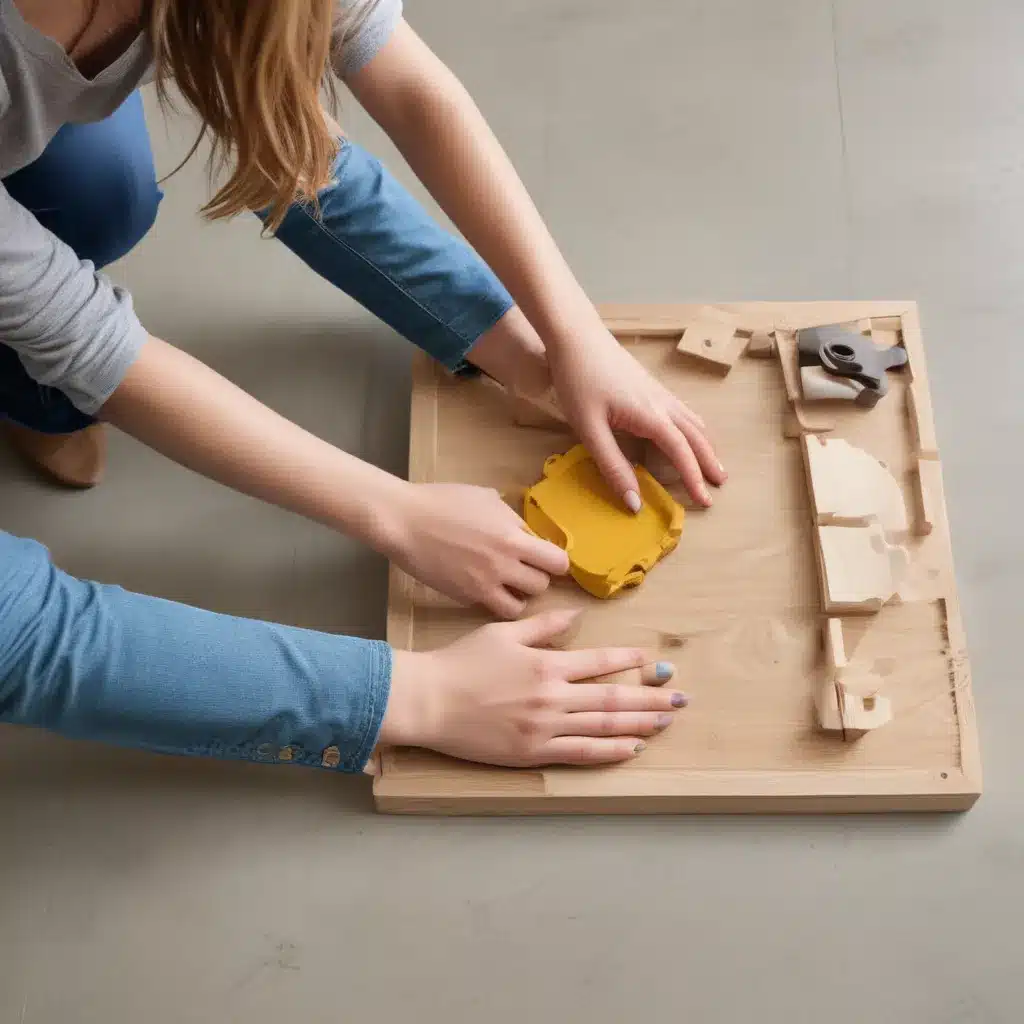
Think of it like a giant, ever-changing puzzle – one where the pieces can be endlessly rearranged to create new and exciting compositions. Maybe today you’re feeling the need for a more intimate, cozy living room layout. Tomorrow, you might crave a more open, airy configuration to accommodate a lively gathering of friends and family. The beauty is that with the right adaptable pieces, you have the freedom to make those changes on a whim.
And let’s not forget the sheer joy and creativity that can come from embracing this flexible mindset. When you’re not bound by rigid notions of how a space “should” look, you open yourself up to all kinds of unexpected discoveries and delightful surprises. Who knows – that old dresser you were about to donate might just become the perfect media console with a little bit of imagination and elbow grease.
The Future of Adaptable Design: Trends and Innovations
As someone who’s been in the building and renovation business for over a decade, I can say with certainty that the demand for adaptable, flexible living solutions is only going to continue to grow. In fact, I’d argue that the ability to create spaces that can morph and evolve alongside our changing needs is going to be one of the defining characteristics of 21st-century home design.
And the good news is that the design world is rising to the challenge, with a steady stream of innovative new products and concepts that push the boundaries of what’s possible. Just take a look at the latest wave of transformable furniture – pieces that can seamlessly transition between different configurations and functions with the mere push of a button or the pull of a lever.
I’m particularly excited about the integration of smart home technology into adaptable design. Imagine a living room that can automatically adjust the lighting, temperature, and even the furniture layout to suit your mood and activity. Or a kitchen island that can expand and contract at the touch of a screen, providing extra counter space when you need it and seamlessly retracting when you don’t.
And let’s not forget about the role that sustainable, eco-friendly materials are going to play in the future of adaptable design. As we become more conscious of our environmental impact, I expect to see a surge in furnishings and design elements crafted from renewable, repurposed, and easily-customizable resources. After all, what could be more adaptable than a piece of furniture that can be easily disassembled, repaired, or even completely transformed with a fresh coat of paint or a new upholstery job?
The possibilities are truly endless, and I can’t wait to see what the next generation of designers and innovators have in store. One thing’s for sure – the days of static, one-size-fits-all living spaces are quickly coming to an end. The future is all about flexibility, customization, and the ability to mold our surroundings to fit our ever-changing needs and lifestyles.
Conclusion: Embracing the Adaptable Lifestyle
So there you have it – my deep dive into the world of adaptable design and how it can transform the way we approach our living spaces. From multi-functional furniture to modular systems, the key is to embrace the flexibility and customization that these innovative solutions provide.
But at the end of the day, adaptable design is about more than just the physical pieces that fill our homes. It’s about cultivating a mindset that celebrates change, encourages experimentation, and empowers us to mold our surroundings to suit our evolving needs and preferences.
After all, our lives are constantly in flux, and our homes should be able to keep up. So why settle for static, one-size-fits-all living when you can create a space that’s as dynamic and adaptable as you are? It’s time to let go of those rigid notions of how a “proper” home should look and function, and instead, embrace the endless possibilities that adaptable design has to offer.
Who knows – with the right mindset and the right furnishings, your living room could transform into a cozy home office one day and a sprawling entertainment hub the next. The only limit is your imagination. So what are you waiting for? It’s time to get creative, get flexible, and start building the adaptable home of your dreams.


