
Preparing for Life’s Unexpected Twists and Turns
Ah, the bathroom – that sanctuary where we start and end our days, rejuvenating our bodies and minds. But what happens when our needs and abilities change over time? As we grow older, the once-simple task of bathing can become a daunting challenge. That’s where the concept of “aging in place” comes into play – designing our homes, and specifically our bathrooms, to support us through every stage of life.
You see, I used to think that planning for accessibility in the bathroom was only for those who were already dealing with mobility issues. Boy, was I wrong. The truth is, anyone can experience a fall, injury, or health condition that could make navigating a standard bathroom a real struggle. And trust me, I learned this the hard way.
A few years back, I was pregnant with my first child when I took a tumble while stepping out of the shower. Luckily, I emerged unscathed, but that scare was a real wake-up call. It made me realize that even the most able-bodied among us are just one slip away from needing a bathroom designed with accessibility in mind.
Designing for the Future, Today
That’s why, when my husband and I decided to embark on a major bathroom renovation, we knew we had to approach it with aging in place principles in mind. We wanted a space that would not only meet our current needs but also adapt seamlessly as our lives inevitably changed over time.
Consulting with our local bathroom fitters, we learned that the key to creating an accessible yet stylish bathroom lies in the details. From widening doorways and swapping out knobs for lever handles, to installing strategically placed grab bars and curbless showers – the possibilities for blending form and function are endless.
One of the biggest challenges we faced was balancing our desire for a luxurious, spa-like retreat with the practical needs of aging in place. After all, who wants to feel like they’re living in a hospital? But with a little creativity and an open mind, we discovered that it’s entirely possible to design a bathroom that’s both beautiful and highly functional.
Navigating the Shower Dilemma
Perhaps the trickiest area to tackle was the shower. On the one hand, we wanted a spacious, walk-in enclosure that would be easy to access. But on the other, we didn’t want to sacrifice our beloved clawfoot tub, which had been a fixture in our home since the 1920s.
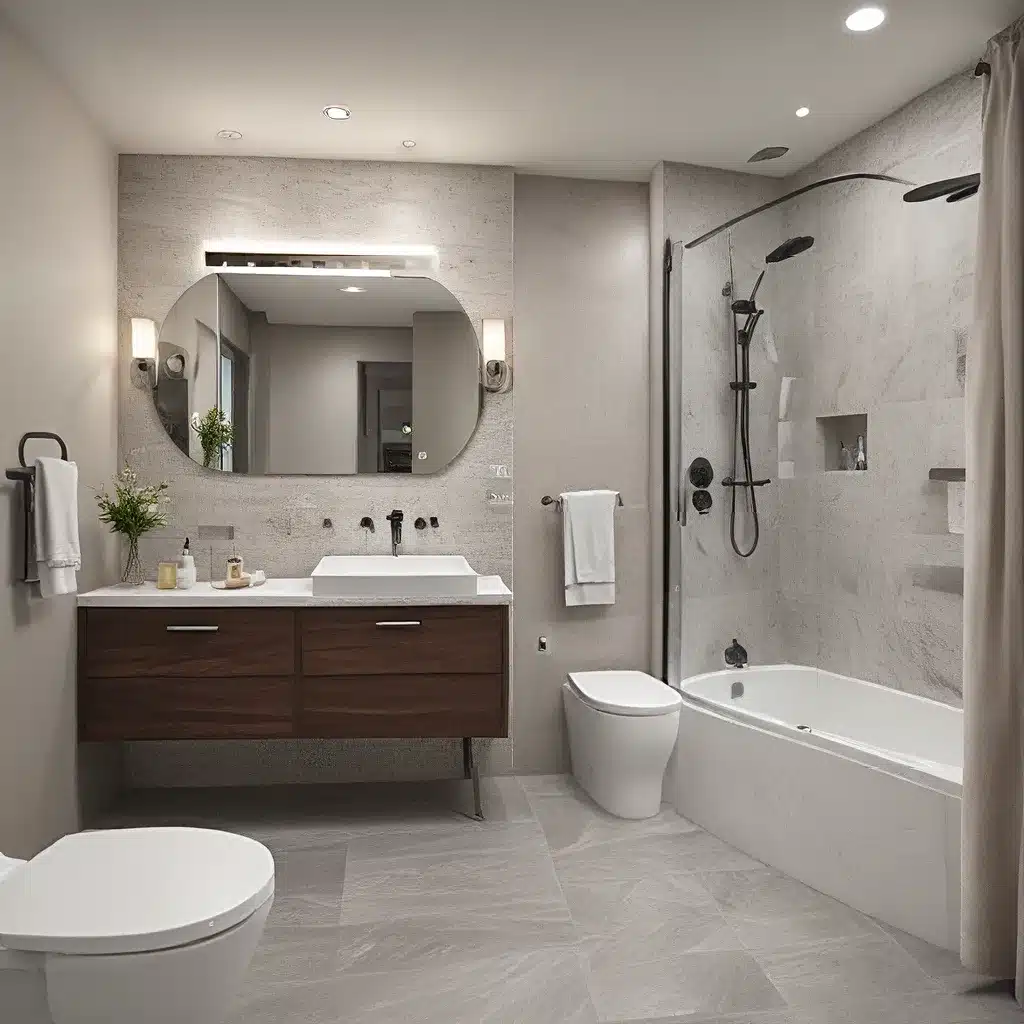
After much deliberation, we decided to go with a curbless shower design. By eliminating the step-up threshold, we not only made the shower more accessible but also created a seamless, spa-like aesthetic. And to ensure the tub didn’t go to waste, we opted for a sleek, low-profile model that was a breeze to step in and out of.
Of course, the shower itself required some thoughtful planning. We made sure to include a built-in bench, strategically placed grab bars, and an adjustable hand-held showerhead – all elements that would allow us to bathe comfortably, whether standing or seated.
Lighting the Way
Lighting is another crucial consideration when designing an aging-in-place bathroom. As we get older, our eyesight tends to diminish, making it essential to have ample, well-placed illumination. We decided on a combination of vanity sconces, recessed ceiling lights, and LED strip lighting under the vanity – a setup that not only looks stunning but also ensures we can see every nook and cranny, no matter the time of day.
Dimmers were a must-have, too, as they allow us to adjust the brightness to suit our needs and preferences. Sometimes, we might want the lights blazing bright for a energizing morning routine, while other times, a softer glow is perfect for a relaxing soak in the tub.
The Power of Contrast
Another trick we learned from our bathroom fitters? Leveraging high-contrast finishes to help us navigate the space more easily. By pairing our dark, wood-look tile floors with crisp white baseboards, for instance, the transition from horizontal to vertical surfaces is crystal clear – even as our vision becomes less sharp over time.
Similarly, we opted for a light-colored countertop to create a bold contrast against our charcoal-hued vanity. These small design decisions may seem inconsequential, but they can make a world of difference when it comes to safely maneuvering around the bathroom.
Embracing the Future, Whatever It May Hold
At the end of the day, our goal in redesigning our bathroom was to create a space that would support us through every stage of life. We didn’t want to dwell on the prospect of growing older or losing our independence – instead, we chose to focus on designing a sanctuary that would adapt to our changing needs with grace and style.
Sure, we may not know exactly what the future holds. But by incorporating aging in place principles into our bathroom renovation, we can rest assured that we’ll be able to remain in our beloved home for years to come, no matter what life throws our way.
After all, who knows? Maybe one day, I’ll be chasing after grandkids in this very bathroom, laughing at the memory of my pregnancy scare. Or perhaps I’ll be leisurely enjoying my golden years, grateful for the foresight that went into creating this accessible oasis. Either way, I’m confident that our bathroom will continue to serve us well, evolving right alongside us.
So, if you’re embarking on a bathroom renovation of your own, I encourage you to think beyond just your current needs. Embrace the possibilities of aging in place, and design a space that will truly stand the test of time. After all, the bathroom is the heart of the home – why not make it a sanctuary for a lifetime?


