
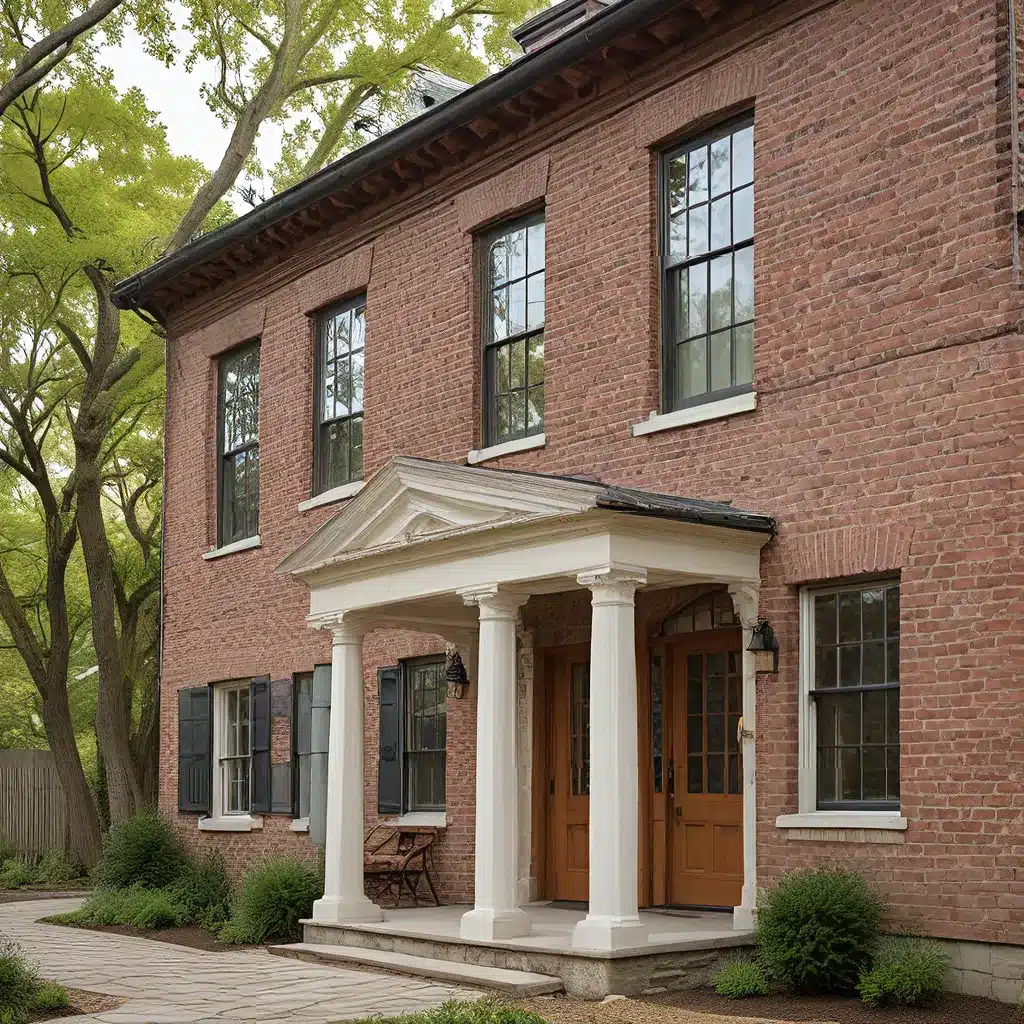
Embracing the Charm and Challenge of Historic Homes
As I strolled through the charming streets of Westport, Connecticut, I couldn’t help but be captivated by the historic homes that lined the neighborhood. The stately Greek Revival, the grand Victorian mansions – each one a testament to the rich architectural heritage of New England. And when I stumbled upon the 1800s home that actress and lifestyle blogger Eva Amurri had renovated, I knew I had to uncover her secrets for blending old and new.
You see, historic homes carry with them a certain allure – a tangible connection to the past that can make renovating them both a joy and a challenge. On one hand, you have the opportunity to preserve the unique character and craftsmanship that defined an era. But on the other, you face the daunting task of seamlessly integrating modern comforts and conveniences without sacrificing that precious historical charm.
It’s a delicate balance, to be sure. But as I dove deeper into Eva’s renovation journey, I discovered strategies that can help any homeowner tackle this rewarding endeavor. So, grab a cup of coffee and let’s explore how to breathe new life into your historic home while honoring its timeless beauty.
Establishing a Vision: Preserving the Past, Embracing the Future
When Eva first laid eyes on her 1800s Greek Revival home, she was smitten. “We loved it from the second we saw it,” she explained. But she also recognized that the home’s layout and lack of grandeur didn’t quite live up to its historic pedigree.
This is a common challenge for those who take on historic home renovations. It’s easy to get swept up by the romance of a bygone era, but the reality is that these homes often require significant work to make them livable for modern families. The key is to strike a careful balance between preserving the past and infusing the space with contemporary functionality and style.
For Eva, that meant tackling both interior and exterior renovations. On the inside, she wanted to open up the floor plan, brighten the spaces, and create a seamless flow between the different areas of the home. On the outside, she envisioned enhancing the home’s historic charm through strategic landscaping and the use of timeless materials.
As experts in historic home renovation often advise, the first step is to clearly define your vision. What aspects of the home’s history do you want to preserve? Where can you incorporate modern comforts and conveniences? By aligning your priorities from the outset, you’ll be better equipped to navigate the inevitable challenges that arise during the renovation process.
Blending Old and New: Striking the Perfect Balance
With her vision in place, Eva set out to transform her historic home, carefully weaving together the old and the new. One of her first moves was to open up the floor plan by knocking down a wall between the kitchen and family room. This not only created a more spacious and inviting layout, but it also required some creative problem-solving.
“During the demolition, they discovered the wall was load-bearing and also had a portion of plumbing and electrical that needed to be redirected,” Eva explained. But with the installation of a strategic steel beam, the home was opened up in a way that seamlessly blended the old structure with new design elements.
This approach of preserving historical features while judiciously incorporating modern upgrades is key to successful historic home renovations. As experts in Boston’s historic home renovation scene suggest, it’s all about finding the right balance.
For example, Eva retained many of the home’s original doors and hardware, honoring the authentic craftsmanship of the era. But she brightened the interior by painting the walls white and whitewashing the floors, creating a clean, uniform look that complemented the home’s historic bones.
Outside, Eva’s renovation choices echoed this harmonious blend of old and new. She turned to Woodbury Gray granite for the outdoor elements, from the thermal pavers leading to the front entrance to the pattern pavers and steps in the backyard patio area.
“I thought it was so cool to be able to use stone in the landscaping that could have been sourced around the time the house was built,” Eva mused. “It felt so holistic to the design of the house and to the commitment I feel to mixing old and new moving forward.”
Unearthing Hidden Gems: Embracing the Unexpected
One of the joys of renovating a historic home is the thrill of discovering unexpected treasures hidden within its walls. And Eva’s project was no exception. During the kitchen renovation, her team uncovered a set of old keys tucked away in the back of an original oven, next to the fireplace.
“One of the most fun things about buying a historic home are the things you can find in little nooks and crannies,” Eva shared. Instead of discarding the keys, she had them framed and incorporated into the home’s decor, adding a unique touch that celebrated the property’s storied past.
But the real jackpot came when the family room floor was ripped up, revealing a trove of 300-year-old floorboards. “Everyone got so excited,” Eva recalled, including her contractor and crew. While the wood’s quality ultimately made it unsuitable for reuse as flooring, Eva is determined to find another way to showcase this remarkable piece of history within her home.
These serendipitous discoveries are a hallmark of historic home renovations, and they can infuse the process with a sense of adventure and delight. By embracing the unexpected, homeowners can uncover the hidden stories that lie within the walls and floorboards, adding depth and character to their homes.
Striking a Delicate Balance: Navigating the Challenges
Of course, with the charm and allure of historic homes come a unique set of challenges. Eva and her team encountered their fair share of obstacles during the renovation process, from load-bearing walls to plumbing and electrical issues.
One of the thorniest challenges was ensuring that the home’s historic elements were preserved while also incorporating the modern features and amenities that today’s families demand. As home renovation experts often caution, this can be a delicate balancing act.
For Eva, finding the right materials was crucial. By opting for Woodbury Gray granite for the outdoor elements, she was able to create a seamless transition between the home’s historic charm and her vision for a more contemporary, family-friendly living space.
But it wasn’t just about the materials – Eva also had to grapple with the practical realities of renovating an older home. Outdated wiring, aging infrastructure, and structural quirks all had to be addressed, often requiring ingenious solutions and a healthy dose of patience.
As I listened to Eva’s story, I couldn’t help but admire her perseverance and dedication. Renovating a historic home is no easy feat, but by maintaining a clear vision, embracing the unexpected, and being willing to tackle the challenges head-on, she was able to transform her family’s 1800s Greek Revival into a stunning, modern sanctuary that still pays homage to its rich past.
Conclusion: Honoring History, Embracing the Future
As I bid farewell to Eva’s home, I couldn’t help but feel a renewed appreciation for the beauty and complexity of historic home renovations. It’s a delicate dance, to be sure, but one that can yield incredibly rewarding results when executed with care, creativity, and a deep respect for the past.
Whether you’re the proud owner of a stately Victorian or a classic New England farmhouse, the keys to a successful historic home renovation lie in establishing a clear vision, striking the right balance between old and new, and embracing the unexpected joys and challenges that come with the territory.
So, as you embark on your own historic home renovation journey, remember to let the home’s unique character guide you. Uncover its hidden stories, celebrate its timeless architectural elements, and weave in modern comforts and conveniences in a way that seamlessly honors the past while ushering in a bright new future. With a little creativity and a lot of passion, you too can breathe new life into your historic gem, blending the old and the new in a way that captures the true essence of your home.


