
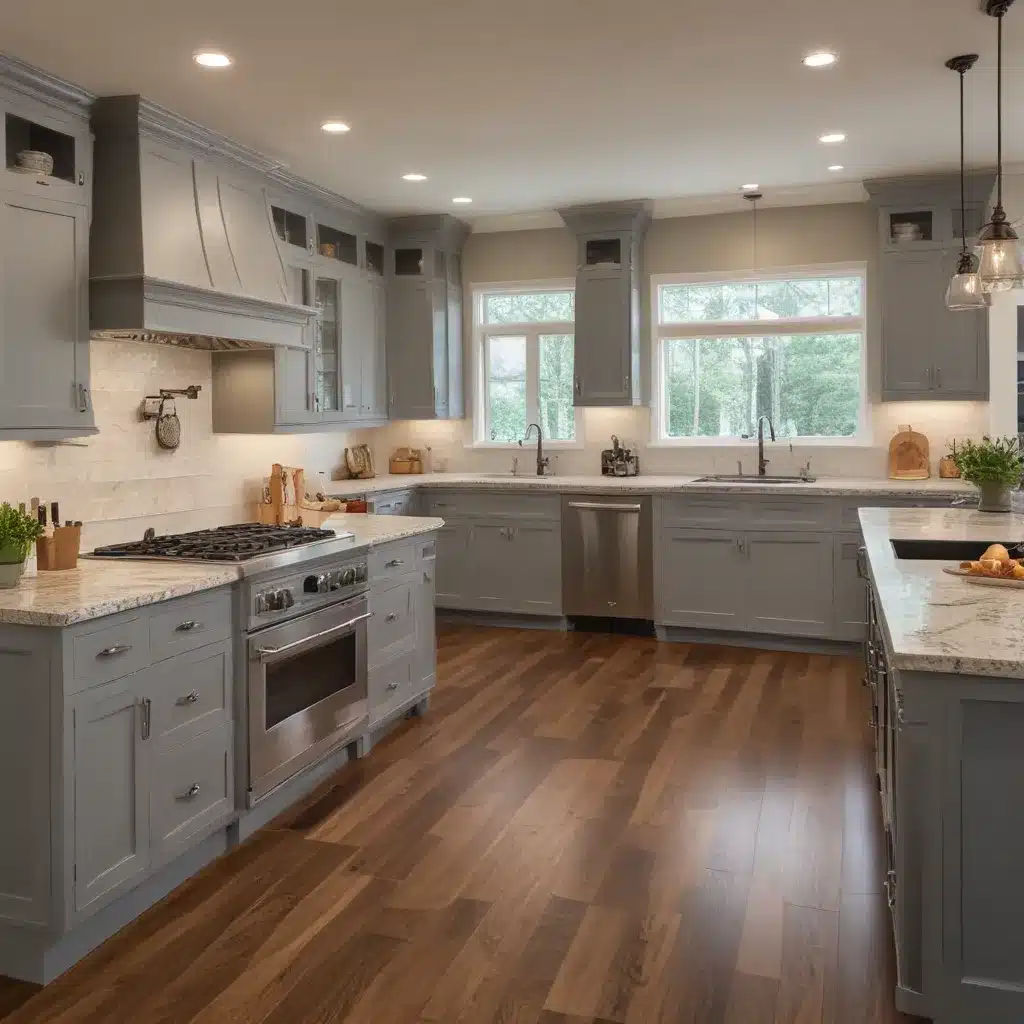
The Kitchen: The Heart of the Home
Ah, the kitchen – the beating heart of every home. This sacred space is where we gather, create, and nourish ourselves and our loved ones. But have you ever stood in the middle of your kitchen, scratching your head, wondering how to make the most of the available space? Fear not, my friends, for I, your resident kitchen layout guru, am here to guide you on your journey to kitchen bliss.
Let’s start with a simple question: what does your dream kitchen look like? Is it a sprawling, open-concept oasis with plenty of counter space and a cozy breakfast nook? Or perhaps a more intimate, galley-style layout that maximizes efficiency and flow? Regardless of your preference, the key to achieving the perfect kitchen lies in striking the delicate balance between form and function.
In my years of working with clients in the Aberdeen, UK area, I’ve seen it all – from cramped, cluttered kitchens that make you want to throw in the towel, to expansive, meticulously planned spaces that ooze sophistication and practicality. And let me tell you, the transformation can be nothing short of magical.
Assessing Your Space
Before we dive into the nitty-gritty of kitchen layouts, it’s essential to take a good, hard look at your existing space. What are the dimensions of your kitchen? What kind of natural light does it receive? Are there any architectural features or structural elements that you need to work around?
The answers to these questions will be the foundation upon which we build your dream kitchen. Think of it like a puzzle – we need to understand the pieces we’re working with before we can start assembling the final masterpiece.
One of the first things I always recommend to my clients is to create a detailed floor plan of their kitchen. This not only helps us visualize the space, but it also allows us to play around with different layout options without actually moving any heavy appliances or cabinetry.
So, grab a measuring tape, a pencil, and a notepad, and let’s get to work! Measure the length, width, and height of your kitchen, making sure to note any doors, windows, or other fixed elements. Then, sketch out a rough floor plan, paying close attention to the placement of your sink, stove, and refrigerator. This will be our starting point as we explore the various kitchen layout options.
Evaluating Kitchen Layout Options
Now that we have a solid understanding of your kitchen’s dimensions and existing features, it’s time to start considering the different layout options. Each one has its own unique advantages and drawbacks, so it’s important to weigh them carefully before making a decision.
The Galley Layout
The galley layout, also known as the “corridor” or “parallel” layout, is a classic choice for smaller kitchens. This design features two parallel runs of cabinetry and countertops, with a walkway in between. The beauty of the galley layout lies in its efficiency – everything is within easy reach, and the linear design can make the most of a narrow space.
One of the key benefits of the galley layout is its ability to maximize workflow. By positioning the sink, stove, and refrigerator in a straight line, you can create a seamless work triangle that minimizes the number of steps you need to take during meal preparation. This can be a game-changer for busy home cooks who value convenience and efficiency.
However, the galley layout does have its drawbacks. If the walkway is too narrow, it can feel cramped and claustrophobic. And if you have a larger kitchen, the linear design might not be the best use of the available space. In these cases, you might want to consider a more open-concept layout.
The U-Shaped Layout
The U-shaped layout is a popular choice for medium-sized kitchens, as it provides ample counter space and storage without feeling overwhelming. This design features three walls of cabinetry and countertops, with the fourth side open for access and traffic flow.
One of the biggest advantages of the U-shaped layout is the way it creates a natural work triangle. The sink, stove, and refrigerator are all within easy reach, making meal preparation a breeze. And with the additional counter space along the three walls, you’ll have plenty of room for food prep, small appliances, and even a casual dining area.
Another perk of the U-shaped layout is its versatility. Depending on the size of your kitchen, you can play around with the depth and height of the cabinets to create a custom look and feel. Plus, the open fourth side can be used to incorporate a breakfast bar or a cozy seating area.
However, the U-shaped layout does require a bit more square footage than the galley, so it might not be the best fit for truly small kitchens. And if you have a larger kitchen, the U-shape might feel a bit cramped and enclosed.
The L-Shaped Layout
The L-shaped layout is a fantastic option for kitchens of all sizes, from cozy galley-style spaces to expansive open-concept designs. This layout features two perpendicular runs of cabinetry and countertops, creating an “L” shape that can be adapted to fit a variety of floor plans.
One of the key advantages of the L-shaped layout is its versatility. The open fourth side allows for easy traffic flow and can be used to incorporate a dining area, a breakfast bar, or even a cozy seating nook. And because the cabinets and countertops are arranged in a corner, you can maximize the available storage and prep space.
Another benefit of the L-shaped layout is its ability to create a natural work triangle. By positioning the sink, stove, and refrigerator along the two perpendicular runs, you can ensure that your most-used appliances and work zones are within easy reach.
However, the L-shaped layout does require a bit more square footage than the galley, and it might not be the best fit for truly small kitchens. And if you have a larger kitchen, you might want to consider a more open-concept layout, such as the G-shaped or the island layout.
The G-Shaped Layout
The G-shaped layout is a hybrid of the U-shaped and L-shaped layouts, featuring an additional “leg” that extends from one of the sides. This layout is perfect for larger kitchens, as it provides ample counter space and storage while still maintaining a sense of openness and flow.
One of the key benefits of the G-shaped layout is the way it creates a dedicated work zone. By positioning the sink, stove, and refrigerator along the three perpendicular runs, you can establish a well-defined “cooking” area that is separate from the rest of the kitchen. This can be especially helpful for home cooks who like to have a clear separation between prep work and socializing.
Another advantage of the G-shaped layout is its ability to incorporate a large, central island. This can be a game-changer for families who love to entertain, as it provides additional counter space, seating, and even storage. And because the island is surrounded by the three runs of cabinetry and countertops, it feels like a natural extension of the overall kitchen design.
However, the G-shaped layout does require a significant amount of square footage, so it might not be the best fit for smaller kitchens. And if you’re not a fan of the “closed-off” feel of the U-shaped layout, the G-shape might not be the ideal choice for you.
The Island Layout
The island layout is a popular choice for open-concept kitchens, as it provides a seamless transition between the cooking and living spaces. This design features a centrally located island, surrounded by cabinetry and countertops on one or more sides.
One of the key advantages of the island layout is the way it fosters a sense of community and interaction. By positioning the island at the heart of the kitchen, you can create a natural gathering spot for friends and family. Whether it’s used for meal prep, casual dining, or simple conversation, the island can be the centerpiece of your kitchen.
Another benefit of the island layout is its flexibility. Depending on the size and shape of your kitchen, you can customize the island to suit your needs. For example, you could incorporate a sink, a cooktop, or even a wine fridge into the island design. And if you have the space, you can even add seating to create a cozy breakfast bar.
However, the island layout does require a significant amount of square footage, so it might not be the best fit for smaller kitchens. And if you’re not a fan of the “open-concept” feel, you might want to consider a more traditional layout, such as the U-shaped or the L-shaped.
Choosing the Right Layout for Your Needs
Now that we’ve explored the various kitchen layout options, it’s time to start thinking about which one might be the best fit for your needs and preferences. As you weigh the pros and cons of each design, consider the following factors:
-
Size of your kitchen: If you have a smaller space to work with, a galley or L-shaped layout might be the way to go. If you have a larger kitchen, you might want to explore the U-shaped, G-shaped, or island layouts.
-
Traffic flow and workflow: Think about how you move around your kitchen and where your most-used appliances and prep areas are located. The layout should make it easy to move between these zones without feeling cramped or cluttered.
-
Storage and counter space: Consider your current storage and counter space needs, and think about how the layout can help you maximize these areas. The U-shaped and G-shaped layouts, for example, tend to offer the most counter space.
-
Entertaining and socializing: If you love to host friends and family, an island layout or an open-concept design might be the way to go. These layouts encourage interaction and create a natural gathering spot.
-
Personal style and aesthetic: Your kitchen layout should not only be functional, but it should also reflect your personal style and aesthetic preferences. Whether you prefer a sleek, modern look or a cozy, farmhouse feel, the layout you choose can help set the tone.
Remember, there’s no one-size-fits-all solution when it comes to kitchen design. The key is to find the layout that best meets your unique needs and preferences. And if you’re still feeling a bit overwhelmed, don’t hesitate to reach out to a professional kitchen designer or a building and renovation company like ABC Home for expert guidance and support.
Bringing Your Dream Kitchen to Life
Alright, now that we’ve covered the various kitchen layout options and the factors to consider, it’s time to start putting the pieces together. Whether you’re embarking on a full-scale kitchen renovation or simply looking to optimize the space you have, the right layout can make all the difference.
As you begin the design process, I encourage you to think about not just the functional aspects of your kitchen, but also the aesthetic and emotional elements. After all, this is the heart of your home – a space where memories are made, meals are shared, and friends and family gather.
So, what does your dream kitchen look like? Is it a cozy, galley-style space with a charming breakfast nook? Or perhaps a sprawling, open-concept oasis with a show-stopping island? Whatever your vision, I’m here to help you bring it to life.
At ABC Home, we pride ourselves on our ability to transform even the most challenging spaces into functional, stylish, and truly remarkable kitchens. From initial design consultations to the final touches, we’ll work closely with you to ensure that your kitchen not only meets your practical needs, but also reflects your unique personality and lifestyle.
So, what are you waiting for? Let’s get started on your kitchen renovation journey! Whether you’re in Aberdeen or the surrounding area, our team of experts is ready to help you create the kitchen of your dreams. Just give us a call or visit our website to schedule a consultation, and let’s start building something amazing together.


