
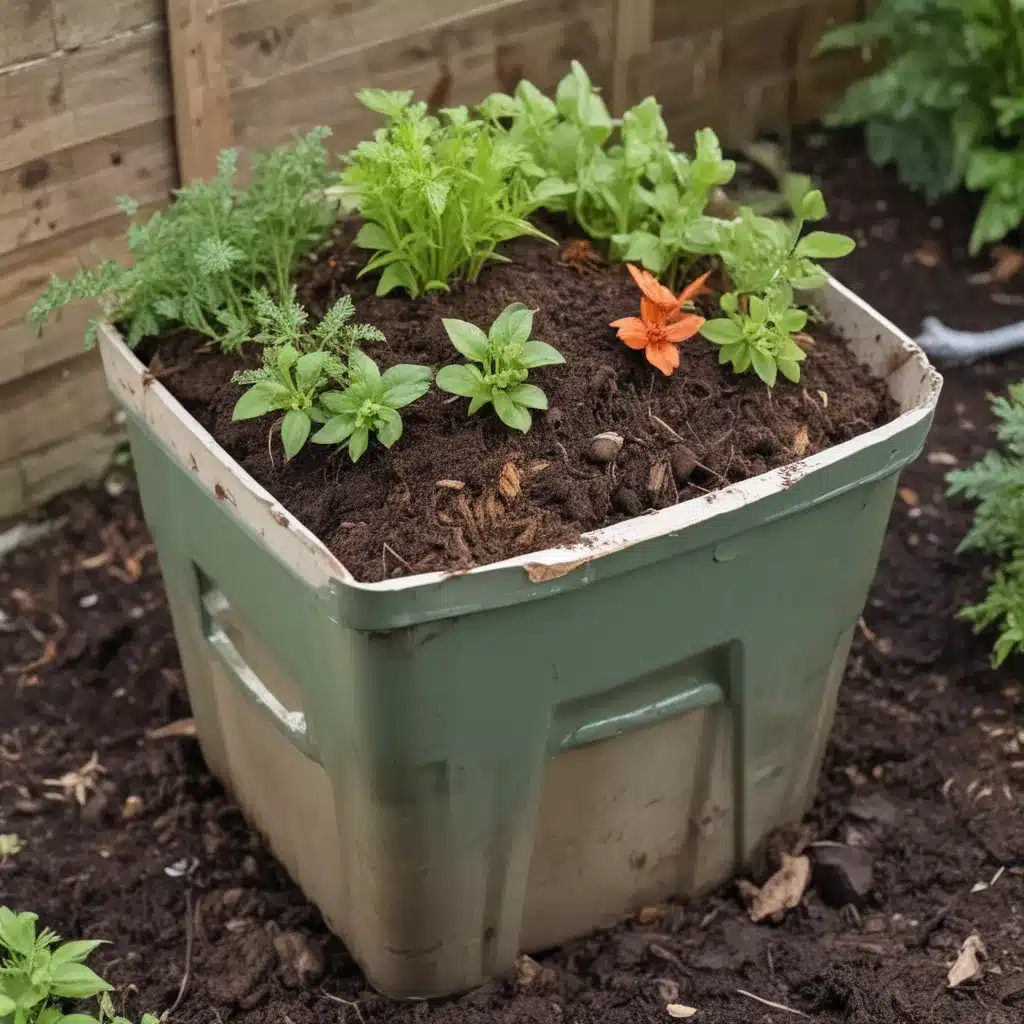
The Humble Compost Bin: A Gardener’s Secret Weapon
Ah, the humble compost bin – the unsung hero of the gardening world. Let me tell you, when I first started dabbling in the art of gardening, I had no idea just how powerful this little contraption could be. It was like discovering a hidden treasure trove, a veritable fountain of nutrient-rich goodness that could transform my backyard into a lush, thriving oasis.
You see, I used to be one of those people who would dutifully cart my kitchen scraps off to the curb, blissfully unaware of the missed opportunity. But then, one fateful day, I stumbled upon an article that opened my eyes to the wonders of composting. It was like a lightbulb went off in my head, and suddenly, I couldn’t wait to get my hands dirty.
So, I did what any self-respecting gardener would do – I rushed out and acquired myself a shiny new compost bin. Now, let me tell you, it wasn’t love at first sight. I’ll admit, there was a bit of a learning curve involved. But once I got the hang of it, I realized that this unassuming little bin was the key to unlocking a whole new world of lush, vibrant plants.
The Science Behind the Compost Pile
Now, I know what you’re thinking – “Composting? Sounds like a lot of work.” But let me assure you, it’s not as complicated as it might seem. In fact, the science behind it is actually quite fascinating.
You see, when you toss your kitchen scraps and yard waste into that compost bin, you’re creating a veritable feast for a whole community of microorganisms. These little guys are like the unsung heroes of the composting world, working tirelessly to break down the organic matter and turn it into a nutrient-rich soil amendment that your plants will absolutely adore.
The key is to strike the right balance between carbon-rich materials (like dried leaves or shredded newspaper) and nitrogen-rich materials (like fruit and vegetable scraps). This creates the perfect environment for those hungry microbes to do their thing. And let me tell you, when they’re done, the resulting compost is like liquid gold for your garden.
The Benefits of Composting: Unleashing the Power of Waste
But the benefits of composting go far beyond just feeding your plants. In fact, it’s a true all-star when it comes to sustainable living. Think about it – instead of sending all those food scraps and yard waste to the landfill, where they’d just take up space and release methane (a potent greenhouse gas), you’re turning them into a valuable resource.
And the best part? It’s not just good for the environment, it’s good for your wallet, too. By creating your own nutrient-rich compost, you can say goodbye to those expensive bags of fertilizer and hello to lush, healthy plants that practically grow themselves.
But don’t just take my word for it. Let’s dive into the nitty-gritty of composting and explore all the ways it can transform your gardening game.
Composting 101: Building the Perfect Pile
Alright, now that you’re convinced of the wonders of composting, let’s get down to the nitty-gritty. How do you actually go about building the perfect compost pile?
First and foremost, you’ll need a compost bin or a designated area in your yard. These can range from simple DIY contraptions to fancy, store-bought models, but the key is to make sure it’s well-ventilated and has a lid to keep the critters out.
Next, you’ll want to start layering your materials. Remember that balance I mentioned earlier between carbon-rich and nitrogen-rich materials? That’s the secret to composting success. Think of it like baking a cake – you need the right ingredients in the right proportions to get the perfect result.
So, start with a layer of brown, carbon-rich materials like dried leaves, shredded newspaper, or straw. Then, add a layer of green, nitrogen-rich materials like fruit and vegetable scraps, coffee grounds, or grass clippings. Keep alternating these layers, making sure to mix them together well.
And don’t forget the moisture! Your compost pile should be about as damp as a wrung-out sponge. If it’s too dry, the microbes won’t be able to work their magic, and if it’s too wet, you might end up with a smelly, anaerobic mess.
Troubleshooting Tips for the Perfect Compost
Now, I know what you’re thinking – “This all sounds great, but what if something goes wrong?” Well, fear not, my fellow gardening enthusiasts. Composting may seem like a finicky process, but with a few simple troubleshooting tips, you’ll be well on your way to composting success.
One of the most common issues people run into is a stinky compost pile. If your compost starts to emit that rotten egg smell, it’s a sign that you’ve got too much moisture and not enough airflow. The solution? Simply turn the pile with a garden fork to incorporate more air, and add some dry materials like shredded paper or leaves to soak up the excess moisture.
Another common problem is a sluggish compost pile that just doesn’t seem to be breaking down. In this case, you might need to add a bit more nitrogen-rich material, like fresh grass clippings or animal manure, to give the microbes a boost.
And let’s not forget about pests! If you start noticing critters like raccoons or rodents snooping around your compost bin, it’s time to take action. Make sure your bin has a tight-fitting lid, and consider adding some deterrents like cayenne pepper or coffee grounds to keep those pesky pests at bay.
Real-Life Composting Success Stories
Now, I know what you’re thinking – “This all sounds great, but does it really work?” Well, let me tell you, the proof is in the pudding (or in this case, the compost).
Take my neighbor, for example. She was a self-proclaimed “black thumb” who couldn’t get anything to grow, no matter how hard she tried. But once she started composting, her garden was transformed. Those lush, vibrant plants she had always envied? They were hers, all thanks to the power of her trusty compost bin.
Or how about my friend, the urban gardener? She lives in a tiny apartment with just a small balcony, but that didn’t stop her from creating a thriving little oasis. Her secret? You guessed it – composting. She’s managed to turn her food scraps and yard trimmings into a nutrient-rich soil amendment that’s the envy of all her friends.
And then there’s the case of the local community garden. They were struggling to keep their plants healthy and productive, until they started incorporating compost into their soil. Now, their veggies and herbs are practically bursting with flavor, and they’ve even started selling their surplus produce to the local farmers’ market.
Conclusion: Embrace the Compost Bin, Embrace the Future
So, there you have it, folks – the ins and outs of composting, straight from the mouth of a dedicated gardener. I know it might seem like a lot of work, but trust me, the rewards are more than worth it.
Not only will you be feeding your plants with nutrient-rich, homemade compost, but you’ll also be doing your part to reduce waste and protect the environment. It’s a win-win situation, if you ask me.
So, what are you waiting for? Grab a compost bin, start collecting those kitchen scraps, and get ready to watch your garden transform before your very eyes. Trust me, your plants will thank you for it.
And if you’re in the Aberdeen area and need some help with your building or renovation projects, be sure to check out ABC Home. They’ve got a team of skilled professionals who can help you turn your dream home into a reality.


