
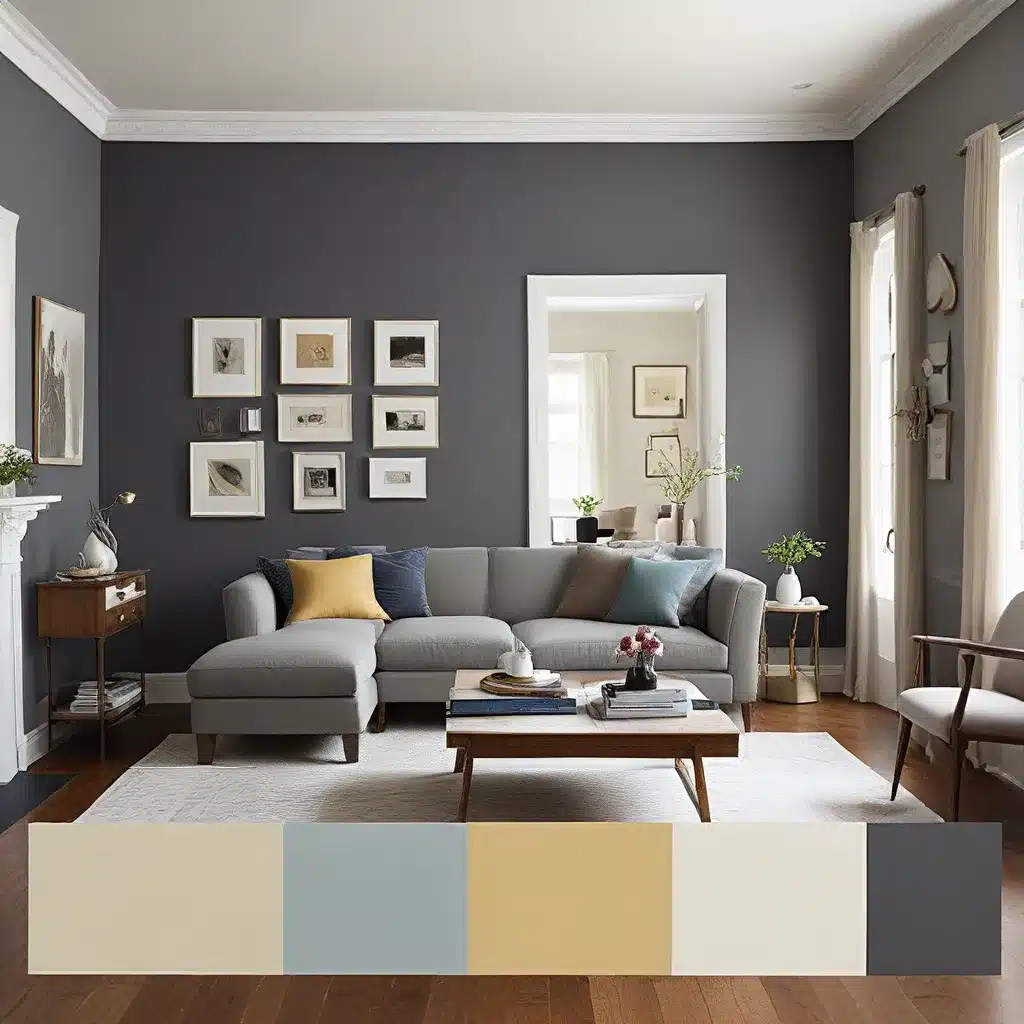
Uncovering the Art of Color Harmony
Ah, color – the very essence that breathes life into our homes. But let’s be honest, navigating the kaleidoscope of hues and finding that perfect palette can feel more like tiptoeing through a minefield than an artistic endeavor. Fear not, my friends! Today, we’re going to uncover the secrets to mastering room palette choices and embracing color with confidence.
You see, I used to be just like you – overwhelmed by the sheer number of paint swatches, unsure of how to blend tones without ending up with a garish mess. But then, I discovered the transformative power of understanding color theory. It was like someone had turned on the lights in my design world, and suddenly, the path to color harmony became crystal clear.
Demystifying Color Theory
Let’s start with the basics, shall we? The foundation of color theory lies in the color wheel – that iconic circular arrangement of hues that’s been the go-to guide for artists and designers for centuries. By understanding the relationships between colors, we can unlock the secrets to creating visually stunning palettes.
Bouquet Bootcamp explains it beautifully: “The color wheel is a visual representation of how colors relate to one another. It shows the primary colors (red, yellow, and blue), the secondary colors (orange, green, and purple), and the tertiary colors (the ones in between).”
But don’t let the technicalities scare you off. The true magic happens when you start to play with these relationships. For example, complementary colors – those sitting opposite each other on the wheel, like blue and orange or red and green – create a striking, eye-catching contrast. Analogous colors, on the other hand, are those sitting side by side, like blue and green or yellow and orange, which produce a harmonious, soothing palette.
Mastering these color relationships is the key to designing rooms that exude a sense of balance and sophistication. And the best part? It’s not rocket science – it’s just a matter of tapping into your inner artist and letting your creativity flow.
Painting a Picture of Personality
Now that we’ve got the color theory foundations down, let’s dive into the fun part: translating these principles into your personal spaces. After all, your home is a reflection of your unique style and personality, and the color palette you choose should capture that essence.
Think about it this way: your living room is like a blank canvas, and the colors you select are your paints. Do you want a vibrant, energetic space that will have your guests feeling like they’re at a modern art gallery? Or perhaps a cozy, earthy retreat that wraps you in a warm embrace the moment you step through the door?
The choice is yours, my friends. And the key is to approach it with intention. Start by considering the mood and atmosphere you want to create in each room. Are you going for a calming, serene vibe in the bedroom? Or a bold, stimulating feel in the home office? Once you’ve got that vision in mind, you can start to build your palette around it.
Remember, there’s no one-size-fits-all solution here. The beauty of color is that it’s highly personal. What might look stunning in my living room might fall flat in yours. The key is to experiment, explore, and trust your instincts. Don’t be afraid to step out of your comfort zone and try unexpected combinations – you never know what hidden gems you might uncover.
Bringing it all Together
Alright, so we’ve covered the foundations of color theory and the importance of capturing your personal style. Now, let’s talk about how to put it all together into a cohesive, harmonious design.
One of the best pieces of advice I can offer is to embrace the power of repetition. Repeating colors, textures, and patterns throughout a space helps to create a sense of visual unity and flow. It’s like weaving a tapestry – the more you introduce the same elements, the more the design starts to come together.
For example, let’s say you’ve fallen in love with a rich, jewel-toned palette of emerald greens and amethyst purples. Don’t just limit those colors to the walls – incorporate them into your soft furnishings, artwork, and even accents like throw pillows or vases. The more you can thread those hues throughout the room, the more polished and intentional the overall look will feel.
And don’t forget about the power of contrast. While repetition is key for creating harmony, a little bit of contrast can add depth, dimension, and visual interest to your space. Maybe you pair those jewel-toned walls with crisp, white trim or introduce a pop of metallic through a statement light fixture.
Richeson School of Art Gallery reminds us that “confident use of color” is essential for achieving “great landscape paintings.” The same principle applies to our homes – when you wield color with confidence, the results can be truly breathtaking.
Putting it all into Practice
Alright, now that we’ve covered the theory, it’s time to put it into practice. Let’s walk through a real-life example of how you can use color to transform a room.
Imagine you’ve got a blank slate – a plain, white-walled living room just begging for a makeover. Where do you start? Well, my friend, let’s channel our inner artists and get to work.
First, take a good look at the space and consider the mood you want to create. Maybe you’re going for a cozy, intimate vibe, perfect for curling up with a good book. In that case, you might want to lean into warm, earthy tones – think rich ochres, burnished golds, and deep, rusty reds.
Start by painting the walls a soothing terracotta shade – not too bright, but just enough to envelop the room in a cozy embrace. Then, layer in complementary hues through your furnishings and accents. Maybe a plush, velvet sofa in a burnished amber, or a pair of navy blue armchairs to add a touch of contrast.
Don’t forget the details! Bring in pops of warm metallic through a gleaming copper pendant light or a gilded mirror. And don’t be afraid to mix in natural textures, like a jute area rug or a macrame wall hanging, to add depth and warmth to the space.
The key here is to let your color palette guide the rest of the design decisions. Every element you introduce should work in harmony to create a cohesive, visually stunning room that reflects your personal style.
Embracing the Journey
Ah, the joy of color – it’s a never-ending adventure, filled with surprises and delights around every corner. And you know what? That’s exactly what makes it so much fun.
Sure, there might be a few bumps in the road as you navigate the world of color theory and palette selection. But trust me, the rewards are well worth the effort. When you finally land on that perfect combination of hues that makes your heart sing, it’s like discovering a hidden gem – a true testament to your creative prowess.
So, my dear friends, embrace the journey. Experiment, explore, and don’t be afraid to step outside your comfort zone. After all, the most memorable spaces are the ones that reflect the unique personalities of the people who inhabit them.
Remember, color is a powerful tool, and when wielded with confidence, it has the ability to transform any space into a true work of art. So, let’s dive in, get our hands dirty, and create something truly extraordinary. The color-filled world of interior design is waiting for you.


