
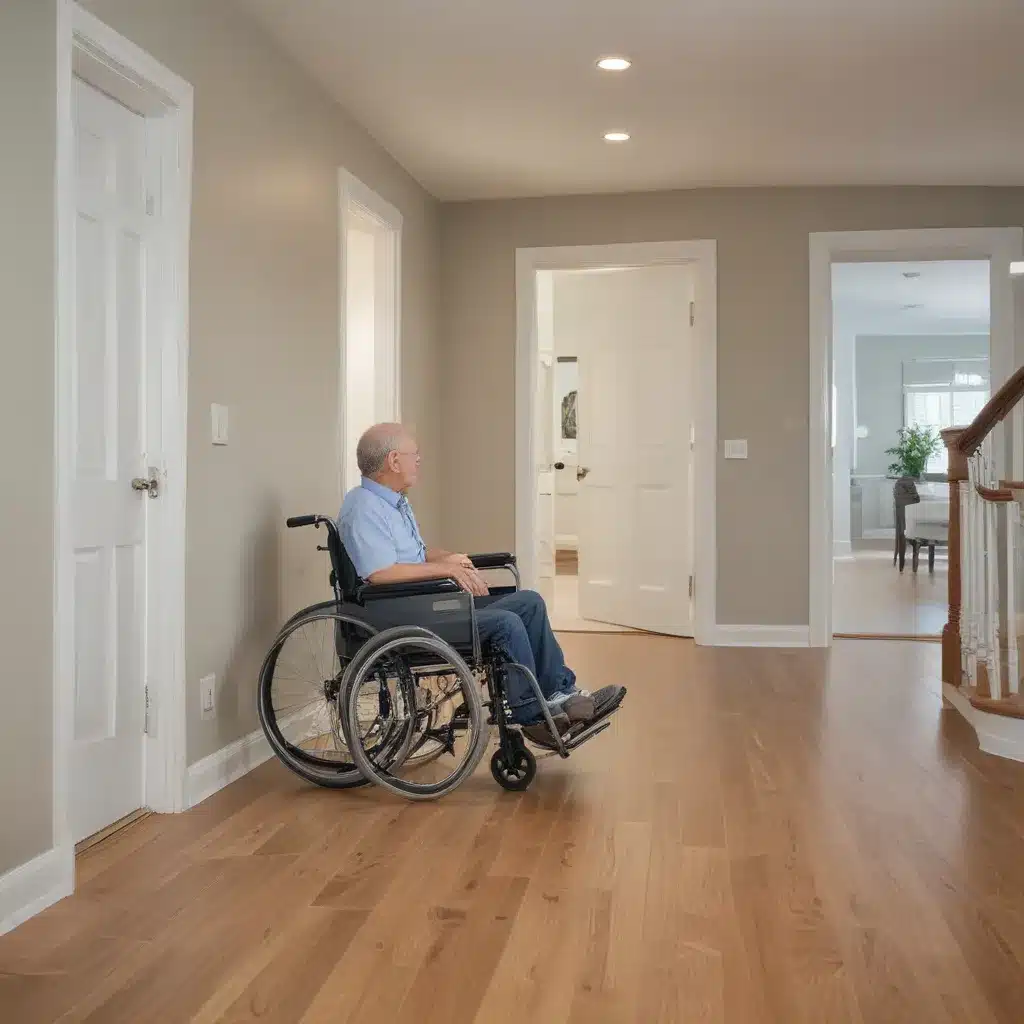
Introduction: The Accessibility Challenge
As the owner of a home renovation company in Aberdeen, UK, I’ve had the privilege of working on a wide range of projects. But one aspect that’s always been top of mind is ensuring our work complies with disability access rules. You see, I believe that a home should be a sanctuary for everyone, regardless of their physical abilities. That’s why I’m passionate about understanding and adhering to the relevant regulations.
Now, I know what you might be thinking – “Disability access rules? That sounds like a real headache!” And I get it, navigating the intricacies of legislation can be a daunting task. But trust me, it’s worth the effort. By making our homes more accessible, we’re not only upholding the law, but we’re also creating spaces that are truly inclusive and welcoming for all.
So, buckle up, because in this in-depth article, I’m going to take you on a journey through the world of disability access rules. We’ll explore the key regulations, dive into practical home modification strategies, and uncover some real-life case studies that’ll inspire you. By the end, you’ll be armed with the knowledge and confidence to tackle any accessibility challenge that comes your way. Let’s get started!
Understanding the Disability Discrimination Act (DDA)
At the heart of disability access rules in the UK is the Disability Discrimination Act (DDA). Enacted in 1995 and later updated in 2005, this landmark legislation is designed to protect the rights of individuals with disabilities. The DDA mandates that service providers, including those in the home renovation industry, must make “reasonable adjustments” to ensure their premises are accessible.
But what exactly does “reasonable adjustments” mean in the context of home modifications? Well, the DDA defines it as any changes that would enable a disabled person to access and use a service. This could range from installing a ramp or widening doorways to providing alternative formats of information or training staff on disability awareness.
The key is that these adjustments must be proportionate and practical, taking into account factors like the size and resources of the business. As a home renovation company, we need to carefully consider the unique needs of each client and find solutions that strike the right balance between accessibility and feasibility.
Navigating the Building Regulations: Part M
While the DDA provides the overarching legal framework, the specific technical requirements for accessible home design are outlined in the Building Regulations, specifically Part M. This section, titled “Access to and Use of Buildings,” sets out the standards that must be met when undertaking any home modification or new construction project.
Part M covers a wide range of considerations, from the dimensions of doorways and hallways to the placement of light switches and power sockets. It also addresses the needs of individuals with visual, hearing, and mobility impairments, ensuring that our homes cater to a diverse range of abilities.
As a responsible home renovation company, we make it a point to stay up-to-date with the latest updates to Part M. After all, the regulations are constantly evolving to keep pace with changing technologies and societal needs. By staying informed, we can provide our clients with the most informed and compliant solutions.
Practical Home Modification Strategies
Now that we’ve covered the legal framework, let’s dive into the nitty-gritty of home modifications. As a home renovation company, we’ve had the opportunity to tackle a wide range of accessibility challenges, and I’m eager to share some of our most effective strategies.
One of the key areas we focus on is mobility. This can involve installing ramps, widening doorways, and ensuring clear pathways throughout the home. We also pay close attention to the placement of light switches, power sockets, and other controls, making sure they’re within easy reach for individuals using wheelchairs or other mobility aids.
Another important consideration is visual and auditory accessibility. This might include improving lighting, adding high-contrast signage, or incorporating features like flashing doorbells or strobe fire alarms. We work closely with our clients to understand their specific needs and tailor our solutions accordingly.
And let’s not forget about the often-overlooked realm of bathroom accessibility. We’ve perfected the art of designing bathrooms that cater to the needs of individuals with physical disabilities, from installing grab bars and level-access showers to ensuring sufficient maneuvering space.
Of course, these are just a few examples of the home modification strategies we employ. The truth is, every project is unique, and we relish the challenge of finding creative, customized solutions that truly meet our clients’ needs.
Real-Life Case Studies: Inspiring Accessibility Transformations
As I’ve mentioned, one of the best ways to gain a deeper understanding of disability access rules and home modifications is to look at real-life case studies. And let me tell you, we’ve had the privilege of working on some truly inspiring projects over the years.
Take the case of the Smith family, for instance. When they first came to us, their beloved family home in Aberdeen was simply not equipped to meet the needs of their son, who had recently suffered a spinal cord injury. The stairs were a major obstacle, and the bathroom was entirely inaccessible.
But with some careful planning and a lot of elbow grease, we were able to transform their home into a true sanctuary. We installed a stairlift, widened doorways, and created a fully accessible bathroom complete with a roll-in shower and grab bars. The result? A comfortable, safe, and empowering living environment that allowed the Smith family to thrive.
Then there’s the story of the Jones family, who had been struggling with the challenges of their aging grandmother’s mobility issues. By working closely with them, we were able to devise a comprehensive home modification plan that included low-threshold entrances, adjustable-height countertops, and a state-of-the-art voice-controlled smart home system.
The look on their grandmother’s face when she was able to navigate her home with ease was truly priceless. It’s moments like these that remind me why I do what I do – to create spaces that truly enrich people’s lives, regardless of their physical abilities.
Conclusion: Embracing Inclusive Design
As I wrap up this in-depth exploration of disability access rules and home modifications, I can’t help but feel a sense of pride and purpose. You see, for me, this isn’t just about ticking boxes or following the letter of the law. It’s about creating a world where everyone, regardless of their physical abilities, can feel safe, comfortable, and empowered in their own homes.
And you know what? I believe that by embracing inclusive design principles, we’re not only fulfilling our legal obligations, but we’re also tapping into a vast and growing market. After all, the UK has an aging population, and more and more people are recognizing the importance of accessibility in their living spaces.
So, if you’re a home owner or a fellow renovation professional, I encourage you to dive headfirst into the world of disability access rules. It may seem daunting at first, but trust me, the rewards are immeasurable. Not only will you be making a tangible difference in people’s lives, but you’ll also be positioning your business for long-term success.
Who knows, maybe one day, we’ll look back and marvel at how far we’ve come. A world where accessibility is the norm, not the exception. A world where everyone can truly call their home a sanctuary. And we’ll know that we played a small, but vital, role in making that dream a reality.
So, what are you waiting for? Let’s get to work and create a more inclusive, accessible future, one home renovation at a time.


