
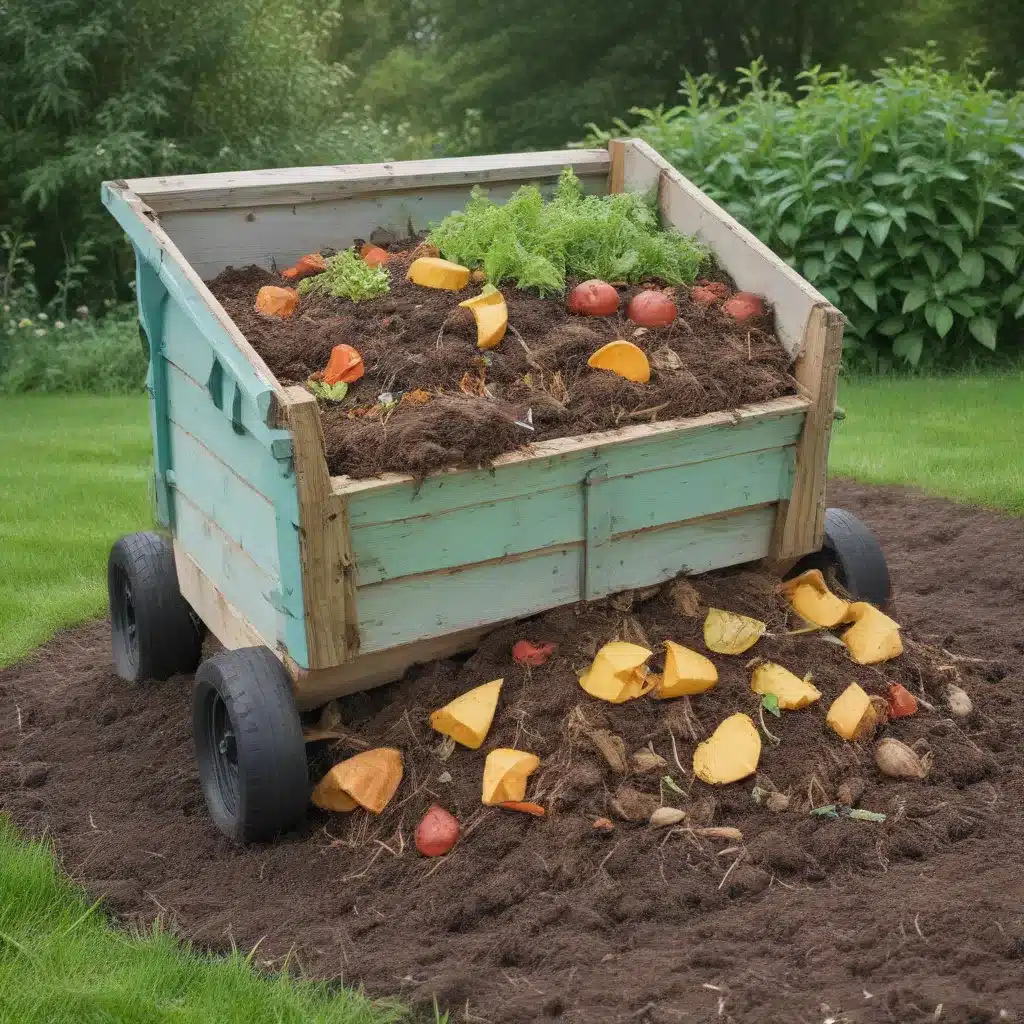
The Composting Conundrum: Turning Kitchen Scraps into Gardening Gold
As a dedicated gardener and green-thumbed enthusiast, I’ve always been on the hunt for ways to nourish my plants and keep my outdoor oasis thriving. And let me tell you, one of the best-kept secrets in the realm of sustainable gardening is the magical art of composting.
You see, I used to be one of those people who would dutifully take out the trash, tossing away all those peelings, scraps, and leftovers without a second thought. But then I had a revelation – why let all that precious organic matter go to waste when I could be turning it into liquid gold for my flower beds and vegetable patches?
So, I decided to embark on a composting journey, and let me tell you, it’s been a game-changer. Not only have I dramatically reduced the amount of food waste going into the landfill, but I’ve also been able to create my own, homegrown fertilizer that’s been an absolute boon for my landscaping endeavors.
The Benefits of Composting: A Greener Thumb and a Healthier Planet
Now, I know what you might be thinking – composting sounds like a lot of work, and who has the time for that, right? But let me assure you, the benefits of composting far outweigh the effort involved.
For starters, by diverting food scraps from the trash, you’re doing your part to reduce the amount of waste that ends up in landfills and incinerators. And let’s be honest, those places aren’t exactly the picture of sustainability, are they? Landfills, in particular, are notorious for producing methane, a potent greenhouse gas that contributes to climate change.
But that’s not all – composting also helps to improve the quality of your soil, making it richer, more nutrient-dense, and better able to support the growth of your plants. Think of it as a natural, organic way to give your garden a little extra TLC.
And the best part? It’s completely free! No need to shell out for expensive fertilizers or soil amendments when you can just turn your kitchen scraps into garden gold. Talk about a win-win situation.
Composting 101: The Ins and Outs of Creating Your Own Fertilizer
Okay, so now you’re probably wondering, “Great, but how do I actually get started with composting?” Well, my friend, let me break it down for you.
The first step is to set up a composting bin or pile. This can be as simple as a designated spot in your backyard, or you can invest in a dedicated composting container. Just make sure it’s situated in a well-ventilated area, away from any structures or sources of moisture.
Next, you’ll want to start layering your “green” and “brown” materials. The “greens” are your nitrogen-rich items, like fruit and veggie scraps, coffee grounds, and fresh grass clippings. The “browns” are your carbon-rich materials, such as dried leaves, shredded paper, and wood chips.
The key is to maintain the right balance between these two elements. Too much “green” can lead to a smelly, slimy mess, while too much “brown” can slow down the composting process. Aim for a roughly 3:1 ratio of browns to greens, and make sure to keep your pile or bin slightly moist (but not soaked).
Now comes the fun part – the actual composting! This is where you get to play mad scientist, monitoring the temperature and moisture levels, and occasionally giving the pile a good stir to keep things aerated. Over time, your food scraps and yard waste will break down, transforming into a rich, crumbly soil amendment that’s perfect for top-dressing your lawn or mixing into your garden beds.
Troubleshooting Composting Woes: Common Challenges and How to Overcome Them
Of course, no gardening journey is complete without a few bumps in the road. And composting is no exception. But fear not, my fellow earth-loving enthusiasts – I’ve got your back.
One of the most common issues people face is dealing with pesky pests, like raccoons or rodents, who just can’t seem to resist the allure of your compost pile. The solution? Make sure to bury your food scraps deep within the pile, cover it with a layer of “browns,” and consider investing in a composting bin with a secure lid.
Another common problem is dealing with that dreaded rotten-egg smell. This usually happens when there’s too much moisture or not enough airflow. To fix this, simply give your compost a good stir, add some more “brown” materials, and make sure it’s not sitting in a puddle.
And let’s not forget about those moments when your compost just seems to be moving at a glacial pace. This could be due to an imbalance in your green-to-brown ratio, or perhaps the pile isn’t getting enough heat. Try adding more “green” materials, or consider turning the pile more frequently to give it a boost.
But hey, don’t let these challenges discourage you – think of them as opportunities to hone your composting skills and become a true master of the garden. After all, what’s a good adventure without a few plot twists and obstacles to overcome?
Composting for the Whole Household: Engaging the Entire Family in Sustainable Practices
Now, I know what you’re thinking – composting sounds like a one-person job, right? Well, think again, my friends. This is the perfect opportunity to get the whole family involved in sustainable living.
Imagine it – the kids can help sort the kitchen scraps, the teens can take turns stirring the compost pile, and even grandma can contribute her green thumb wisdom. It’s a great way to teach the next generation about the importance of reducing waste, conserving resources, and nurturing the earth.
Plus, let’s be real – what kid doesn’t love a good science experiment? Watching the magic of decomposition happen right before their eyes is sure to spark their curiosity and encourage a lifelong appreciation for the natural world.
And let’s not forget the added bonus of getting the family outdoors and working together. Gardening and composting can be a wonderful way to bond, exercise, and relieve stress – all while creating something truly remarkable for your outdoor space.
So, what are you waiting for? Gather the troops, put on your gardening gloves, and let’s get composting!
Composting for a Cause: Partnering with Local Organizations to Reduce Waste
But the benefits of composting don’t stop at your own backyard, my friends. No, this is an opportunity to make a real difference in your community and beyond.
Picture this – you’ve been faithfully composting your food scraps for months, and your garden is thriving thanks to the nutrient-rich soil. But what if you could take it one step further and share the wealth with others?
That’s where local organizations come into play. Many cities and towns have community garden initiatives, urban farming projects, or even school-based composting programs that are always on the lookout for rich, homegrown compost. By partnering with these groups, you can not only reduce your own waste but also contribute to the greater good of your community.
Imagine the joy of knowing that your kitchen scraps have been transformed into a life-giving resource for a local school’s vegetable patch, or that your dried leaves have nourished the soil in a community garden that provides fresh produce to those in need. It’s a win-win for both you and the planet!
And who knows – your composting success story might even inspire others to get in on the action. By sharing your knowledge and enthusiasm, you could be the catalyst for a sustainable revolution in your neck of the woods. Talk about making a real difference!
Composting and Beyond: Exploring the Wider World of Sustainable Gardening
But let’s not stop there, my friends. Composting is just the tip of the iceberg when it comes to sustainable gardening practices. Once you’ve mastered the art of turning your food waste into gardening gold, the possibilities for eco-friendly landscaping are truly endless.
Think about it – you could explore the world of native plant species, which are not only beautiful but also require far less water and maintenance than traditional ornamentals. Or maybe you’ll be inspired to set up a rain barrel system, capturing precious rainwater to nourish your plants and reduce your reliance on municipal water sources.
And let’s not forget about the joys of organic pest control, where you can harness the power of beneficial insects and natural repellents to keep your garden thriving without the use of harsh chemicals. It’s a whole new realm of gardening that’s not only better for the environment but also better for your own health and well-being.
The point is, composting is just the beginning of a journey towards a greener, more sustainable future. So, why not dive in and see where this rabbit hole takes you? Who knows, you might just discover a whole new passion for eco-conscious landscaping that you never knew you had.
Conclusion: Composting – The Gateway to a Greener, Healthier Garden (and Planet!)
So, there you have it, my fellow green-thumbed enthusiasts – the ins and outs of composting your food waste to create nutrient-rich fertilizer for your landscaping endeavors. It’s a journey that’s not only good for your garden but also good for the planet, and one that can be shared and celebrated with your entire household.
Sure, there may be a few bumps in the road, but with a little perseverance and a whole lot of passion, you’ll be well on your way to creating your own little slice of gardening paradise. And who knows – maybe you’ll even inspire your neighbors to hop on the composting bandwagon and join you in your mission to save the world, one food scrap at a time.
So, what are you waiting for? Grab your gardening gloves, fire up that compost bin, and let’s get to work! Your garden (and the planet) will thank you.
Oh, and if you’re in the Aberdeen, UK area and in need of some expert building or renovation services to complement your sustainable landscaping projects, be sure to check out https://abc-home.co.uk/. These folks are the real deal when it comes to eco-conscious construction and design. Happy gardening, my friends!


