
Discovering the Beauty of Simplicity
When it comes to designing a kitchen or bathroom, one of the most important decisions you’ll make is the choice of splashback tiles. It’s a decision that can truly make or break the entire look and feel of the space. As an interior designer for a local building company here in Aberdeen, I’ve seen it all – from the bold and daring to the classic and timeless. And you know what? Time and time again, I find myself gravitating towards the simple beauty of subway tiles.
Now, before you start rolling your eyes at the mere mention of subway tiles (I know, I know, they’ve become a bit of a cliche in recent years), hear me out. There’s a reason these humble tiles have stood the test of time – they’re versatile, elegant, and can be used to create a variety of stunning effects. In fact, I’d argue that the “subway tile fatigue” we’re seeing is less about the tiles themselves and more about the uninspired way they’re often used.
That’s why, in this article, I want to explore the incredible potential of subway tiles – from classic offset patterns to more modern herringbone layouts. I’m here to prove that these tiles are anything but boring, and that with a little creativity, you can elevate your space and create a truly unique look.
The Allure of the Offset Pattern
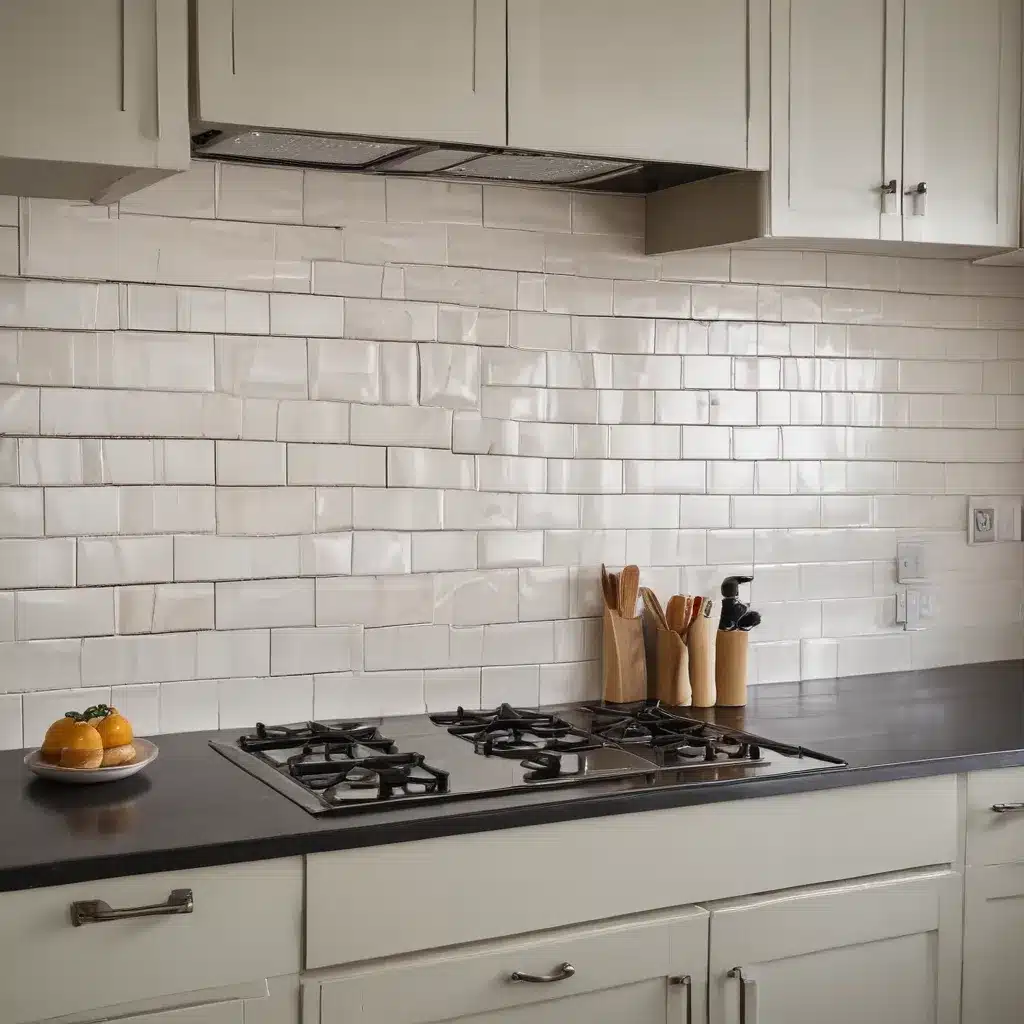
Let’s start with the classic offset, or “running bond,” pattern. This is the go-to for many homeowners and designers, and for good reason. It’s a timeless look that exudes a sense of effortless sophistication. The offset pattern is achieved by staggering each row of tiles, so that the vertical grout lines don’t align. This creates a subtle, rhythmic movement that’s easy on the eye.
One of the great things about the offset pattern is its versatility. It works equally well in traditional and modern settings, and can be customized with different tile sizes, colors, and grout choices. For a classic look, you can’t go wrong with a 3×6 subway tile in a crisp white, paired with a coordinating grout. But if you’re feeling a bit more adventurous, why not try a larger format tile, or even a muted gray or beige shade?
The offset pattern also has the added benefit of being relatively straightforward for tile installers to execute. This means it’s often a more budget-friendly option compared to some of the more complex layouts we’ll explore later on. And let’s be honest, when you’re undertaking a kitchen or bathroom renovation, keeping costs down while still achieving a high-end look is always a top priority.
Herringbone Heaven
Now, if you’re looking to add a bit more visual interest to your space, the herringbone pattern is a fantastic choice. This classic chevron-style layout creates a sense of movement and energy that’s hard to resist. As Kate Riley from Centsational Style notes, the herringbone pattern is a “classic with a twist” – it takes the humble subway tile and transforms it into something truly special.
One of the things I love about the herringbone pattern is that it works beautifully in both traditional and contemporary settings. In a classic kitchen, it can add a touch of old-world charm, while in a more modern bathroom, it can lend a sophisticated, high-end feel. And the great thing is, you can achieve this look with the same 3×6 subway tiles you’d use for an offset pattern, just by arranging them in a different way.
Now, I’ll admit, the herringbone pattern does require a bit more skill from your tile installer. The angled cuts and precise layout can be a bit more labor-intensive, which means it may come with a slightly higher price tag. But in my opinion, the end result is worth it. The combination of clean, linear tiles and the dynamic herringbone layout creates a visual feast that’s sure to impress.
The Basket Weave: A Timeless Twist
If you really want to make a statement with your subway tiles, then the basket weave pattern is definitely worth considering. Also known as the “parquet” pattern, this layout involves stacking the tiles vertically and horizontally to create a woven, almost three-dimensional effect.
As Maria Killam from Maria Killam Colour explains, the key to achieving the basket weave pattern is to use rectangular tiles where the width is divisible by the height. This could be a 3×12 tile, a 4×12 tile, or even a 4×16 tile – the possibilities are endless. The installer will then carefully arrange the tiles in a staggered, overlapping pattern to create that signature woven look.
Now, I’ll admit, the basket weave is a bit more challenging to execute than the offset or herringbone patterns. It requires precise measurements, careful planning, and a skilled tile installer. But the end result is truly stunning. The interplay of light and shadow, the depth and texture – it all comes together to create a showstopping effect that’s sure to be the focal point of any kitchen or bathroom.
And the best part? The basket weave pattern has a certain timeless quality to it. While it may not be as widely used as the offset or herringbone (at least not yet), I have a feeling it’s going to start making a big comeback in the coming years. There’s just something about that classic, artisanal aesthetic that never goes out of style.
Mixing it Up: Combining Patterns for Maximum Impact
Of course, if you really want to take your subway tile game to the next level, you can always consider mixing and matching different patterns within the same space. As Kayleigh Scholten from Our Well Designed Life notes, the key is to strike the right balance – you don’t want to overwhelm the space with too much pattern, but a judicious use of different layouts can create a truly stunning effect.
One approach that I’ve seen work particularly well is to use the offset pattern as the primary layout, but then incorporate a smaller accent area of herringbone or basket weave. This could be above the stove, around the sink, or even in a separate zone like the shower. The contrast between the clean, linear offset and the more dynamic, textural patterns creates a sense of visual interest that’s hard to beat.
Another option is to use the same tile size and color throughout, but play with the orientation. For example, you could have an offset pattern on the lower half of the wall, and then switch to a herringbone layout on the upper half. Or you could create a border or “frame” around the main offset pattern using a contrasting tile layout. The possibilities are truly endless, and the end result is a space that’s truly one-of-a-kind.
Of course, with any tile layout that involves multiple patterns, it’s important to work closely with your tile installer to ensure everything is properly aligned and executed. But trust me, the effort is well worth it. When done right, a mixed-pattern subway tile installation can transform a mundane kitchen or bathroom into a true work of art.
Timeless Subway Tiles: The Gift That Keeps on Giving
As I mentioned at the beginning of this article, subway tiles have a bit of a reputation for being, well, a bit boring. But I hope that by now, I’ve convinced you that there’s nothing boring about these humble tiles. In fact, with a little creativity and a willingness to experiment, they can be transformed into something truly spectacular.
Whether you opt for the classic offset, the dynamic herringbone, or the utterly unique basket weave, one thing is certain – subway tiles are a gift that keeps on giving. They’re endlessly versatile, incredibly durable, and (perhaps most importantly) they won’t go out of style anytime soon. In fact, I’d argue that a well-executed subway tile installation is the very definition of timeless design.
So, if you’re planning a kitchen or bathroom renovation here in Aberdeen, I encourage you to take a closer look at subway tiles. Forget about the trends and the hype, and focus instead on finding a pattern or layout that truly speaks to you. Because at the end of the day, the most important thing is that you end up with a space that you absolutely love – one that will stand the test of time and bring you joy for years to come.
And who knows, maybe you’ll even start a new subway tile trend of your own! After all, that’s the beauty of these humble tiles – they’re a blank canvas, just waiting to be reimagined and transformed. So why not be the one to lead the charge and show the world just how special subway tiles can be?


