
The Allure of Farmhouse Chic
As a lifelong resident of Aberdeen, UK, I’ve always been captivated by the charming, rustic aesthetic of the countryside. Driving through the winding roads, I can’t help but admire the weathered stone farmhouses, with their cozy interiors and inviting outdoor spaces. It’s a style that exudes warmth, comfort, and a deep connection to the land – qualities that I believe are sorely lacking in much of modern design.
That’s why, when I started my own building and renovation company a few years ago, I knew I wanted to bring that farmhouse flair to urban and suburban homes. We’ve helped countless clients transform their properties into stunning, modern farmhouse retreats, blending the best of traditional and contemporary elements.
In this article, I’ll take you on a deep dive into the world of contemporary farmhouse decor, exploring the key design principles, materials, and techniques that can help you capture that elusive “modern rustic charm.” Whether you’re planning a full-scale renovation or just looking to spruce up your living room, I guarantee you’ll come away with a fresh perspective and a whole host of inspiring ideas.
The Foundations of Farmhouse Style
At the heart of the farmhouse aesthetic lies a reverence for natural materials and a commitment to functionality. The quintessential farmhouse, you see, was never about mere aesthetics – it was a practical, hardworking space, built to withstand the rigors of rural life.
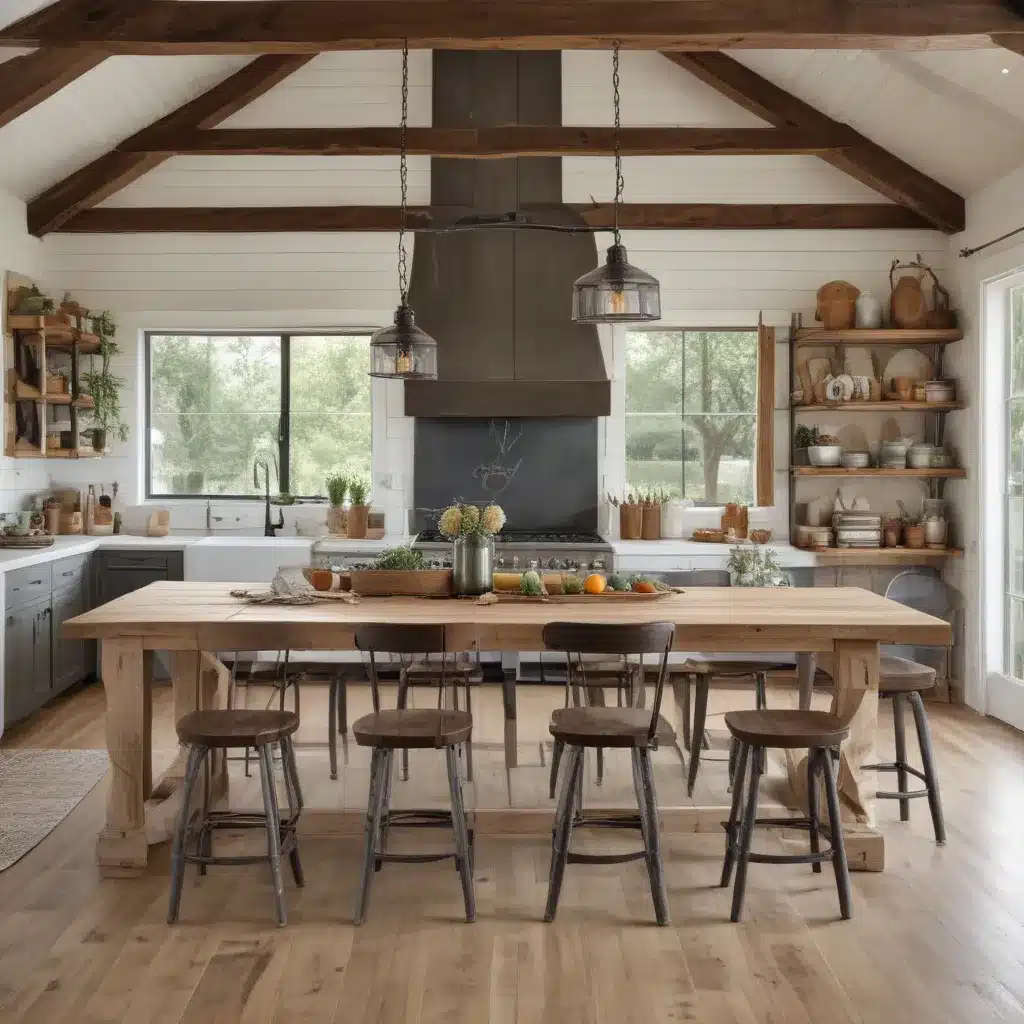
This practical sensibility is what underpins the farmhouse style, even as it has evolved over the centuries. Think sturdy wooden beams, exposed brick walls, and wide-plank floors – materials that are not only visually appealing, but also incredibly durable and easy to maintain. These elements form the backbone of the farmhouse look, providing a solid foundation upon which to build.
Of course, the modern farmhouse takes this utilitarian foundation and adds a healthy dose of style. Gone are the days of plain, utilitarian spaces – today’s farmhouse-inspired homes are all about marrying form and function, with thoughtful design touches that elevate the aesthetic without sacrificing practicality.
Blending Old and New
One of the most defining characteristics of contemporary farmhouse decor is the way it seamlessly blends old and new. It’s a delicate balancing act, to be sure, but when done right, the result is a space that feels both timeless and refreshingly modern.
Take the kitchen, for instance – the heart of any farmhouse-style home. Here, you might find vintage-inspired cabinetry alongside sleek, stainless-steel appliances. Or a rustic, wood-burning stove nestled next to a state-of-the-art induction cooktop. The key is to find ways to honor the past while embracing the present, creating a harmonious and visually striking synthesis.
This same principle applies throughout the home. In the living room, you might pair an heirloom armchair with a contemporary sectional sofa. In the bedroom, a reclaimed-wood headboard might share space with clean-lined, minimalist nightstands. The goal is to create a layered, eclectic look that feels both cohesive and full of personality.
Texture and Materiality
Of course, blending old and new is only half the battle. The other crucial element of contemporary farmhouse decor is the careful consideration of texture and materiality. After all, this style is all about creating a warm, inviting ambiance – and that starts with the tactile elements of the space.
Think about the different surfaces and textures you encounter in a traditional farmhouse. The rough-hewn wooden beams, the weathered brick walls, the worn leather of an antique armchair – these are the elements that give the space its cozy, lived-in feel. In the modern farmhouse, we want to capture that same sense of warmth and character, but with a more refined, intentional approach.
So, instead of plain drywall, you might opt for shiplap paneling or exposed stone. Instead of sleek, polished metal, you might choose matte-finished hardware or aged copper accents. And rather than stark, uniform floors, you might embrace the natural variations and imperfections of hand-scraped hardwood or even reclaimed barn wood.
By thoughtfully layering these textural elements, you can create a space that feels both stylishly curated and comfortingly familiar. It’s a delicate balance, to be sure, but the payoff is a home that feels truly unique and enveloping.
The Modern Farmhouse Color Palette
Of course, texture and materiality aren’t the only elements that contribute to the contemporary farmhouse aesthetic. Color also plays a crucial role in setting the tone and mood of the space.
The traditional farmhouse palette tends to be fairly muted and earthy, drawing inspiration from the natural world around it. Think soft whites, warm grays, muted blues and greens, and the occasional pop of rusty red or deep, saturated indigo. These colors evoke a sense of timelessness and serenity, perfectly complementing the rough-hewn textures and vintage-inspired furnishings.
In the modern farmhouse, we want to maintain that calming, naturalistic vibe, but with a slightly more refined and intentional approach. So, while you might still see plenty of classic white and gray, the tones tend to be a bit cleaner and crisper. And there’s often a more deliberate use of accent colors, whether it’s a rich, jewel-toned velvet sofa or a vibrant, patterned throw pillow.
The key is to create a cohesive, harmonious palette that feels both soothing and visually interesting. It’s a delicate balancing act, to be sure, but when done right, the result is a space that feels simultaneously timeless and thoroughly modern.
Bringing it all Together
Of course, all of this talk about materials, textures, and color palettes is all well and good, but how does it all come together in a real-world, lived-in space? That’s the million-dollar question, isn’t it?
One of my favorite examples is a recent project we completed for a young family in the heart of Aberdeen. They had purchased a charming, turn-of-the-century farmhouse just outside the city limits, and they wanted to transform it into a modern, family-friendly oasis.
The starting point was the kitchen – the centerpiece of any farmhouse-style home. We kept the original wide-plank floors and exposed ceiling beams, but added custom shaker-style cabinetry in a soft, muted gray. The countertops are a beautiful, honed marble, which lends an air of elegance and sophistication. And to balance out all that cool, neutral tone, we incorporated plenty of warm, natural accents – a vintage-inspired farmhouse sink, an heirloom-quality butcher block island, and a stunning, antique-inspired pendant light fixture.
The result is a space that feels both timeless and thoroughly modern. It’s a harmonious blend of old and new, with each element working in perfect concert to create a cohesive, inviting atmosphere. And that’s really the essence of contemporary farmhouse style – it’s about finding the right balance, the perfect synthesis of tradition and innovation.
Of course, this is just one example, and the possibilities are truly endless. Whether you’re renovating a historic farmhouse or starting from scratch in a new construction, the key is to stay true to the core principles of the style – a reverence for natural materials, a commitment to functionality, and a deep respect for the past. With a discerning eye and a bit of creativity, you can transform any space into a modern farmhouse oasis.
Embracing the Imperfections
One of the things I love most about contemporary farmhouse decor is the way it celebrates imperfection. In a world that often values sleek, flawless surfaces and rigid symmetry, the farmhouse aesthetic celebrates the beauty of the imperfect, the worn, and the well-loved.
Take, for example, the reclaimed wood beams that feature prominently in so many farmhouse-inspired homes. Each one is unique, with its own distinctive knots, grain patterns, and subtle distresses. Rather than trying to hide or disguise these “flaws,” we embrace them as part of the natural character of the material.
The same goes for the aged copper fixtures, the distressed leather armchairs, the hand-painted ceramic tiles. These are the elements that give a space its soul, its character, its sense of history. They’re the antidote to the cookie-cutter perfection that so often dominates mainstream design.
And you know what? I think that’s exactly what makes the contemporary farmhouse look so appealing and inviting. It’s not about striving for some unattainable ideal of pristine, minimalist design. It’s about creating a space that feels lived-in, loved, and full of personality. It’s about celebrating the imperfections that make a house a home.
Conclusion: A Timeless Aesthetic for the Modern Age
As I reflect on the rise of the contemporary farmhouse style, I can’t help but feel a deep sense of appreciation for the way it marries tradition and innovation. In a world that is constantly changing and evolving, there’s something incredibly comforting about the enduring appeal of this aesthetic.
After all, the farmhouse look has been around for centuries, evolving and adapting to the needs of each new generation. And yet, despite its deep roots in the past, it feels as fresh and relevant as ever. It’s a testament to the timeless power of good design – the ability to create spaces that are not just beautiful, but truly functional and livable.
So, whether you’re planning a full-scale renovation or just looking to infuse your home with a bit of that modern rustic charm, I hope this article has inspired you to embrace the beauty of the imperfect and the time-honored. With a little creativity and a discerning eye, you can transform any space into a warm, inviting oasis that celebrates the best of the past and the present.
And if you’re in the Aberdeen area and looking to bring your own farmhouse dreams to life, I’d be more than happy to chat. Our team of expert builders and designers would love to work with you to create a truly one-of-a-kind home that blends timeless style with modern functionality. Let’s get started on your journey to contemporary farmhouse bliss!


