
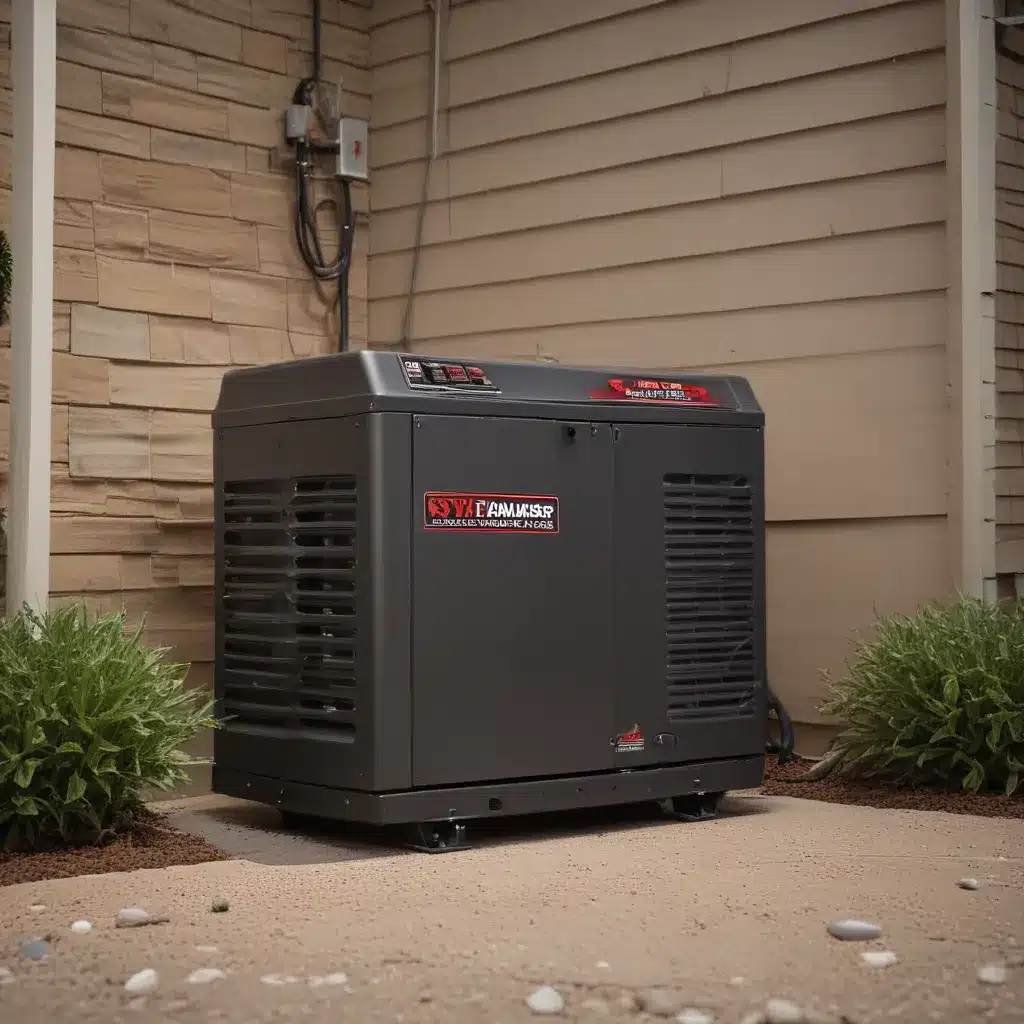
Powering Through the Unexpected
As a proud homeowner in the heart of Aberdeen, I know all too well the value of reliable, uninterrupted electricity. Whether I’m working from home, cooking up a storm in the kitchen, or cozying up to a good book, I need that steady flow of power to keep my life running smoothly. But what happens when the unexpected strikes and the grid goes down? That’s where a standby generator steps in to save the day.
Now, I’ll admit, the idea of a standby generator used to conjure up images of loud, clunky machines that were more trouble than they were worth. But boy, have things changed! The latest models are sleek, sophisticated, and packed with features that make them a must-have for any modern home. And let me tell you, ever since I had one installed at my place, I’ve never looked back.
The Continuous Power Difference
The key to a standby generator’s magic lies in its ability to provide what’s known as “continuous power.” Unlike a traditional portable generator that you have to manually start up and refuel, a standby unit kicks in automatically the moment the grid goes down, seamlessly taking over to keep your lights on, your devices charged, and your appliances running.
But what exactly is this “continuous power,” and how does it differ from the regular kind? Well, let me break it down for you.
According to the experts over at Generator Source, there are three main types of generators: continuous, prime, and standby. Continuous and prime generators are the workhorses, designed to run for extended periods and handle heavy, consistent loads. Think of them as the muscle cars of the generator world – built for power and endurance.
Standby generators, on the other hand, are the sprinters. Their job is to spring into action during those unexpected outages and keep your home running until the grid comes back online. They don’t need to be as beefy as their continuous and prime counterparts, but they do need to be quick on their feet and ready to go at a moment’s notice.
The Cooling Conundrum
One of the key differences between these types of generators lies in their cooling systems. Continuous and prime generators have to deal with a lot more heat, thanks to their non-stop operation. Their engines and alternators are constantly churning, generating massive amounts of thermal energy that needs to be whisked away.
That’s why these units come equipped with heavy-duty cooling systems, complete with large radiators, fans, and even cooling towers in the biggest industrial models. It’s like having an entire air conditioning unit just for your generator! Without these robust cooling measures, the engine and alternator would quickly overheat, leading to all sorts of nasty problems.
Standby generators, on the other hand, have a much easier time keeping their cool. Since they only run for short bursts during outages, they have the luxury of letting their components cool down naturally in between uses. Their cooling systems can be smaller and simpler, often relying on good old-fashioned air cooling rather than water-based systems.
The Air Filtration Factor
But the differences don’t stop there. Continuous power generators also need to be outfitted with heavy-duty air filtration systems. Think about it – these units are running around the clock, sucking in huge volumes of air to feed the engine’s insatiable appetite for oxygen. All that air means a whole lot of dust, dirt, and other airborne nasties that can quickly gum up the works.
That’s why continuous power generators are equipped with commercial-grade air cleaners, filters, and assemblies that can trap even the tiniest of particles. They have to be tough enough to handle the constant onslaught of contaminated air without losing their efficiency. Standby generators, on the other hand, can get away with simpler, less robust air filtration systems since they only run for short bursts.
The Cost Conundrum
Now, with all these extra bells and whistles, you might be thinking that continuous power generators must cost an arm and a leg. And you’d be right – to a certain extent. As the experts at Generator Source explain, these heavy-duty units are indeed more expensive than their standby counterparts.
The reason? All that extra engineering and specialized equipment doesn’t come cheap. The beefy cooling systems, the industrial-grade air filtration, the reinforced alternators – it all adds up. And when you’re talking about generators that can power entire factories or remote mining operations, you’re looking at some seriously hefty price tags.
But for the average homeowner, the cost difference may not be as dramatic. A quality standby generator capable of keeping your home running during a blackout can be had for a few thousand pounds, while a continuous power unit suitable for a large home or small business might set you back 10 or 20 grand. Sure, it’s a significant investment, but when you consider the peace of mind and the convenience it provides, it’s one that’s well worth it in my book.
The ABC Home Advantage
And that’s where the team at ABC Home comes in. As Aberdeen’s premier building and renovation experts, they know a thing or two about keeping the power flowing, no matter what. They’ve helped countless homeowners and business owners in the area install reliable, high-performance standby generators that are tailored to their specific needs.
Whether you’re looking for a compact unit to keep your home office humming or a beefy continuous power generator to safeguard your commercial operations, the ABC Home team has got you covered. They’ll work with you to assess your power requirements, help you select the perfect generator for your needs, and even handle the installation and maintenance so you can enjoy uninterrupted, worry-free power.
So, if you’re tired of worrying about the next unexpected outage, or if you’re looking to take your business to the next level with a continuous power solution, don’t hesitate to reach out to the experts at ABC Home. With their help, you can say goodbye to blackouts and hello to the peace of mind that comes with having a reliable, high-performance generator in your corner.


