
The Rainy Day Dilemma: Tackling Excess Stormwater
As a homeowner in the rainy city of Aberdeen, UK, I’ve often found myself staring out the window, watching in dismay as the downpours turn my yard into a soggy mess. The excess stormwater pouring off my roof has been a persistent problem, leading to puddles, erosion, and even the occasional flooded basement. But just when I was about to resign myself to a lifetime of dealing with this watery nuisance, I stumbled upon an ingenious solution – the rain garden.
What is a Rain Garden, Exactly?
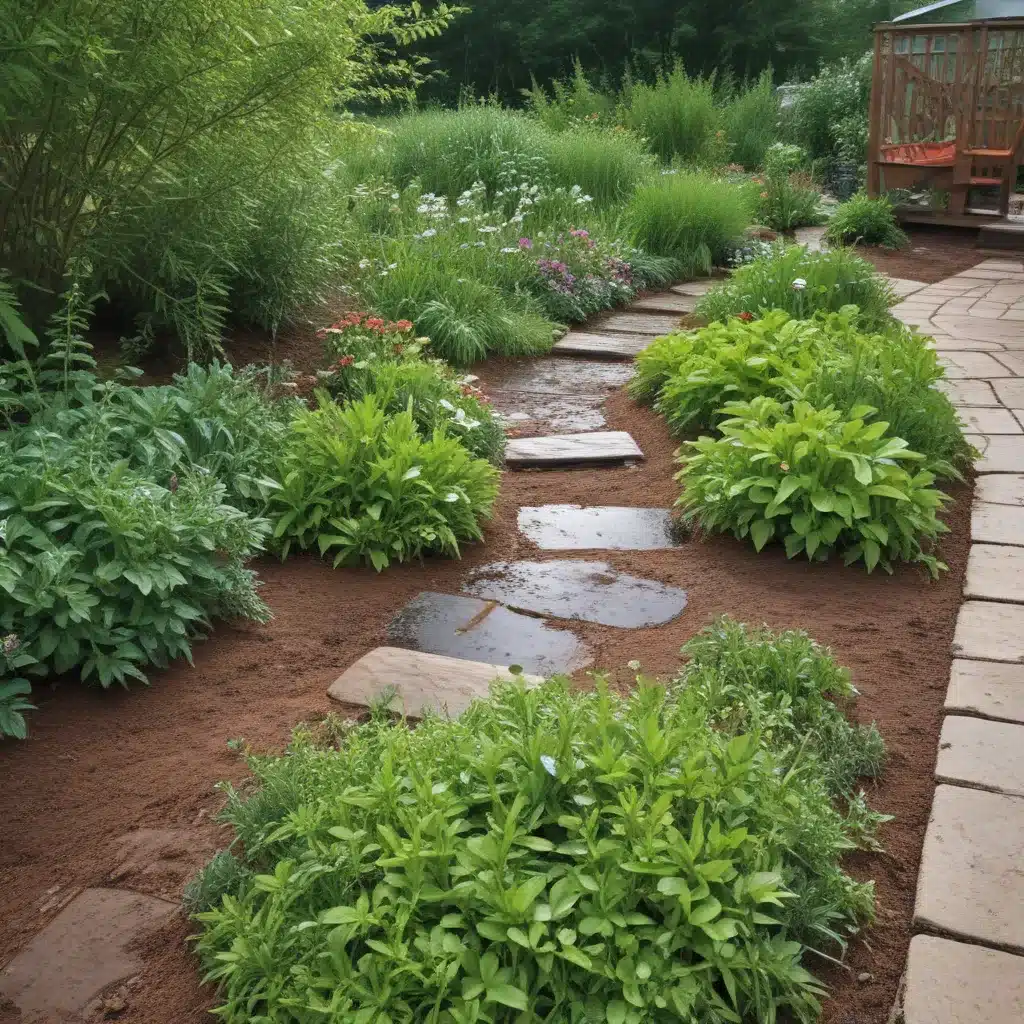
A rain garden, you ask? Well, let me tell you, it’s a garden lover’s dream come true. Imagine a beautifully landscaped oasis that doubles as a natural sponge, soaking up all that unwanted water from your roof. It’s a clever and environmentally-friendly way to turn a problem into an opportunity.
The concept is quite simple, really. A rain garden is a shallow, bowl-shaped depression in your yard that’s designed to collect and temporarily hold rainwater runoff from your roof, driveway, or other impervious surfaces. It’s typically planted with a carefully selected mix of native plants that can withstand both wet and dry conditions, ensuring that the excess water is absorbed into the ground rather than rushing off into the local storm drains or, worse, your home’s foundation.
The Benefits of a Rain Garden
But the benefits of a rain garden go far beyond just tackling stormwater. Let me break it down for you:
-
Improved Drainage: By capturing and infiltrating the runoff, a rain garden can help prevent pooling, erosion, and other drainage issues on your property.
-
Water Conservation: As the water soaks into the ground, it helps recharge the local groundwater supply, reducing the strain on municipal water resources.
-
Pollutant Removal: Rain gardens are natural filtration systems, trapping sediment, nutrients, and other pollutants before they can make their way into local waterways.
-
Habitat Creation: The native plants in a rain garden provide food and shelter for a variety of pollinators, birds, and other beneficial wildlife, helping to increase biodiversity in your backyard.
-
Aesthetic Appeal: Let’s not forget the visual appeal of a well-designed rain garden. With its lush, colorful plants and gentle curves, it can transform a drab, soggy corner of your yard into a true showpiece.
Designing Your Ideal Rain Garden
Now, I know what you’re thinking – “Sounds great, but how do I actually go about creating one of these rain gardens?” Well, fear not, my fellow Aberdeen homeowners, I’ve got you covered.
The first step is to assess your property and identify the best location for your rain garden. You’ll want to choose an area that’s relatively flat and within 10 feet of a downspout or other source of runoff. Avoid spots that are too close to your home’s foundation or underground utilities.
Next, it’s time to roll up your sleeves and start digging. The ideal rain garden depth is between 4 and 8 inches, with gently sloping sides to allow for easy access and maintenance. Be sure to loosen the soil at the bottom of the depression to encourage water infiltration.
Now comes the fun part – selecting the plants! You’ll want to choose a mix of native species that can tolerate both wet and dry conditions, such as:
- Switchgrass (Panicum virgatum): A hardy, drought-tolerant grass that can add height and texture to your rain garden.
- Purple Coneflower (Echinacea purpurea): A vibrant, pollinator-friendly perennial that will add a pop of color.
- River Birch (Betula nigra): A stunning, moisture-loving tree that can serve as a focal point.
Remember, the key is to create a diverse, low-maintenance ecosystem that can thrive in the unique conditions of your rain garden.
Maintaining Your Rain Garden
Once your rain garden is established, the maintenance requirements are relatively low, but there are a few things to keep in mind. Periodically remove any weeds or invasive plants that may try to take over, and consider adding a fresh layer of mulch to help retain moisture and suppress unwanted growth.
During the winter months, you may need to clear any fallen leaves or debris that could clog the garden’s drainage. And in the spring, take some time to give your plants a little TLC – prune back any dead or overgrown foliage and add a bit of organic fertilizer to keep them healthy and vibrant.
Real-Life Success Stories
But don’t just take my word for it – let’s take a look at some real-life examples of rain gardens in action. Take the case of the Smith family, who live just a few streets over from me. After dealing with constant flooding in their backyard, they decided to install a rain garden, and the results have been nothing short of amazing.
“Before the rain garden, our yard was a muddy mess every time it rained,” Mrs. Smith told me. “But now, the water just soaks right into the ground, and we’ve even seen an increase in the number of butterflies and birds visiting our garden. It’s been a real game-changer for us.”
And the Johnsons, who live a few blocks down, had a similar experience. “We were hesitant at first, but the team from ABC Home & Renovations really walked us through the process and helped us design a beautiful rain garden that fits perfectly with the rest of our landscaping. It’s been a wonderful addition to our home.”
Bringing it all Together
So, there you have it, my fellow Aberdeen residents – the ultimate guide to creating a rain garden that will not only solve your stormwater woes but also transform your outdoor space into a lush, eco-friendly oasis. Whether you’re dealing with chronic flooding, want to do your part for the environment, or simply crave a more visually appealing yard, a rain garden could be the perfect solution.
Don’t let another rainy day get you down. Embrace the power of nature and let your rain garden be the shining star in your Aberdeen backyard. Who knows, maybe it’ll even inspire your neighbors to follow suit, creating a veritable network of water-wise gardens that will benefit the entire community.
So, what are you waiting for? Grab your shovel, your gardening gloves, and let’s get to work on transforming your outdoor space into a true rain-catching masterpiece. Trust me, your future self (and the local wildlife) will thank you.


