
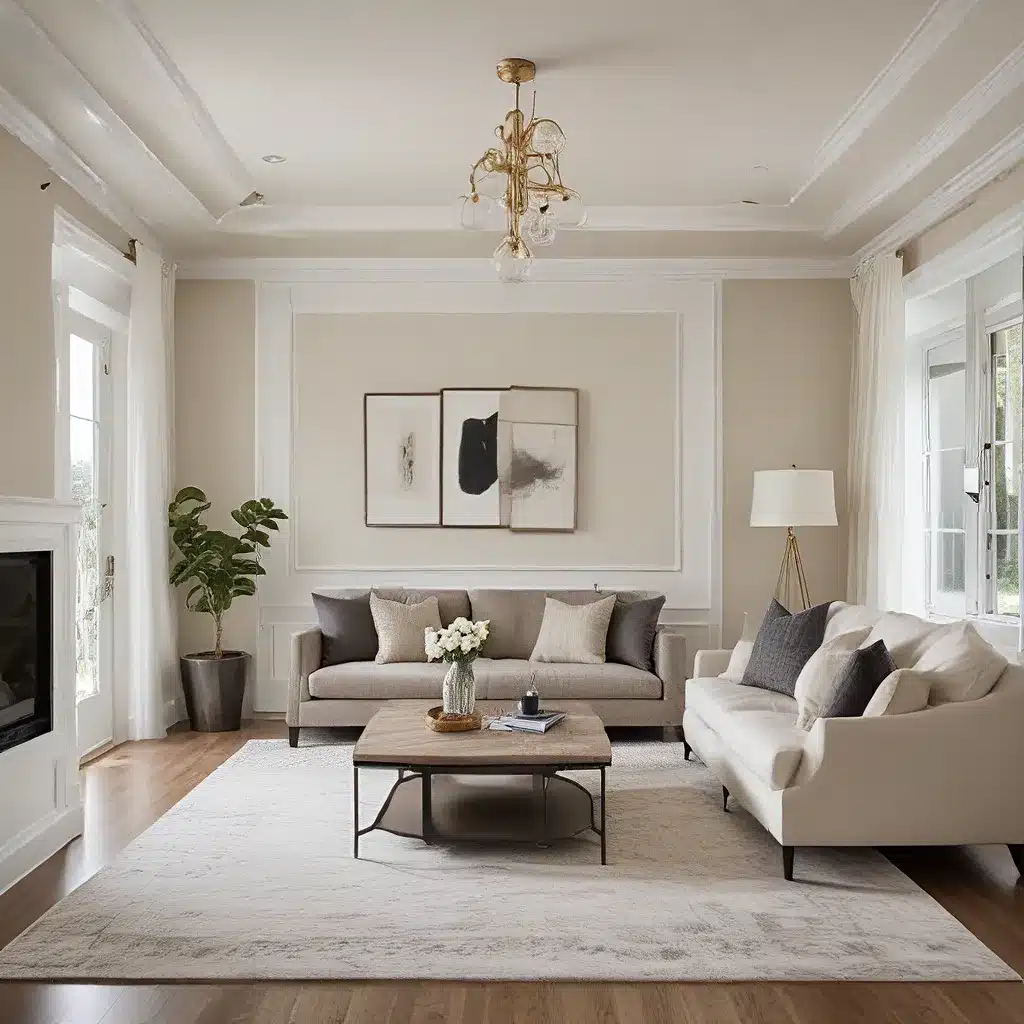
Unlocking the Secret to a Cozy, Cohesive Abode
Oh, the trials and tribulations of decorating your dream home – it’s enough to make even the bravest of us want to dive back under the covers and say, “Forget it, I’ll live with it as is!” Trust me, I’ve been there.
But fear not, my friends! I’m here to share a methodical, step-by-step process that will break down how to design your space into manageable, doable parts. Even though this is my personal design approach, the whole point is to make it adaptable so it serves you, your home, and your loved ones.
If you follow these guidelines, I guarantee you’ll create a room that is comfortable, cohesive, functional, and reflects your own unique style. And the best part? It doesn’t have to cost a fortune. In fact, I firmly believe that design constraints, whether budgetary or otherwise, often result in a more interesting project. With a little clever ingenuity and some extra legwork, you can save money and end up with a richer, more compelling reflection of your personal style.
Are you ready to get started? Buckle up, because we’re about to embark on a transformative journey, room by room!
Crafting a Budget-Friendly Blueprint
First things first – a budget is a must if you want to keep your remodel or redesign under control. Decide upfront what you can spend on your project and prioritize your expenditures into must-haves, nice-to-haves, and not-a-priority. Then, create a spreadsheet where you can input line items for each and every element of the project.
Calculate square footages to estimate your material costs, and don’t forget to add an additional 10-20% for cost overruns. Trust me, you don’t want to be on such a tight shoestring budget that a surprise dry rot or corroded plumbing situation leaves you scrambling.
Once you’ve set your budget, stick to it. Don’t be tempted to deviate midway with an “Ooh, it would be nice if…” upgrade, unless you can truly afford it. This is how budgets get blown, my friends.
Mastering the Mood Board Mystique
Before you spend a single penny, the first step in the design process is to create a mood board. This can be as simple as a Pinterest board or as elaborate as a curated collection of imagery, inspiration, and specific objects. The key is to take a step back and see what the common threads are.
Some questions to ponder: What’s the purpose of the space you’re working on? Does it need to be practical for families and groups, or is it more of a private retreat? What do you want the overall feel or mood of the room to be about? Come up with a few descriptor words if that helps.
Then, start pinning rooms, color schemes, furniture, and accessories that appeal to you. Don’t worry about having preconceived ideas – just let your intuition guide you. Once you have about 50 pins, take a step back and look at the board as a whole. What styles, colors, forms, and textures keep popping up in your selections? These are the clues to your true design preferences.
You may even discover that your Pinterest pins don’t lie – you might find that you’re drawn to more soothing neutrals and contemporary design than you previously thought. Trust your gut and let the mood board be your guide.
Finding Your Springboard Object
In addition to identifying your unifying design elements, you can select a specific object, artwork, or decor piece that you use to help organize and propel the direction of your project. A painting or a rug, for example, might inform the color scheme you work with. Or if you fall in love with a quirky thrift store find or antique, it could set the tone, style, or mood for your entire room.
Just be sure to do a gut check – just because you have a cool vintage painting with some purple in it, doesn’t mean you need to dogmatically incorporate that color elsewhere if it doesn’t feel right. The goal is to use this springboard object as a starting point, not a rigid rulebook.
Laying the Foundation with Furniture
Now that you’ve got your mood board and springboard object sorted, it’s time to start thinking about furniture placement. Measure your space and make a simple drawing, either on graph paper or using a free floor planner app. This will help you visualize how your proposed pieces will fit and flow within the room.
Remember to research interior design dimension standards to ensure comfortable passage and placement. Consider outlet locations, wall elements like mounting a TV, and any other wiring needs. Seeing your ideas laid out to scale provides an important reality check before you start spending.
When it comes to the actual furniture selection, I’d recommend choosing a neutral sofa and a simple coffee table as your foundation. These versatile pieces can work with a variety of styles, color schemes, and accessories, allowing you the flexibility to change up the look and feel of your space over time.
And let’s be real – with kids, pets, and the occasional red wine-wielding uncle, you don’t want to be stressing over every little spill or scuff. Opt for durable, performance fabrics like leather, Crypton, or Sunbrella, and consider slipcovers or inexpensive, washable options. Your sanity (and your upholstery) will thank you.
Painting with Purpose
Ahh, the age-old question: neutral or color? When it comes to wall paint, the struggle is real. But fear not, my friends – I’ve got your back.
Start by revisiting your mood board and pinpointing the general direction you’re leaning towards. Are you drawn to soothing neutrals or do you crave the vitality of stronger hues? Once you have a sense of your overall palette, it’s time to dive into the nitty-gritty.
Pro tip: Paint color will look more color-saturated on an entire wall than on the chip, so always paint large samples and observe them in different lighting conditions. The color of your existing walls can also dramatically affect how the potential new color looks, so I recommend priming large sections before testing.
Remember, interior designer or paint-expert vetted palettes exist for a reason. The shades they recommend generally work for most spaces or, at the very least, stand a greater chance of success than a random color that looks pretty on a chip. So, while it may be tempting to go rogue, I’d encourage you to stick with a proven winner and thoroughly test it before committing.
Mastering the Art of Accessorizing
Ahh, the fun part! With your foundation pieces and wall color in place, it’s time to let your personal style shine through with accessories, accent pieces, and all the little touches that make a house a home.
This is where you can really get creative and experiment without fear. Embrace the quirky, the rustic, the high-end, the low-end – mix it all together and see what magic unfolds. A thrifted treasure paired with a modern statement piece, a collection of natural elements interspersed with sleek metallics – the possibilities are endless.
But don’t let the temptation to go overboard take hold. Remember, bigger is not always better when it comes to accessories. Opt for a few well-placed, impactful pieces rather than a cluttered array of small items. Group similar objects together on trays or shelves to create a cohesive, curated look.
And don’t forget the power of mixing textures – jute, wood, cotton, velvet, and more can instantly make a space feel warm and inviting. Add in some greenery, a cozy throw, and a handful of plush pillows, and you’ve got a recipe for a harmonious, beautifully renovated room that’s sure to become your new favorite retreat.
Finding the Balance: Eclectic vs. Overwhelming
As you’re layering in all those delightful accessories and personal touches, it’s important to strike the right balance. You don’t want your home to look like a catalog showroom, but you also don’t want it to resemble your elderly neighbor’s collection of ceramic miniatures.
The key is to mix it up – incorporate elements from different styles, eras, and price points to create a rich, layered look. A mid-century coffee table paired with a rustic wool rug and a touch of modern industrial in the lighting? Yes, please! The goal is to avoid a flat, one-note design and instead infuse your space with personality and depth.
But beware the temptation to go overboard. Sometimes, less really is more. Pay attention to scale and proportion, and don’t be afraid to edit and refine your choices. A few well-placed, impactful pieces will often have a greater visual impact than a cluttered arrangement of smaller items.
Remember, your home should be a reflection of you – a cozy, harmonious haven that allows you and your loved ones to truly thrive. So, take a deep breath, embrace the process, and get ready to create a space that will have your heart singing every time you walk through the door.


