
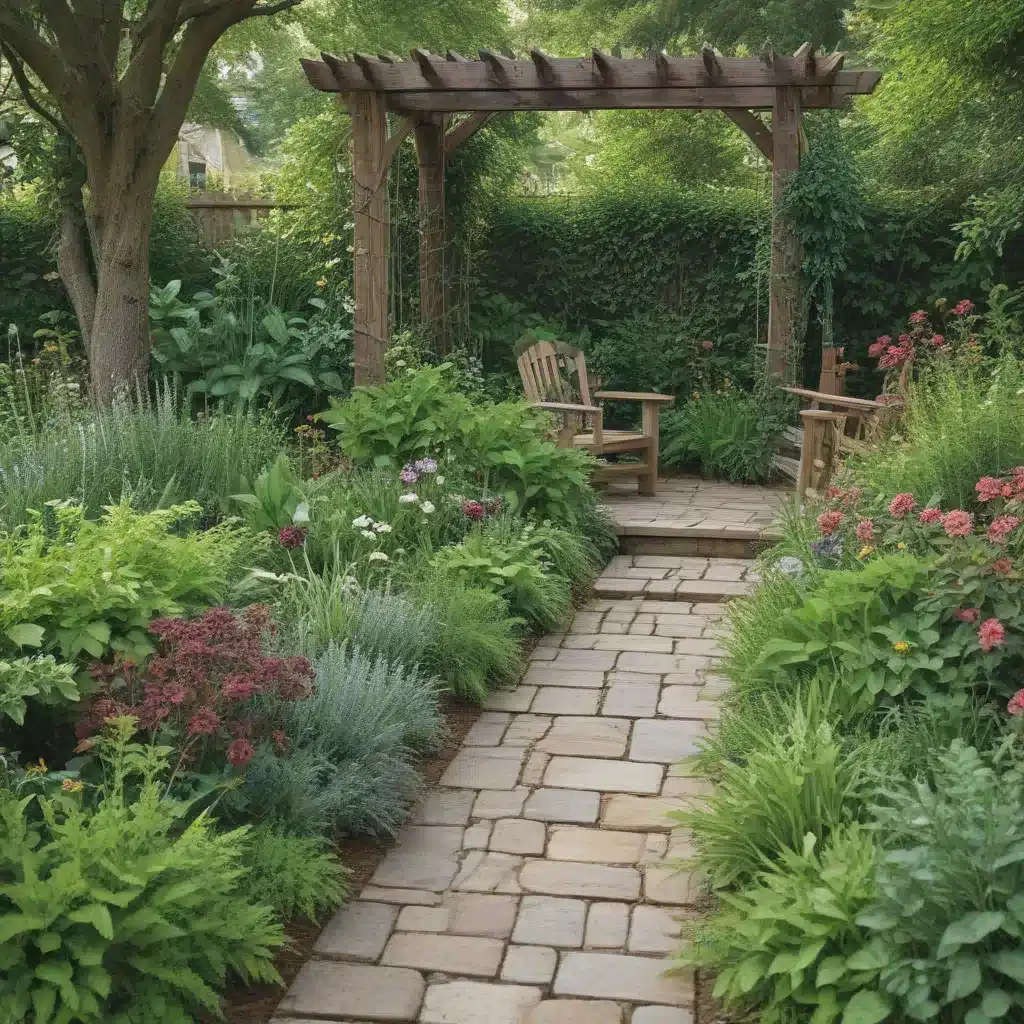
Embracing the Unexpected: Transforming Wet, Tricky Garden Spots
If your garden is anything like mine, then you’ve probably encountered a wide range of soil conditions – from bone-dry, rock-hard patches to sections that are perpetually soggy and waterlogged. The biggest challenge I’ve faced, however, is dealing with those wet, problematic areas that never seem to dry out, even during the height of summer.
I know the feeling all too well – you dig a hole in your flower bed, only to find that it’s filled with standing water the next day. It’s a frustrating situation, to say the least, as the excess moisture can rob the soil of vital oxygen and cause plant roots to rot. But over the years, I’ve learned that the key to tackling these wet, challenging garden spots is to embrace the unexpected and get a little creative.
Diagnosing the Problem: Identifying the Culprits
The first step in addressing a wet garden is to figure out what’s causing the issue in the first place. Is it simply a case of having too much clay in the soil, which can impede drainage? Or is the problem rooted in a high water table in that particular area? Maybe it’s even a result of the way your yard was graded during construction, channeling water into a problematic spot.
Understanding the root cause is crucial, as it will determine the best course of action. If it’s a clay soil problem, amending the earth with organic matter like compost can help to break up the dense, impermeable structure and improve aeration. On the other hand, if the issue is a high water table, you may need to consider installing a drainage system or building raised garden beds to elevate the planting area above the waterlogged zone.
Rolling with the Punches: Embracing Nature’s Curve Balls
Now, I’ll be the first to admit that dealing with a perpetually wet garden can be a real headache. It’s expensive and disruptive to install drainage systems, and there’s no guarantee that they’ll solve the problem for good. That’s why, over the years, I’ve learned to “roll with the punches” and embrace the unexpected – and I’ve found that this approach often leads to the most creative and rewarding solutions.
As the blogger from Blooming Secrets put it so eloquently, “It is often very expensive and almost futile to sometimes change what Mother Nature has put in place. I’ve found it is much easier and in some ways confidence building to come up with creative solutions to a tough problem.”
Making Lemonade from Lemons: Thriving in Wet Conditions
Rather than fighting a losing battle against the elements, I’ve found it’s often better to embrace the wet conditions and work with them. That’s why I’ve opted to create a garden that celebrates the moisture-loving plants that actually thrive in these challenging spots, rather than trying to force plants that are better suited to drier conditions.
In one particularly soggy area of my garden, I’ve incorporated river rocks to create the illusion of a natural stream bed, and I’ve filled it with a vibrant assortment of water-loving perennials like Astilbe, Cardinal Flower, Bee Balm, and Japanese Iris. These plants positively revel in the perpetually damp soil, and they’ve transformed what was once a troublesome eyesore into a lush, captivating oasis.
Lessons Learned: Adapting and Thriving in the Face of Adversity
The truth is, we don’t always have the luxury of choosing the perfect growing conditions for our gardens. Sometimes, Mother Nature throws us a curveball, and it’s up to us to adapt and find creative solutions. But as I’ve discovered, these challenges can actually be opportunities in disguise – a chance to step outside our comfort zones, tap into our problem-solving skills, and create something truly unique and beautiful.
So, if you find yourself struggling with a wet, problematic spot in your own garden, don’t despair. Instead, embrace the unexpected, get a little creative, and remember the wise words of the Blooming Secrets blogger: “Make lemonade from a lemon.” By rolling with the punches and celebrating the plants that thrive in these challenging conditions, you just might end up with a one-of-a-kind garden that’s the envy of the entire neighborhood.
And who knows? Your creative solution might even inspire others to think outside the box and transform their own tricky garden spots. After all, as the saying goes, bloom where you’re planted. So why not make the best of it?
Harnessing the Power of Water: Embracing Moisture-Loving Plants
If you’ve got a perpetually wet spot in your garden, fear not – there’s a whole world of vibrant, water-loving plants just waiting to be discovered. From the lush, feathery foliage of Astilbe to the bold, fiery blooms of Cardinal Flower, these moisture-tolerant perennials are the perfect solution for those challenging, soggy areas.
And the benefits don’t stop there. By embracing these water-loving plants, you’re not just creating a stunning, one-of-a-kind garden – you’re also helping to address the underlying drainage issues. As the Bergreen Photography blog points out, “Plants and trees intuitively grow where they’ll live!” By choosing the right plants for the conditions, you’re essentially allowing nature to do the heavy lifting for you.
Thriving in the Face of Adversity: A Lesson in Resilience
But the true beauty of these moisture-loving plants lies in their resilience and adaptability. As the Sierra Flower Farm blog so eloquently states, “The crazier the day, the more memorable it is.” And the same can be said for our gardens – the challenges we face often lead to the most rewarding and transformative outcomes.
Just imagine the sense of pride and accomplishment you’ll feel when you see your once-problematic garden spot burst to life with a vibrant array of Iris, Astilbe, and Bee Balm. It’s a testament to your creativity, your problem-solving skills, and your willingness to embrace the unexpected. And who knows? Your garden might even become a source of inspiration for others who are facing similar challenges.
So, the next time Mother Nature throws you a curveball in the form of a perpetually wet garden spot, don’t despair. Instead, take a deep breath, roll up your sleeves, and get ready to create something truly extraordinary. Because when it comes to gardening, the real magic happens when we’re willing to step outside our comfort zones and embrace the unexpected.


