
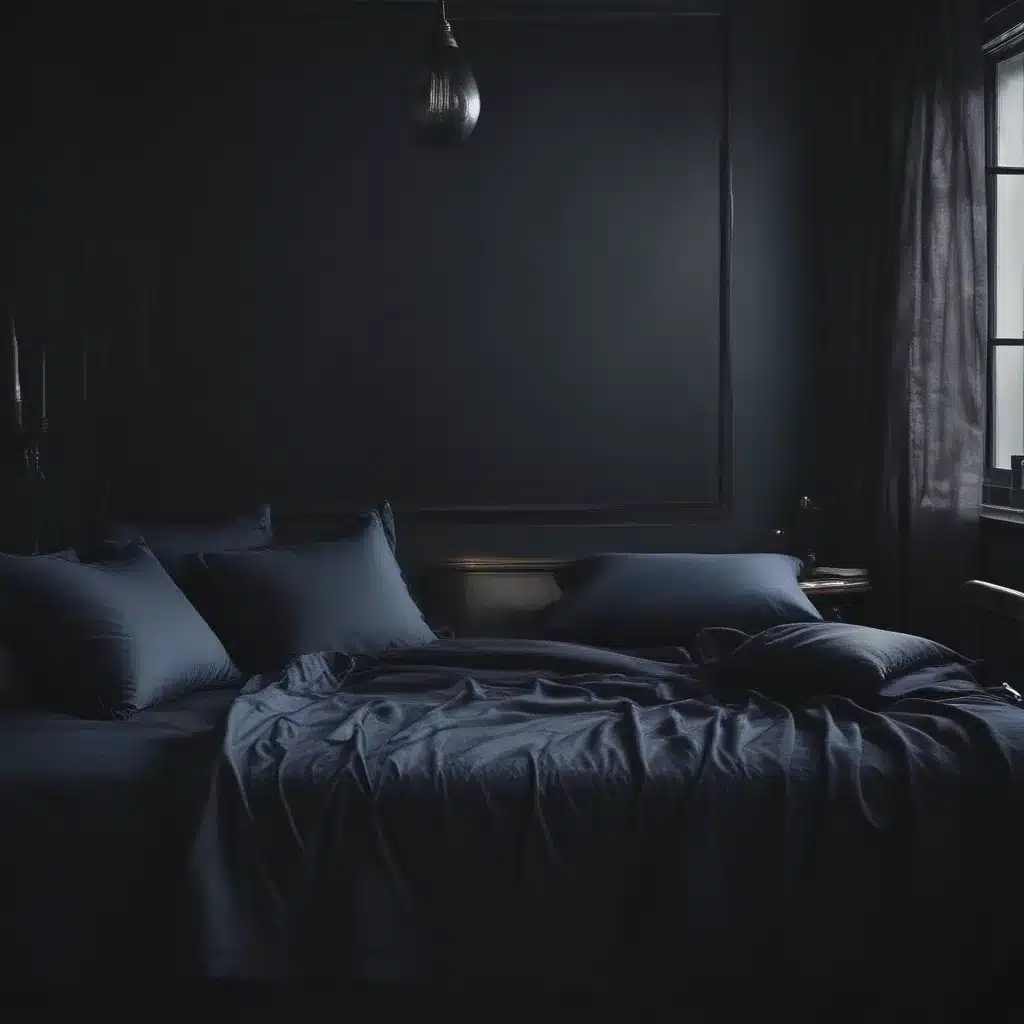
The Rise of the Dark and Moody Aesthetic
I’ll admit it – I used to be a self-proclaimed color maximalist. My home was a riot of bright, vibrant hues that vied for attention at every turn. But something shifted for me over the past year or so. Perhaps it was the stress and uncertainty of the times we’re living in, or maybe I was just craving a more calming, serene environment. Whatever the reason, I found myself increasingly drawn to the allure of deeper, moodier color palettes.
And it seems I’m not alone. The popularity of the dark and moody aesthetic has been steadily on the rise, especially among homeowners and interior designers. From inky black accent walls to rich charcoal sofas, there’s an undeniable appeal to these dramatic, enveloping shades. But make no mistake – using dark colors effectively is an art form unto itself. Get it right, and you’ll create a space that feels cocooning and sophisticated. Get it wrong, and you risk veering into dank, oppressive territory.
As the founder and lead designer of ABC Home Renovations, I’ve had the pleasure of helping countless clients navigate the world of dark and moody design. And let me tell you, I’ve learned a thing or two along the way. In this in-depth article, I’ll share my top tips and tricks for incorporating these alluring hues into your home in a way that’s both stylish and livable. So grab a cup of coffee (or perhaps a glass of wine?), get cozy, and get ready to embrace the dark side.
The Psychology of Dark Colors
Before we dive into the practical application of dark and moody hues, it’s important to understand the psychological impact they can have on a space. After all, color is one of the most powerful design elements we have at our disposal – it has the ability to evoke emotions, set the mood, and fundamentally change the way we experience a room.
Dark colors, in particular, tend to have a bit of a reputation. They’re often associated with feelings of gloom, heaviness, and even depression. And it’s true that if used carelessly, they can certainly contribute to a space feeling oppressive or unwelcoming. However, when deployed thoughtfully, darker shades can actually have the opposite effect.
Studies have shown that rich, enveloping hues like charcoal, navy, and forest green can foster a sense of coziness and comfort. They create an intimate, almost cocoon-like atmosphere that encourages relaxation and introspection. Interestingly, these moody tones have also been linked to increased productivity and focus – likely because they help to minimize visual distractions and create a calming, grounding environment.
Of course, the specific psychological impact of dark colors will vary from person to person. Some may find them soothing and restorative, while others may find them a bit overwhelming. But for those who embrace the dark side, the rewards can be profound. “There’s something almost primal about the appeal of dark, moody colors,” muses ABC Home Renovations client, Sarah. “They just make me feel safe and secure, like I’m enveloped in a warm hug.”
Where to Use Dark Colors
Okay, so we’ve established that dark and moody colors can have a powerful impact on the overall feel of a space. But where, exactly, should you be incorporating them? The truth is, there are no hard and fast rules – the key is to think strategically about how you want each room to function and what kind of vibe you’re trying to cultivate.
Living Rooms: Living rooms are an excellent canvas for dark, dramatic hues. These are the spaces where we tend to gather, relax, and unwind, so creating a cozy, intimate atmosphere is often a top priority. Rich charcoal sofas, inky accent walls, or moody, midnight-blue built-ins can all work beautifully. Just be sure to balance the darkness with plenty of warm, natural lighting and lighter accents to keep the space feeling grounded and inviting.
Bedrooms: Bedrooms are another prime candidate for dark, moody palettes. After all, these are the sanctuaries where we retreat to rest and recharge. Enveloping shades like forest green or deep eggplant can foster a sense of calm and serenity, making it easier to drift off to sleep. And don’t be afraid to go all-in – painting the ceiling and trim in a matching hue can create a truly cocooning effect.
Home Offices: If your home office is feeling a bit too sterile and clinical, introducing some dark, moody tones could be just the antidote. Charcoal walls or a deep navy desk can provide a sophisticated, grounding backdrop that helps you focus and stay productive. Just be sure to balance the darkness with plenty of natural light and warm accent pieces to prevent the space from feeling overly heavy or oppressive.
Entryways: While you may not spend as much time in your home’s entryway, it’s still an important space to consider when exploring dark, moody palettes. Painting the front door or accent wall in a bold, dramatic hue can create an impactful first impression, setting the tone for the rest of your home. And if you have the space, a charcoal console table or bench can anchor the area in a really elegant way.
Of course, these are just a few examples – the possibilities for incorporating dark, moody colors are truly endless. The key is to think carefully about how each space functions and what kind of vibe you want to cultivate. With a little creativity and strategic planning, you can harness the power of these alluring hues to transform your home into a cozy, sophisticated oasis.
Tips for Using Dark Colors Effectively
Now that we’ve explored the psychological impact of dark, moody colors and where to use them, let’s dive into some practical tips for incorporating them into your home in a way that’s both stylish and livable.
Start Small: If you’re new to the world of dark and moody design, it’s best to ease your way in. Rather than diving headfirst into an all-black or navy blue room, start with smaller, more manageable projects. Try painting an accent wall, adding a dramatic piece of furniture, or incorporating dark accessories and textiles. This will allow you to get a feel for how these hues behave in your space and build up the confidence to go bolder over time.
Balance is Key: One of the most common pitfalls of using dark colors is creating a space that feels oppressive or overwhelming. The key to avoiding this is to strike the right balance between light and dark elements. Pair your moody hues with plenty of natural lighting, clean white walls, and lighter accents to prevent the space from feeling too heavy or closed-in.
Incorporate Texture: Another important factor to consider when using dark colors is texture. Flat, matte finishes can sometimes make a space feel a bit flat and one-dimensional. To add depth and visual interest, incorporate a variety of textures – think shiny, glazed ceramics, nubby wool throws, and velvet accent pillows. This will help the dark tones feel more warm and inviting.
Embrace Contrast: While balance is crucial, don’t be afraid to embrace bold contrasts as well. Pairing deep, inky hues with crisp white trim or bright, metallic accents can create a truly striking visual impact. This high-contrast approach is particularly effective in spaces like kitchens and bathrooms, where the juxtaposition of dark and light elements can feel fresh and modern.
Layer, Layer, Layer: When it comes to using dark colors, subtlety and nuance are your friends. Rather than slapping a single bold hue on the wall and calling it a day, try layering different shades and tones to create depth and complexity. For example, you might start with a deep charcoal base, then add in accents of navy, forest green, and even black to build up a rich, multidimensional palette.
Personalize with Accessories: Finally, don’t be afraid to have a little fun and get creative with your dark, moody color scheme. Accessories are a great way to inject your own personal style and flair into the mix. Think dramatic light fixtures, intriguing artwork, and plush, enveloping textiles. These finishing touches will help the space feel unique and tailored to your individual aesthetic.
Ultimately, the key to using dark, moody hues effectively is to approach it with a light touch and an open mind. Experiment, play, and above all, trust your instincts. After all, your home should be a reflection of your unique personality and style. So don’t be afraid to embrace the dark side – I promise, the results will be nothing short of captivating.
Real-Life Dark and Moody Inspirations
Of course, no discussion of the dark and moody aesthetic would be complete without some real-life inspiration to draw from. As the lead designer at ABC Home Renovations, I’ve had the pleasure of working with countless clients who have embraced these alluring hues in their own homes. And let me tell you, the results are nothing short of stunning.
Take, for example, the case of our clients, Emily and David. When they first came to us, their living room was a fairly uninspired space – beige walls, a basic neutral sofa, and not much in the way of personality. But Emily and David had a vision. They wanted to create a cozy, sophisticated retreat that felt like a true reflection of their style.
Working closely with our team, they settled on a rich, moody color palette anchored by a deep charcoal sectional and accented with inky throw pillows and a striking black-and-white abstract painting. To balance the darkness, we incorporated plenty of warm, natural lighting, as well as touches of brass and wood that added warmth and texture. The end result is a space that feels equal parts elegant and inviting – the perfect spot to curl up with a good book or entertain friends.
Another client of ours, Sarah, took a slightly different approach in her home office. Rather than going for an all-out moody aesthetic, she opted for a more subtle, nuanced palette. The walls are painted in a soft, smoky gray that provides a sophisticated backdrop, while the deep navy desk and bookshelf add just the right amount of drama. Touches of leather, brass, and greenery help to round out the look, creating a space that feels grounded, productive, and decidedly un-stuffy.
And then there’s the case of our clients, Liam and Emma, who embraced the dark and moody trend in a truly show-stopping way. When they first approached us, they were craving a cozy, cocoon-like primary suite that would serve as a true oasis from the rest of the house. Our solution? Enveloping the entire room in a rich, inky charcoal, from the walls to the ceiling to the built-in cabinetry. To prevent the space from feeling too heavy, we balanced the darkness with plush, textured accents and plenty of warm, ambient lighting. The result is a bedroom that feels simultaneously dramatic and incredibly serene – a true retreat from the outside world.
These are just a few examples of how our clients have harnessed the power of dark, moody colors to transform their homes. And the common thread that runs through all of these projects? A willingness to take risks, experiment, and trust their instincts. After all, when it comes to design, there’s no one-size-fits-all approach. The key is to find what resonates with you and your personal style – and then run with it.
Final Thoughts
As I reflect on my journey of embracing the dark and moody aesthetic, I can’t help but feel a sense of both excitement and pride. What once felt like a risky, daring choice has now become a cornerstone of my design philosophy. And seeing the transformative impact it can have on a space – the way it can foster coziness, sophistication, and a true sense of sanctuary – never ceases to amaze me.
Of course, I know that not everyone may share my enthusiasm for these alluring hues. Some may find them a bit too heavy or overwhelming, while others may simply gravitate towards brighter, more vibrant palettes. And that’s perfectly okay. After all, the beauty of design is that it’s deeply personal and subjective. What works for one person may not resonate with another.
But for those of you who are intrigued by the dark and moody aesthetic, I encourage you to embrace it with open arms. Experiment, take risks, and trust your instincts. Because when you get it right, the results can be truly breathtaking. Your home can become a cozy, cocoon-like haven – a space that feels both sophisticated and utterly unique.
So go on, indulge your inner goth. Surround yourself with rich, enveloping hues and textures that make you feel safe, grounded, and inspired. Because at the end of the day, your home should be a reflection of your authentic self – no matter how dark or moody that self may be.


