
Understanding the Unique Needs of Individuals with Disabilities
As the owner of a building and renovation company in Aberdeen, UK, I’ve had the privilege of working with a diverse range of clients, each with their own unique needs and requirements. One area that has always held a special place in my heart is designing bathrooms for individuals with disabilities. The challenges they face in navigating a space that most of us take for granted can be daunting, but with the right approach, we can create a sanctuary that truly empowers and enriches their lives.
Let me share a story that highlights the importance of this endeavor. Last year, I had the opportunity to work with a family in Aberdeen whose teenage son, Jack, had been confined to a wheelchair after a devastating car accident. The family’s existing bathroom was simply not equipped to meet Jack’s needs, and they were desperate for a solution that would restore his independence and dignity.
As I sat down with the family to discuss their requirements, I was struck by the weight of their situation. Jack’s parents, Sarah and David, described the daily struggles they faced, from helping him bathe to navigating the narrow doorways and cramped space. Their voices trembled with emotion as they shared their hopes for a bathroom that would allow Jack to regain control over his most intimate moments.
It was in that moment that I knew this project would be more than just a renovation – it would be a journey of empowerment, a testament to the resilience of the human spirit. With a deep sense of purpose, I set out to design a bathroom that would not only meet Jack’s physical needs, but also nurture his sense of autonomy and self-worth.
Prioritizing Accessibility and Functionality
The first step in designing a bathroom for individuals with disabilities is to understand the unique challenges they face. Mobility issues, limited dexterity, and sensory impairments are just a few of the factors that must be taken into account. By putting ourselves in their shoes, we can create a space that truly caters to their needs.
One of the primary concerns in designing an accessible bathroom is ensuring that the layout and dimensions accommodate the use of a wheelchair or other mobility aids. This means widening doorways, creating ample turning radius, and strategically placing essential elements like the vanity, toilet, and shower. It’s not just about creating a functional space, but one that also feels inviting and comfortable.
As I delved into the research, I discovered a wealth of design principles and guidelines specifically tailored to the needs of individuals with disabilities. For example, the placement of grab bars, the height of countertops, and the type of faucets and fixtures can all make a significant difference in the user’s experience.
Equally important is considering the sensory aspects of the bathroom. Individuals with visual or hearing impairments may benefit from features like contrasting colors, textured surfaces, and audio cues to navigate the space. By incorporating these elements, we can create a bathroom that is not only functional, but also enhances the overall user experience.
Incorporating Personalized Design Elements
While adhering to accessibility guidelines is crucial, the true magic happens when we infuse the design with personal touches tailored to the individual’s preferences and lifestyle. This is where the art of bathroom design truly shines, as we have the opportunity to create a space that feels like a true reflection of the person who will be using it.
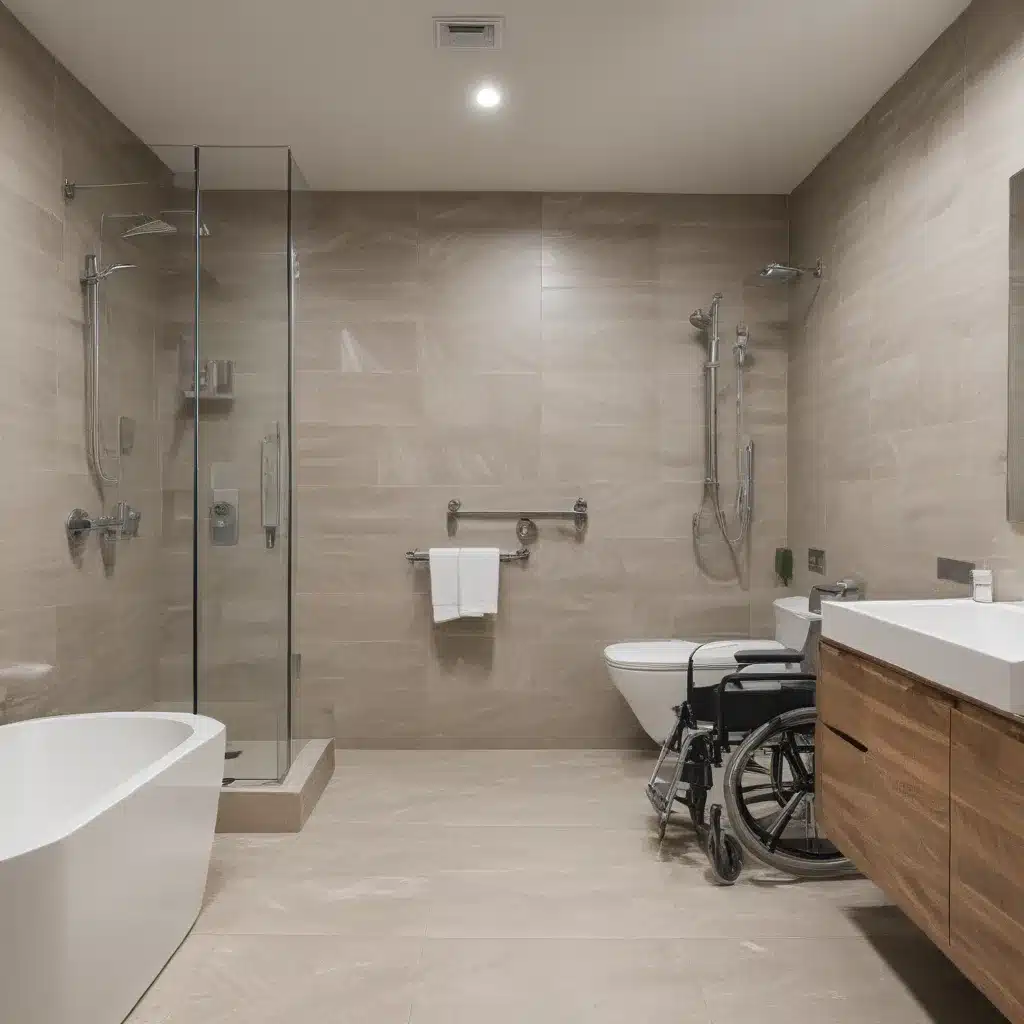
For Jack, we knew that his love for nature and the outdoors would be an important consideration. Inspired by this, we incorporated earthy tones, natural materials, and soothing lighting to create a serene, spa-like atmosphere. The vanity, for instance, was crafted from reclaimed wood, lending a rustic charm that resonated with Jack’s sensibilities.
But it didn’t stop there. We also worked closely with Jack’s occupational therapist to understand his specific needs and preferences. This led us to customized features like a height-adjustable shower bench, a wall-mounted toilet that allowed for easy transfer, and a sink with a knee clearance that accommodated his wheelchair.
The attention to detail extended even to the smallest of elements. We chose faucets with large, easy-to-grip handles, and installed a handheld showerhead with a flexible hose for maximum control. The towel bars were placed at a height that was accessible, and the lighting was designed to eliminate glare and shadows, ensuring a safe and comfortable environment.
Collaboration and Empowerment
As the renovation progressed, I was struck by the sense of collaboration and empowerment that permeated the entire process. Jack and his family were active participants, offering their insights and feedback at every stage. They felt heard, respected, and truly invested in the outcome.
The transformation was nothing short of remarkable. When the project was complete, I had the privilege of witnessing Jack’s first independent shower in his new bathroom. The look of joy and pride on his face was a testament to the power of inclusive design. He no longer had to rely on his parents for the most basic of tasks, regaining a sense of autonomy and dignity that had been so profoundly impacted by his disability.
Reflections and Lessons Learned
Designing a bathroom for individuals with disabilities has been a profound and humbling experience. It has taught me the true meaning of empathy, the importance of listening, and the transformative power of design.
Through this journey, I’ve learned that accessibility is not just about ticking boxes or meeting code requirements. It’s about creating a space that empowers, uplifts, and celebrates the unique strengths and abilities of each individual. It’s about recognizing that disability is not a limitation, but rather an opportunity to push the boundaries of what’s possible.
As I reflect on the work we’ve done, I’m reminded of the words of Helen Keller, who once said, “Alone we can do so little; together we can do so much.” The collaboration and partnership with Jack, his family, and the broader team of professionals was essential in bringing this project to life. It’s a testament to the power of working together, of combining our expertise and perspectives to create something truly remarkable.
Moving forward, I’m committed to continuing this important work. I know that there are countless individuals in our community who face similar challenges, and I’m determined to be a champion for their needs. By sharing our experiences and learnings, I hope to inspire other building and renovation companies to embrace the principles of inclusive design and to see it not as a burden, but as an opportunity to make a real difference in people’s lives.
So, if you’re a homeowner in Aberdeen, UK, or anywhere else, and you’re in need of a bathroom renovation that truly caters to your unique needs, I encourage you to reach out to us at ABC Home. Together, let’s embark on a journey of empowerment, where the spaces we create become a reflection of the resilience and strength of the individuals who call them home.


