
The Inspiration Behind Wheelchair Friendly Bathrooms
As the owner of a building and renovation company in Aberdeen, UK, I’ve had the privilege of working on a wide range of projects over the years. But one area that has always held a special place in my heart is the design and construction of wheelchair-friendly bathrooms. You see, my own grandmother spent the last few years of her life confined to a wheelchair, and I witnessed firsthand the daily struggles she faced in her own home. The lack of accessibility and the constant need for assistance with the simplest of tasks – it broke my heart.
That’s why, when I started this business, I made a personal commitment to ensure that every bathroom we design and build would be fully accessible and adaptable to the needs of our customers, no matter their mobility challenges. It’s not just about following the latest building regulations – it’s about creating spaces that truly empower and uplift those who need it most.
The Wet Room Advantage
One of the key features we often recommend for wheelchair-friendly bathrooms is the wet room. Now, I know what you might be thinking – “Wet rooms? Aren’t those just for fancy spa hotels?” Well, let me tell you, the wet room design is a game-changer when it comes to accessibility and independent living.
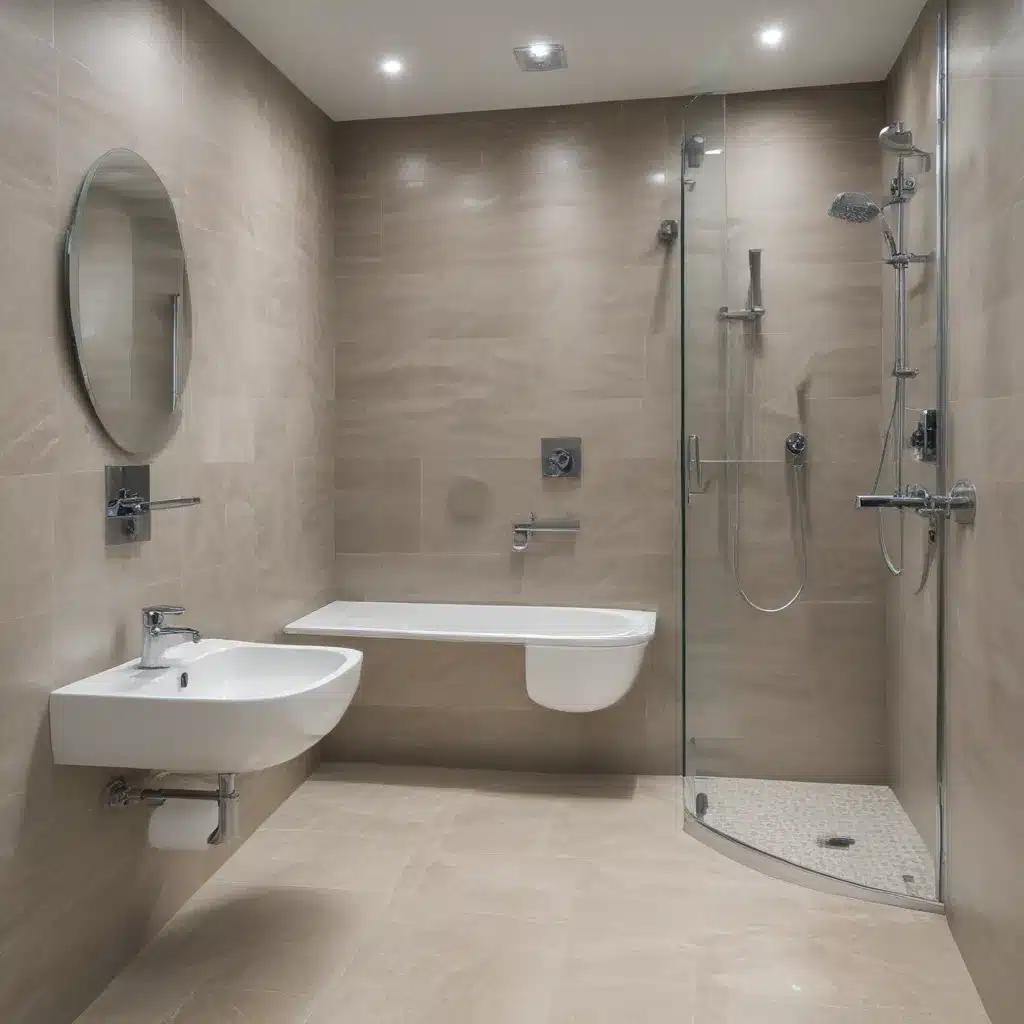
Unlike traditional bathrooms with a separate shower enclosure, a wet room is designed with the entire floor sloped towards a central drain. This means that the entire room becomes the shower area, eliminating the need for any steps or thresholds that could pose a tripping hazard. Wheelchair users can simply roll right in, without the fear of navigating a cramped shower cubicle or stepping over a high ledge.
But the benefits of a wet room go beyond just accessibility. The open, seamless layout also creates a much more spacious and visually appealing environment. Gone are the days of feeling claustrophobic in a tiny bathroom – a wet room can make even the most compact spaces feel airy and luxurious.
Designing for Comfort and Convenience
Of course, designing a truly wheelchair-friendly wet room requires a bit more thought and attention to detail. It’s not just about removing the barriers – it’s about creating a space that is genuinely comfortable and convenient for our customers.
One of the key considerations is the placement and design of the shower area. We always make sure to incorporate a sturdy, wall-mounted shower seat that can support the weight of the user, as well as strategically placed grab bars for added stability. And the shower controls? They’re positioned within easy reach, so that our customers can operate them without having to strain or reach.
But it’s not just the shower itself that we think about. The entire bathroom layout is carefully planned to ensure maximum maneuverability for wheelchair users. Wide doorways, generous floor space, and thoughtfully positioned fixtures and storage areas – these are all essential elements that we incorporate into our wet room designs.
Customizing for Individual Needs
Of course, no two customers are exactly alike, and their individual needs and preferences can vary quite significantly. That’s why we always take the time to sit down with each of our clients and really understand their unique requirements.
For some, the priority might be a more streamlined, minimalist aesthetic, with clean lines and a neutral color palette. Others might prefer a more warm and inviting feel, with pops of color and textural elements. And then there are those who have very specific accessibility needs, such as the requirement for a height-adjustable vanity or a specialized toilet system.
Whatever the case may be, our team of experienced designers and contractors is up for the challenge. We work closely with our clients, incorporating their feedback and preferences at every stage of the process, to ensure that the end result is a bathroom that not only meets their needs, but truly exceeds their expectations.
Bringing it all Together: A Case Study
To give you a better idea of what a wheelchair-friendly wet room can look like in practice, let me share a recent project that we completed for a family in Aberdeen.
The clients, a retired couple in their 70s, had been struggling with the limitations of their outdated bathroom for years. The narrow doorway, the high-walled tub, the cramped shower cubicle – it was all a constant source of frustration and anxiety for the husband, who had been using a wheelchair for the past five years.
When they reached out to us, we knew we had our work cut out for us. But we were also excited to put our expertise to the test and create a truly transformative space.
The first step was to completely gut the existing bathroom, removing all the old fixtures and fittings. We then got to work on the layout, designing a spacious wet room that would allow for easy wheelchair maneuverability. The floor was carefully sloped towards a centrally located drain, and we incorporated a wall-mounted shower seat and strategically placed grab bars to provide the necessary support and stability.
But the real showstopper was the custom-built vanity unit. Recognizing the importance of maintaining independence, we worked with the clients to create a height-adjustable design that could be easily operated by the husband from his wheelchair. The result? A sleek, modern vanity that not only looked stunning, but also empowered our client to take care of his daily grooming routine without relying on assistance.
The final touch was the addition of a few personal flourishes – a vibrant accent wall, plush towels in the client’s favorite color, and a few carefully chosen decorative elements. The transformation was nothing short of remarkable, and the couple’s delight was palpable.
The Transformative Power of Accessible Design
As I reflect on this project, and countless others like it, I’m reminded of the truly life-changing impact that accessible bathroom design can have. It’s not just about ticking boxes or meeting regulatory requirements – it’s about restoring a sense of dignity, independence, and joy to those who have long been denied these basic comforts.
Sure, a wheelchair-friendly wet room might cost a bit more than a standard bathroom renovation. But the dividends it pays in terms of improved quality of life, increased self-confidence, and the ability to age in place with grace and autonomy – those are the true markers of success.
And that, my friends, is why I am so passionate about this work. It’s not just a job, it’s a calling. To be able to create spaces that empower, uplift, and transform the lives of our customers – that is the greatest reward I could ever ask for.
So, if you’re considering a bathroom renovation, I urge you to think beyond the surface-level aesthetics and really consider the long-term impact of your design choices. Because when you create a bathroom that is truly accessible and adaptable, you’re not just building a room – you’re building a sanctuary, a haven, a place of comfort and independence that can make all the difference in the world.
One final thought: if you’re interested in exploring the possibilities of a wheelchair-friendly wet room for your own home, I encourage you to reach out to our team at ABC Home. We’d be honored to work with you and help turn your accessibility dreams into a reality.


