
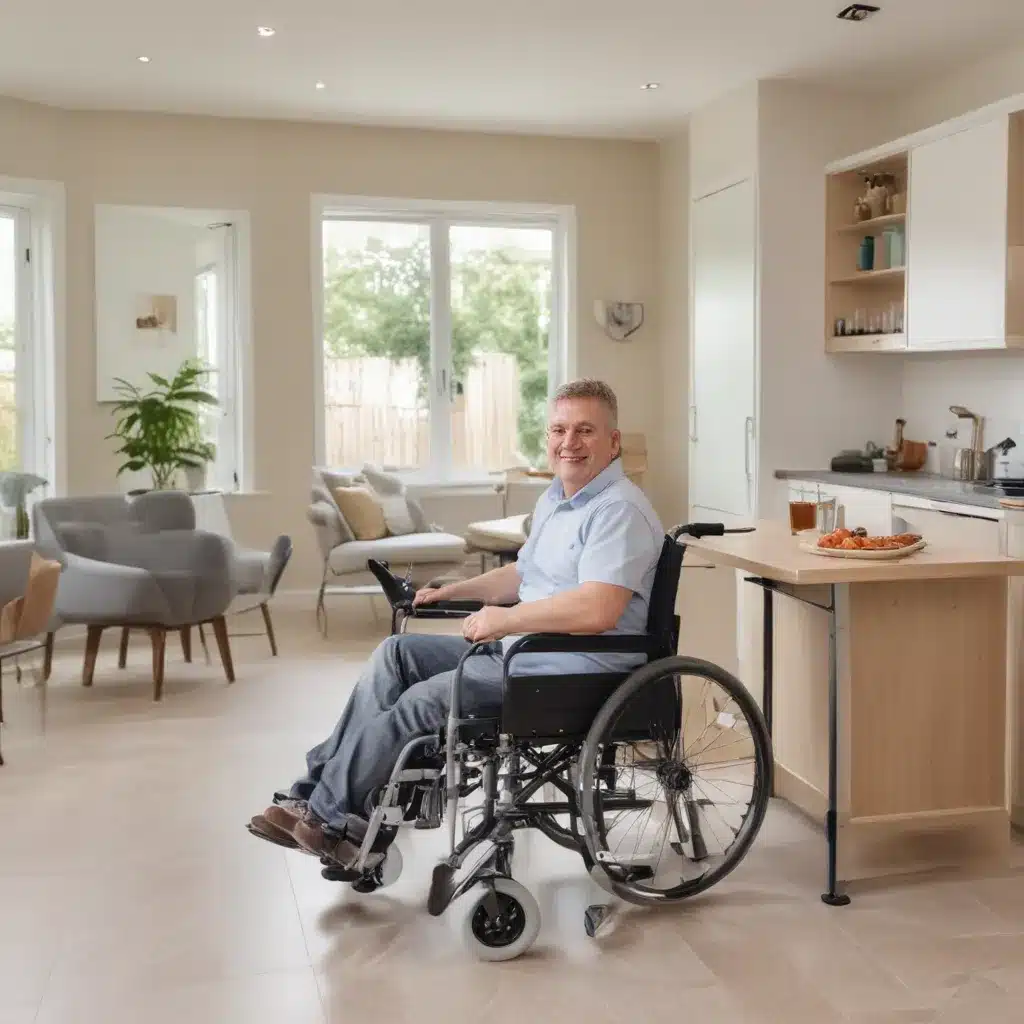
Unlocking the Door to a Lifetime of Comfort and Convenience
As I sit down to write this article, I can’t help but reflect on the journey that led me to this point. You see, I’ve been in the building and renovation business for over a decade, and during that time, I’ve had the privilege of helping countless clients create their dream homes. But it’s the experiences with a particular group of clients that have truly transformed the way I approach my work: those seeking to design an accessible and mobility-friendly home.
It all started when I received a call from a young couple, let’s call them Emily and Jack. They had recently welcomed their first child, a beautiful baby girl named Lily, who was born with a rare genetic condition that left her with limited mobility. Emily and Jack were determined to create a home that would not only accommodate Lily’s needs but also provide a warm and inviting space for their growing family. That’s when I knew that my role as a builder and designer had to evolve beyond just creating aesthetically pleasing spaces.
Embracing Accessibility: The Cornerstone of Inclusive Design
As I delved deeper into the world of accessible design, I was struck by the realization that it’s not just about ticking boxes or meeting building codes. It’s about creating an environment that empowers individuals, regardless of their physical abilities, to live with dignity, independence, and a sense of belonging.
The truth is, accessibility is not just for those with visible disabilities. It’s for anyone who might face mobility challenges, whether it’s due to age, injury, or temporary circumstances. By designing with accessibility in mind, we can create homes that adapt to the changing needs of the occupants, ensuring that they can comfortably and safely navigate their living spaces for years to come.
One of the key principles I’ve learned is that accessible design is not about compromise or sacrificing style. In fact, it can actually enhance the overall aesthetic and functionality of a home. It’s about finding innovative solutions that seamlessly integrate accessibility features into the overall design, creating a space that is both beautiful and accommodating.
Navigating the Maze of Accessibility Requirements
As a building and renovation professional, I’ve had to navigate a complex web of accessibility guidelines and building codes. From the Americans with Disabilities Act (ADA) in the United States to the Equality Act in the UK, there are a myriad of regulations and standards that must be taken into consideration.
But rather than seeing these requirements as a burden, I’ve come to view them as opportunities to create truly inclusive spaces. By staying up-to-date on the latest accessibility guidelines and best practices, I’m able to anticipate and address the needs of my clients, ensuring that their homes are not only visually appealing but also fully accessible.
One of the most important aspects of accessible design is the consideration of circulation and movement within the home. This includes wide doorways, smooth transitions between rooms, and strategically placed grab bars and handrails. It’s about creating a seamless flow that allows individuals with mobility challenges to move freely and independently throughout their living space.
Crafting Customized Solutions: Tailoring Accessibility to Individual Needs
While there are general principles and guidelines for accessible design, the reality is that every individual has unique needs and preferences. That’s why I believe it’s crucial to take a personalized approach when it comes to designing an accessible home.
When working with clients like Emily and Jack, I make it a point to have in-depth conversations about their specific requirements, challenges, and aspirations. This allows me to develop customized solutions that cater to their unique circumstances, whether it’s the placement of light switches, the design of the bathroom, or the integration of assistive technologies.
One of the most rewarding aspects of my work is seeing the joy and relief on my clients’ faces when they realize that their home can be a place of true comfort and independence, rather than a constant source of frustration and limitation.
Embracing the Latest Technologies for Accessible Living
The world of accessible design is constantly evolving, and I’ve been thrilled to witness the incredible advancements in assistive technologies that are transforming the way people with mobility challenges interact with their living spaces.
From voice-controlled smart home systems that allow for hands-free operation of lights, appliances, and even door locks, to innovative mobility aids like power-assisted wheelchairs and exoskeletons, the options for creating a truly accessible home are growing by the day.
As a building and renovation professional, I’ve made it a priority to stay up-to-date on the latest accessibility technologies and to incorporate them into my design process whenever possible. By seamlessly integrating these cutting-edge solutions, I’m able to create homes that not only meet the needs of my clients but also offer them a level of independence and convenience that was once unimaginable.
Fostering Inclusive Communities: The Ripple Effect of Accessible Design
As I reflect on my experiences in the world of accessible design, I’ve come to realize that the impact of our work extends far beyond the walls of the homes we create. By designing inclusive spaces that cater to individuals with diverse abilities, we’re not just transforming the lives of our clients – we’re also contributing to the creation of more equitable and accessible communities.
When a home is designed with accessibility in mind, it doesn’t just benefit the occupants. It also sets a precedent for the surrounding neighborhood, inspiring others to consider the importance of inclusive design. It’s a ripple effect that can have far-reaching consequences, breaking down barriers and fostering a greater sense of belonging for all.
I’ve seen this firsthand in the case of Emily and Jack. Their home, with its thoughtfully integrated accessibility features, has become a gathering place for their community, where neighbors come together to celebrate, socialize, and support one another. It’s a testament to the power of inclusive design to bring people together and create a more welcoming world for all.
Embracing the Future: The Endless Possibilities of Accessible Design
As I look ahead to the future of accessible design, I can’t help but feel a sense of excitement and optimism. The field is rapidly evolving, with new technologies, materials, and design approaches emerging all the time. And as a building and renovation professional, I’m thrilled to be at the forefront of this important movement.
I envision a world where accessibility is not an afterthought, but a fundamental consideration in the design of all living spaces. Where homes are not just functional, but truly empowering, offering their occupants the freedom to live life to the fullest, regardless of their physical abilities.
It’s a future that I’m committed to helping create, one home at a time. By sharing my knowledge, collaborating with industry experts, and continuously pushing the boundaries of what’s possible, I’m confident that we can design and build homes that not only meet the needs of today but also anticipate the needs of tomorrow.
So, if you’re on the journey of creating your own accessible and mobility-friendly home, I encourage you to embrace the possibilities. Together, we can unlock a world of comfort, convenience, and true independence – a world where every individual has the freedom to thrive and flourish, no matter the challenges they face.
Remember, your home should be a sanctuary, a place where you can live, grow, and celebrate life to the fullest. And with the right accessible design, that dream can become a reality. Let’s embark on this journey together and create a future where accessibility is the norm, not the exception.
If you’re ready to take the first step towards your dream home, I invite you to visit our website and let’s start the conversation. I can’t wait to hear your story and work with you to design the perfect accessible and mobility-friendly home for life.


