
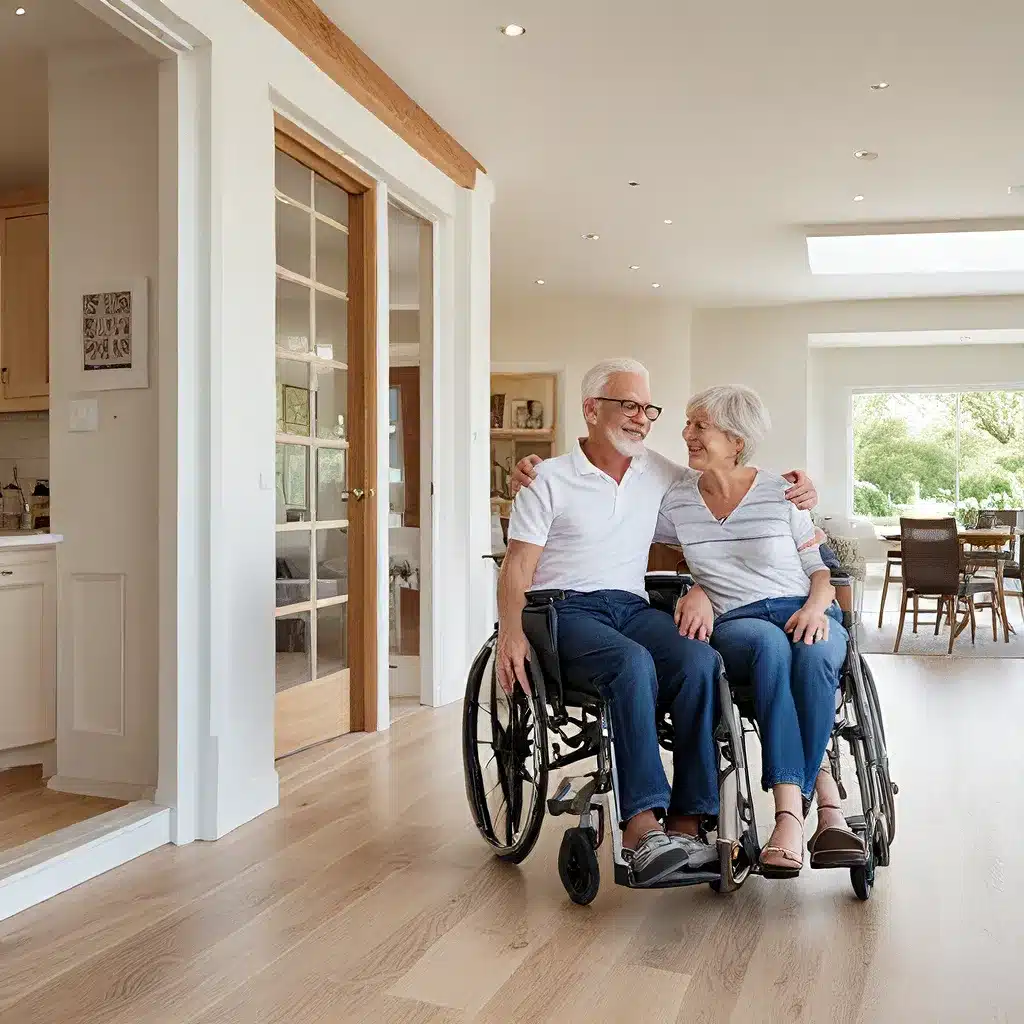
Embracing the Multigenerational Living Revolution
Ah, the joys and challenges of living with multiple generations under one roof! As families across the UK are discovering, multigenerational living is on the rise, reshaping the way we think about our homes. This living arrangement not only fosters a supportive and caring environment but also offers financial advantages and shared caregiving responsibilities.
But let’s be real – when you’ve got Grandma, Mom, Dad, the kids, and the family dog all under the same roof, things can get a little chaotic. That’s why accessible home design is so crucial when creating a multigenerational haven. By incorporating smart features and universal design principles, we can transform our homes into a comfortable, functional, and inclusive space for every generation.
Adapting Your Home to Accommodate All Needs
I’ll never forget the time my 92-year-old grandma came to stay with us for a few months. Bless her heart, she had a heck of a time navigating our split-level home, with all those stairs and tricky doorways. It was a wake-up call that our living situation needed some serious TLC.
That’s where the magic of accessible home design comes in. By working with aging in place consultants and home remodeling experts, we were able to identify the key modifications needed to make our home truly user-friendly for Grandma and the rest of the family.
One of the first things we tackled was improving mobility and accessibility throughout the house. We widened doorways, installed grab bars in the bathroom, and added a ramp at the front entrance. These simple changes made a world of difference, allowing Grandma to get around with ease and reducing the risk of falls or accidents.
But it wasn’t just about the physical space – we also needed to consider the unique needs of each family member. For Grandma, who had limited mobility due to arthritis, we incorporated features like adjustable countertops and a walk-in shower to make her daily routines more manageable. And for our young, rambunctious kids, we created a dedicated playroom with plenty of room to run and explore.
Creating a Harmonious and Inclusive Living Space
As we navigated the world of multigenerational living, we quickly learned that it’s not just about the physical design – it’s also about fostering a sense of harmony and inclusion within the home. After all, when you’ve got three generations under one roof, there are bound to be some clashing of preferences and personalities.
That’s why we placed a strong emphasis on private spaces and noise-control measures. By strategically arranging our home’s layout, we were able to create cozy retreats for each family member to escape to when they needed some alone time. And with the help of soundproofing techniques, we minimized the disruptive echoes of late-night video game sessions and early-morning dish clattering.
But the true magic happened when we started bringing everyone together in our shared living spaces. We designed an open-concept kitchen and dining area where we could all gather for family meals and conversations. And our spacious family room became the hub for movie nights, game sessions, and lively debates.
Empowering Independence and Fostering Connections
One of the most rewarding aspects of our accessible home design journey was witnessing the positive impact it had on our family. For Grandma, the simple modifications gave her a renewed sense of independence and dignity. She could now move around freely, complete her daily tasks with ease, and actively participate in family activities without feeling like a burden.
But the benefits extended far beyond just Grandma. By creating a living environment that caters to the needs of every generation, we fostered a deeper sense of belonging and connection within our family. Gone were the days of Grandma feeling isolated in her room or the kids feeling like they were constantly being scolded for making too much noise. Instead, we had a harmonious, supportive, and inclusive space where everyone could thrive.
The Key Ingredients for a Multigenerational Home
As I reflect on our experience, I realize that the secret to a successful multigenerational home lies in a delicate balance of flexibility, accessibility, and personalization. By incorporating universal design principles, we were able to create a living space that could adapt to the changing needs of our family over time.
One of the standout features in our home was the inclusion of dual master suites. This allowed Grandma to have her own private living quarters on the ground floor, while the rest of the family occupied the upper levels. It was the perfect compromise between independence and togetherness.
We also made sure to incorporate sustainable design elements that not only contributed to a healthier living environment but also helped to reduce our utility costs. From energy-efficient appliances to water-conserving fixtures, these small tweaks made a big difference in our overall comfort and financial well-being.
Embracing the Journey of Accessible Home Design
If you’re considering the leap into multigenerational living, I can attest that it’s an incredibly rewarding experience – but it’s also not without its challenges. That’s why it’s so important to work with the right professionals, like the team at ABC Home, to guide you through the process.
These experts have the knowledge and expertise to help you identify the most effective and practical home modifications for your family’s unique needs. They can walk you through the process, from initial planning to final construction, ensuring that your home meets the requirements of all your loved ones.
So, if you’re ready to embark on your own accessible home design journey, don’t hesitate to reach out and explore the possibilities. Trust me, the investment in creating a safe, comfortable, and inclusive living environment for your family will be well worth it. After all, home is where the heart is – and when it’s designed with everyone in mind, it becomes a true haven for all generations to flourish.


