
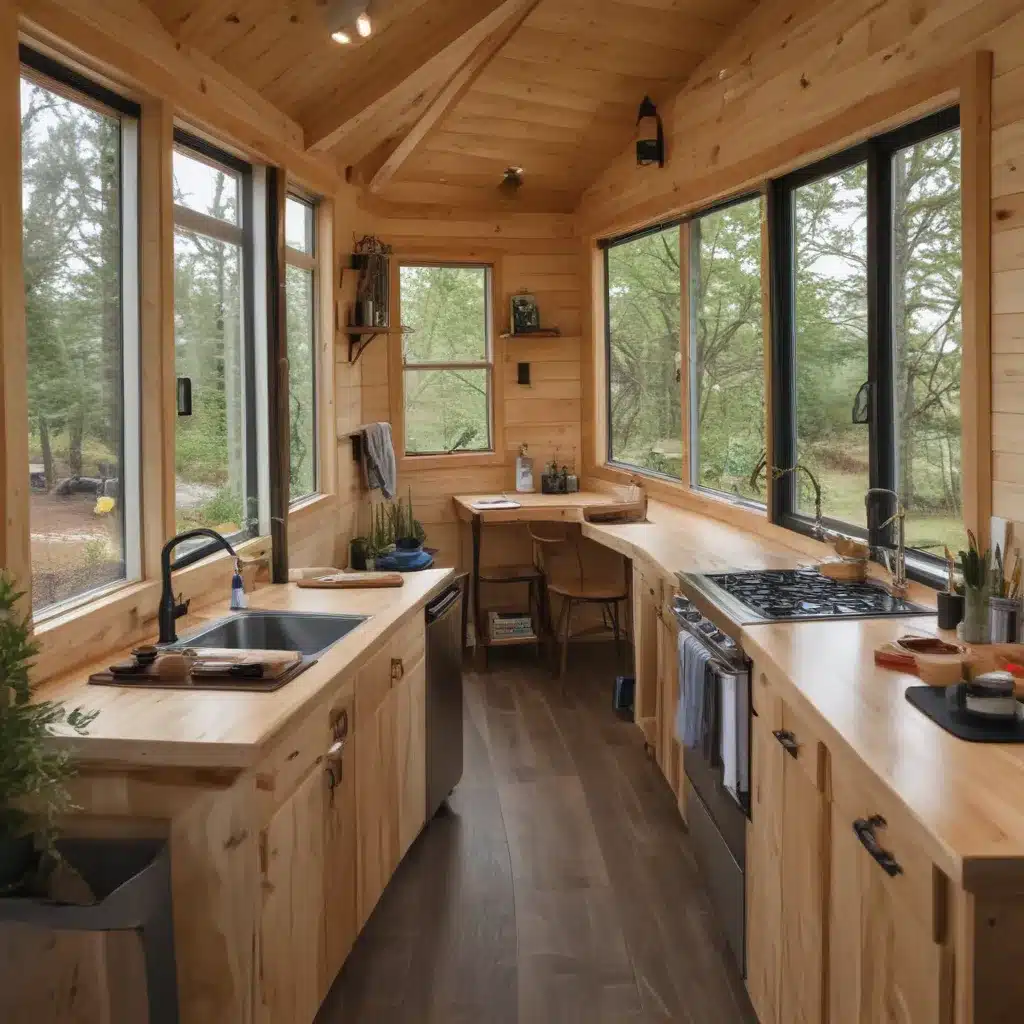
The Joys (and Challenges) of Downsizing
Ah, the tiny home – that alluring vision of minimalist bliss, where less is truly more. As the founder of ABC Home, a building and renovation company in the heart of Aberdeen, UK, I’ve had the privilege of guiding countless clients on their journeys towards more sustainable, space-efficient living. And let me tell you, it’s been quite the ride!
You see, the desire to downsize and live with a smaller eco-footprint is on the rise, and for good reason. In a world that often values excess and conspicuous consumption, the tiny home movement offers a refreshing antidote. But make no mistake, designing and constructing these diminutive dwellings is no easy feat. It requires a delicate balance of creativity, practicality, and a deep understanding of your client’s needs and aspirations.
The Appeal of Tiny Homes
Why, you ask, are so many people drawn to the tiny home lifestyle? Well, for starters, there’s the financial aspect. With the ever-increasing cost of housing, particularly in bustling urban areas like Aberdeen, the tiny home offers a more affordable alternative. By eschewing the traditional McMansion in favor of a pint-sized oasis, homeowners can free up funds for other pursuits, whether it’s travel, education, or simply stashing away a bit more in the ol’ retirement account.
But it’s not just about the bottom line. Many of our clients are also driven by a desire to minimize their environmental impact. In an age of rampant consumerism and resource depletion, the tiny home represents a conscious choice to live more mindfully, to consume less, and to tread more lightly upon the Earth. It’s a way of life that aligns with the growing awareness of climate change and the urgent need for sustainable solutions.
And let’s not forget the sense of liberation and simplicity that comes with downsizing. Gone are the days of endless dusting, vacuuming, and maintenance that come with a sprawling abode. In a tiny home, the focus shifts from “stuff” to experiences, relationships, and personal growth. It’s a lifestyle that encourages a closer connection with nature, a deeper appreciation for the essentials, and a greater sense of freedom and flexibility.
Designing for Efficiency and Functionality
Now, you might be thinking, “Okay, I get the appeal, but how do you actually make these tiny homes work?” Well, my friends, it’s all about design and functionality.
When crafting a tiny home, every square inch counts. We’re talking about a masterclass in spatial planning, where every nook and cranny is optimized to maximize utility. Gone are the days of vast, underutilized rooms; in their place, we have meticulously designed, multifunctional spaces that seamlessly blend form and function.
Take the kitchen, for example. In a traditional home, the kitchen is often a separate, dedicated space. But in a tiny home, we need to get a bit more creative. We might incorporate a compact, modular kitchen that integrates seamlessly with the living area, or even explore the possibility of a “kitchen island” that doubles as a dining table or workspace.
And the sleeping quarters? Forget the sprawling master suite! In a tiny home, the bed might be tucked away in a cozy loft, or perhaps it transforms into a sofa or daybed during the day. It’s all about finding innovative solutions that allow our clients to live large in a small space.
Of course, storage is always a hot topic when it comes to tiny homes. But with a bit of ingenuity, we can turn even the most seemingly “dead” spaces into functional storage hubs. Hidden compartments, built-in shelving, and cleverly designed furniture pieces – these are the tools of our trade, allowing us to maximize every last inch of available space.
Sustainability and Eco-Friendly Features
But the design prowess doesn’t stop there. When it comes to tiny homes, sustainability is a key consideration. After all, what’s the point of downsizing if you’re not going to embrace eco-friendly practices?
That’s why we work closely with our clients to incorporate cutting-edge green technologies into the design and construction of their tiny homes. Solar panels, for instance, are a must-have – they allow our clients to generate their own renewable energy, reducing their reliance on the grid and, in turn, their carbon footprint.
And the sustainable features don’t stop there. We also explore the use of reclaimed and recycled materials, minimizing waste and giving new life to old resources. Imagine a kitchen countertop made from repurposed glass bottles, or walls clad in salvaged timber – it’s all part of our mission to create homes that are kind to the planet.
But it’s not just about the physical aspects of the home. We also strive to cultivate a mindset of sustainability among our clients, encouraging them to embrace a more conscious, eco-friendly lifestyle. This might involve things like water conservation measures, composting systems, or even the integration of edible gardens and urban farming solutions.
Real-Life Tiny Home Stories
Of course, the true magic of tiny home design can only be fully appreciated through the stories of the people who have embarked on this journey. And let me tell you, we’ve had the privilege of working with some truly inspiring individuals.
Take, for example, the case of the Andersons, a young couple who were determined to break free from the shackles of a traditional mortgage. They came to us with a dream of building a sustainable, off-grid tiny home that would allow them to explore the great outdoors and live a life of adventure. Working closely with our team, they designed a masterpiece of a tiny home, complete with solar panels, a composting toilet, and a retractable deck that opened up to breathtaking views of the nearby forest.
Then there’s the story of Mrs. Patel, a recent retiree who was looking to downsize and simplify her life. She had spent years in a sprawling suburban home, and the thought of maintaining all that space was simply exhausting. With our guidance, she transformed a quaint, 400-square-foot cabin into a cozy, yet functional haven, with custom-built storage solutions and a compact, energy-efficient kitchen that allowed her to focus on her newfound passion for cooking and entertaining.
And let’s not forget the Wilsons, a family of four who were determined to prove that tiny home living wasn’t just for singles or couples. Working closely with our team, they designed a clever two-story tiny home that managed to accommodate their growing brood, complete with a loft sleeping area for the kids and a cozy, ground-floor living space that brought the family together in new and meaningful ways.
The Challenges and Considerations
Now, I’d be remiss if I didn’t acknowledge that the tiny home journey isn’t always smooth sailing. There are certainly a few hurdles and considerations that our clients need to grapple with.
For starters, there’s the issue of zoning and regulations. Depending on the location, tiny homes may face a minefield of building codes, permits, and bureaucratic red tape. It’s a challenge that requires a deep understanding of the local landscape and a willingness to navigate the sometimes-murky waters of municipal governance.
And then there’s the question of resale value. While the tiny home lifestyle may be all the rage in certain circles, there’s always the concern that these diminutive dwellings may not hold their value in the same way as a traditional home. It’s a consideration that our clients need to weigh carefully, particularly if they’re thinking of this as a long-term investment.
But perhaps the biggest hurdle of all is the mental and emotional adjustment. Downsizing and simplifying one’s life isn’t just a physical undertaking; it’s a profound psychological shift. Our clients need to be prepared to let go of material possessions, to embrace a more minimalist mindset, and to find comfort in the cozy confines of their tiny home.
The Future of Tiny Homes
So, what does the future hold for the tiny home movement? Well, if the past few years are any indication, I believe we’re only just scratching the surface.
As the cost of housing continues to soar and the urgency of environmental stewardship becomes ever more pressing, the appeal of tiny homes is only going to grow. I foresee a future where these compact, sustainable dwellings become not just a niche curiosity, but a mainstream housing option for people of all ages and walks of life.
And the design possibilities? Oh, the possibilities are endless! As technology and innovation continue to evolve, I can envision tiny homes that push the boundaries of what’s possible. Imagine homes that can expand and contract based on the needs of their occupants, or that seamlessly integrate with the surrounding landscape. Perhaps even tiny homes on wheels, allowing for a truly nomadic lifestyle.
But beyond the physical aspects, I believe the true power of the tiny home movement lies in its ability to inspire a broader shift in societal values. By embracing a more minimalist, eco-conscious way of living, these diminutive dwellings have the potential to catalyze a broader rethinking of our relationship with material possessions, our impact on the environment, and the very nature of what it means to live a fulfilling life.
So, if you’re someone who’s been toying with the idea of downsizing and living a smaller, more sustainable life, I encourage you to take the leap. Reach out to us at ABC Home – we’d be more than happy to help you design the tiny home of your dreams, and to guide you on the journey towards a more fulfilling, eco-friendly future.


