
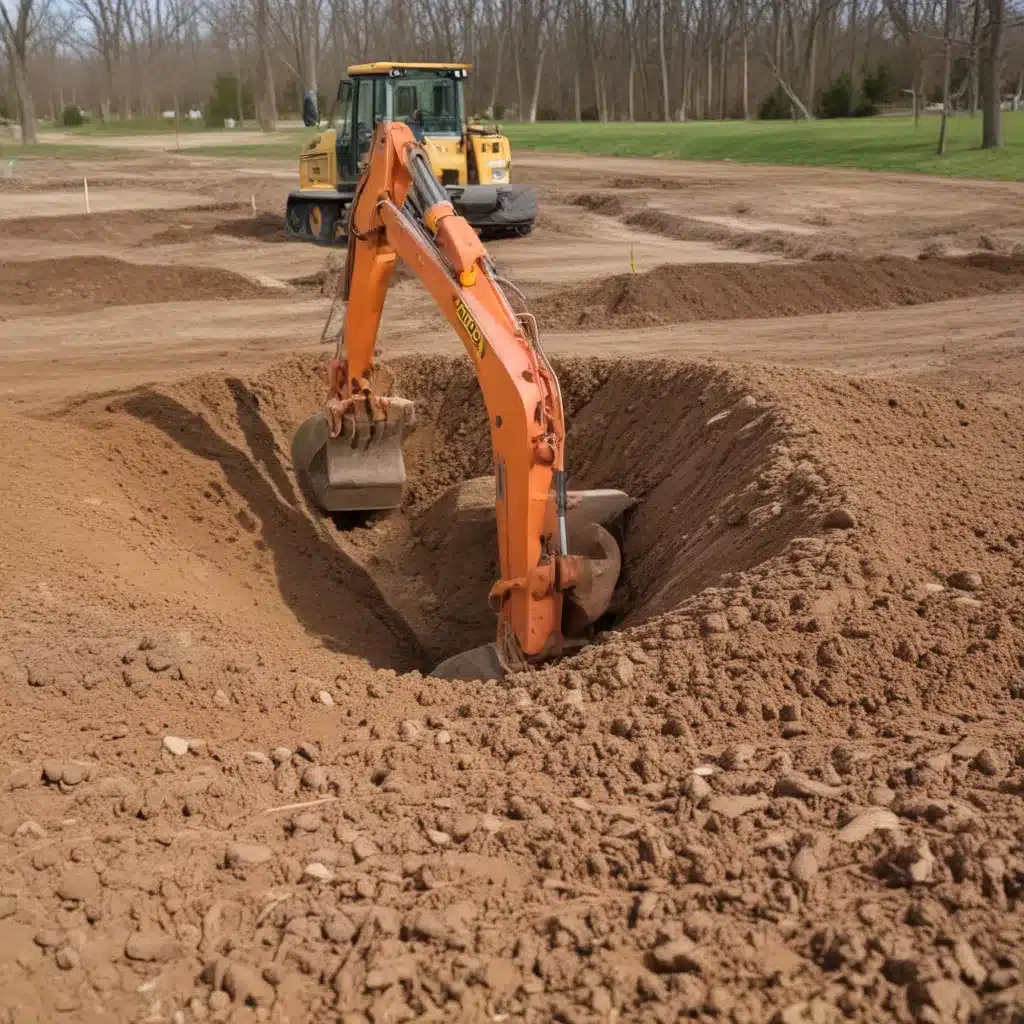
The Buried Treasure Beneath Our Feet
Have you ever wondered what lies beneath the unassuming surface of your backyard or construction site? Well, my friends, let me tell you – it’s a veritable minefield of buried utilities, cables, and pipelines, just waiting to be discovered (or, more accurately, accidentally severed)! As a building and renovation company based in Aberdeen, UK, we’ve had our fair share of run-ins with these subterranean surprises, and let me tell you, it’s not a pretty sight.
You see, the ground beneath our feet is like a labyrinth of hidden pathways, carrying everything from electricity and gas to water and telecommunications. And the sad truth is, too many homeowners and contractors alike have a habit of diving headfirst into a project without a second thought for what might be lurking below. I’ve seen it all – from severed fiber optic cables that left an entire neighborhood without internet, to ruptured gas lines that required a full-scale evacuation. It’s enough to make your hair stand on end!
But fear not, my fellow adventurers, for I’m here to share with you the secrets of digging safely and avoiding those pesky buried services. After all, the last thing you want is to end up like that poor bloke who accidentally cut through his neighbor’s underground sprinkler system, only to be met with a veritable geyser of water shooting up into the air. (Believe me, the mental image is both hilarious and horrifying.)
Mapping the Underworld: Locating Buried Services
So, where do we begin this quest for subterranean safety? Well, the first step is to get a good map of the area, of course! And I’m not talking about your standard Google Maps here, folks – we’re talking about something much more specialized.
You see, utility companies are required by law to maintain accurate records of the location of their underground assets. And lucky for us, they’re usually more than happy to share this information, provided we ask nicely (and, you know, maybe offer to buy them a pint or two). These utility maps can be an absolute godsend, pinpointing the precise location of cables, pipes, and other buried treasures that might be lurking beneath the surface.
But here’s the catch: these maps aren’t always as up-to-date or accurate as we’d like them to be. After all, things can change a lot over time, and it’s not uncommon for new utilities to be installed or old ones to be rerouted without the maps being properly updated. That’s why it’s always a good idea to do a little extra digging (pun intended) before you start your own excavation project.
Calling in the Experts: Utility Locating Services
That’s where the utility locating experts come in. These are the brave souls who wield an array of high-tech gadgets and gizmos, from ground-penetrating radar to electromagnetic sensors, all in the name of finding those pesky buried services before they can cause any trouble.
Now, I know what you’re thinking – “But wait, isn’t that going to cost me an arm and a leg?” And you know what, you’re not wrong. These utility locating services don’t come cheap, and it’s a bit of an investment upfront. But let me tell you, it’s a small price to pay compared to the alternative.
Imagine this: you’re merrily digging away, blissfully unaware of the high-voltage cable just a few inches beneath the surface. Suddenly, there’s a huge spark, a deafening bang, and the entire neighborhood is plunged into darkness. Not only have you just caused thousands of pounds’ worth of damage, but you’ve also put yourself and your crew in serious danger. And let’s not even get started on the headache of dealing with the utility company and their angry lawyers.
No, my friends, it’s simply not worth the risk. That’s why I always recommend calling in the professionals before you start any major excavation project. Trust me, it’s a whole lot easier (and cheaper) to find those buried services before you accidentally turn your worksite into a scene from a Michael Bay movie.
The Art of Potholing: Exposing Buried Utilities
Of course, even with the best utility maps and the most advanced locating equipment, there’s still no substitute for good old-fashioned elbow grease. That’s where the art of “potholing” comes into play.
Potholing, for the uninitiated, is the process of carefully excavating small trial holes to physically expose and verify the location of buried utilities. It’s a bit like a high-stakes game of hide and seek, but with the added bonus of potentially electrocuting yourself or triggering a massive gas leak.
Okay, maybe that’s a bit of an exaggeration, but the point is, potholing is not for the faint of heart. It requires a steady hand, a keen eye, and a whole lot of patience. You’ve got to be willing to get down and dirty, literally, as you carefully remove the soil, silt, and gravel to uncover those hidden pipelines and cables.
And let me tell you, the suspense is palpable. Will you strike gold and find exactly what you’re looking for? Or will you accidentally stumble upon a buried treasure trove of trouble? It’s like a real-life version of that old arcade game “Minesweeper,” but with much higher stakes.
But the payoff, oh, the payoff is glorious. When you finally lay eyes on that elusive utility, it’s like a little victory dance in the middle of your worksite. You can practically hear the angels singing as you carefully mark the location and move on to the next challenge.
The Importance of Utility Strikes: Avoiding Costly Accidents
Now, I know what you’re thinking – “Why go to all this trouble? Surely it can’t be that big of a deal if I accidentally hit a buried utility, right?” Oh, my sweet summer child, if only that were the case.
You see, utility strikes (that’s industry lingo for when you accidentally hit a buried cable or pipe) are a big deal. Like, a really big deal. We’re talking thousands of pounds in potential damages, not to mention the risk of serious injury or even loss of life.
Just imagine the scenario: you’re merrily digging away, trying to install a new drainage system, when suddenly, the sound of screeching metal fills the air. You’ve just hit a high-pressure gas line, and now you’ve got a veritable geyser of flammable gas spewing out into the open. Or maybe you’ve sliced through a fiber optic cable, leaving an entire neighborhood without internet (the horror!).
The consequences can be devastating, both financially and in terms of safety. Not only will you be on the hook for the cost of repairs, but you could also be facing hefty fines, legal battles, and even criminal charges if someone gets hurt. And let’s not forget the impact on your reputation – word spreads fast in the construction industry, and trust me, you don’t want to be known as the guy who keeps hitting underground utilities.
That’s why it’s so important to take every precaution possible when it comes to digging and excavation. From thoroughly researching the site to calling in the experts, every step you take can mean the difference between a successful project and a complete and utter disaster.
Staying Safe: Personal Protective Equipment and Site Protocols
But it’s not just about the equipment and the maps, my friends. When it comes to digging safely, it’s also all about the personal protective equipment (PPE) and the site protocols.
Now, I know what you’re thinking – “PPE? That’s just for the big construction sites, right?” Wrong, my friend. Even if you’re just doing a small backyard renovation, you need to be kitted out in the proper gear to keep yourself and your crew safe.
We’re talking hard hats, steel-toed boots, high-visibility vests, and gloves that can withstand even the sharpest of tools. And let’s not forget the all-important safety goggles – because there’s nothing quite like a face full of dirt and debris to ruin your day.
And it’s not just the PPE that’s important, either. You’ve got to have a solid site protocol in place, too. That means clearly marking the location of any buried utilities, setting up warning signs and barriers, and making sure everyone on the crew knows exactly what to do in the event of an emergency.
Because let me tell you, when that gas line gets ruptured or that power cable gets severed, you want to be able to react quickly and efficiently. The last thing you want is to be frantically scrambling around, trying to figure out who to call and what to do.
The Aftermath: Dealing with Utility Strikes
But even with all the precautions in the world, sometimes things just don’t go according to plan. And when that happens, you’ve got to be prepared to deal with the aftermath.
Now, I know what you’re thinking – “Aftermath? You mean like, calling the utility company and hoping they’ll come out and fix it?” Well, my friend, it’s a little more complicated than that.
You see, when you hit a buried utility, it’s not just a matter of a quick phone call and a speedy repair. There’s a whole slew of paperwork, procedures, and potential legal ramifications to deal with. And let me tell you, it’s enough to make your head spin.
First, you’ve got to notify the utility company, of course. And let me tell you, they’re not exactly going to be thrilled about the situation. They’ll likely show up with a team of technicians, all of whom will be scrutinizing your every move and demanding a detailed report of what happened.
And then there’s the matter of the repair work itself. Depending on the severity of the damage, it could take days or even weeks to get everything fixed and back to normal. And in the meantime, you’re looking at a whole host of additional costs – from the utility company’s repair fees to the potential loss of business or revenue for your clients.
But wait, there’s more! You’ve also got to deal with the regulatory authorities, the health and safety inspectors, and maybe even the local police if the incident was particularly serious. It’s enough to make even the most seasoned contractor break out in a cold sweat.
But fear not, my friends, for there is hope. With the right preparation, the right team, and the right attitude, you can navigate the aftermath of a utility strike with grace and professionalism. It’s all about staying calm, following the proper protocols, and being willing to take responsibility for your actions.
Conclusion: Embrace the Challenge, Conquer the Buried Treasure
Well, there you have it, folks – the ins and outs of digging safely and avoiding those pesky buried services. It’s a bit of a minefield, to be sure, but with the right knowledge and the right approach, it’s a challenge that can be conquered.
So, what are you waiting for? Grab your hard hat, your utility maps, and your trusty potholing gear, and let’s get to work! Together, we can navigate the underworld of buried cables and pipelines, emerging victorious and ready to tackle the next big project.
After all, what’s a little dirt and a few sparks between friends? As long as we take the necessary precautions, we can dig our way to success, one carefully planned and executed project at a time.
And who knows, maybe we’ll even uncover some hidden treasures along the way. After all, you never know what might be lurking beneath the surface, just waiting to be discovered.
So, what are you waiting for? Grab your shovel, and let’s get digging! Visit our website to learn more about our building and renovation services in Aberdeen, UK.


