
As a homeowner, it’s easy to get caught up in the hustle and bustle of daily life and overlook the importance of maintaining the electrical systems in your home. But let me tell you, neglecting these essential checks could be the difference between a cozy, well-lit abode and a smoldering pile of ash. Yes, I’m being a tad dramatic, but electrical fires are no laughing matter, my friends.
Inspecting the Electrical Panel
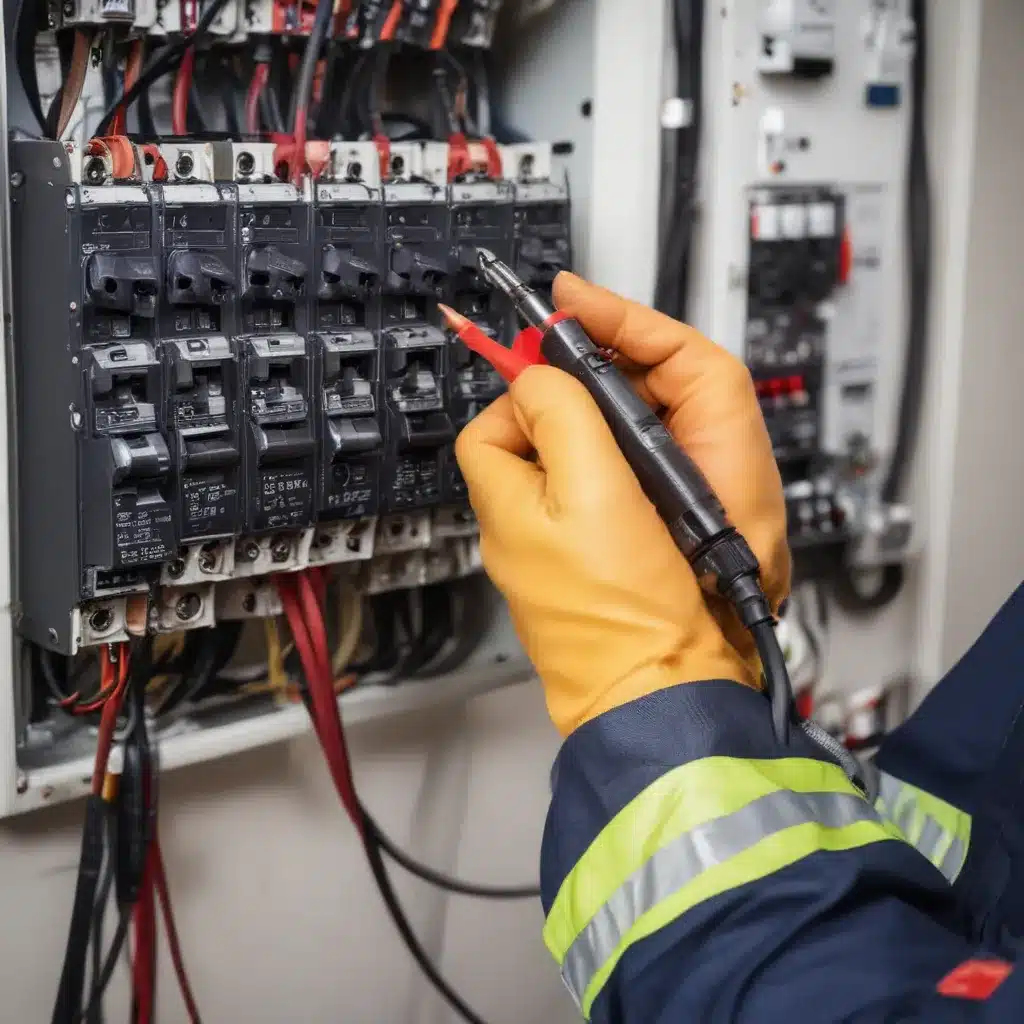
Let’s start with the heart of your home’s electrical system – the main electrical panel. This unassuming little box is like the control center for your entire electrical network, and it deserves a thorough once-over at least once a year.
First, make sure you have a good three feet of clear space around the panel. No clutter, no stacks of boxes, just open space. This gives you easy access in case you need to reset a tripped breaker or, heaven forbid, deal with an emergency.
Next, take a close look at the breakers themselves. Are any of them showing signs of rust or rodent activity? Ew, I know, but these little critters love to make a cozy home inside electrical panels, and their mischief can lead to some serious safety hazards. Flip each breaker on and off, making sure none of them are sticking or corroded. A smooth, easy operation is what you’re looking for.
And while we’re on the topic of breakers, do your family members know how to safely reset a popped circuit? Believe me, when the power goes out, it rarely happens at a convenient time. Having a plan in place can save you a lot of headaches (and potentially, a few singed eyebrows).
Checking for GFCI Protection
Next up, let’s talk about those pesky outlets near water sources – the ones that have those little “test” and “reset” buttons. These are called ground fault circuit interrupters (GFCIs), and they’re designed to protect you from electrical shocks in wet areas.
Grab that trusty receptacle tester (you do have one, right?) and plug it into each GFCI-protected outlet. Press the “test” button and make sure all the outlets on that circuit shut off. If they don’t, it’s time to call in an electrician to get that GFCI working properly.
And while we’re on the topic of outlets, take a moment to scan the rest of your home for any that might be looking a little worse for wear. Loose-fitting plugs or outlets that seem to be on the fritz could be a sign of bigger problems. It’s better to nip those issues in the bud before they turn into a full-blown electrical disaster.
Inspecting Wiring and Extension Cords
Now let’s head up to the attic or down to the basement and take a look at those exposed wiring runs. If you can see them, so can the resident rodents, and they just love to chomp away on those tasty-looking cables. Look for any signs of damage, splits, or chewing, and make repairs as needed.
And don’t forget about those trusty extension cords! They’re practically essential for any DIY project, but they can also be a bit of a fire hazard if they’re not in tip-top shape. Examine them for cuts, nicks, or any other damage, and make sure they’re rated for the amperage of the tools you’re using. If they’re looking a little worse for wear, it’s time to replace them.
Checking Exterior Outlets
Let’s step outside for a moment and take a look at those outdoor outlets. Are they properly sealed against the elements and protected from prying animal paws? GFCI protection is a must for any exterior outlet, and you’ll want to make sure that weather-resistant cover is keeping moisture and critters at bay.
If you do need to leave an outlet in use for an extended period, look for one with a cover that has access holes. That way, you can keep it securely closed while still powering your devices.
Tamper-Resistant Outlets
Speaking of outlets, have you checked to see if yours are tamper-resistant? These nifty little devices have a plastic barrier behind the receptacle openings, making it much harder for curious little fingers (or paper clips!) to find their way inside and get shocked.
If your outlets don’t have this feature, it’s a quick and easy upgrade that can give you some much-needed peace of mind. Just make sure to turn off the power before you start swapping out those old outlets.
Monitoring Outlet Performance
While we’re on the subject of outlets, keep an eye on how your electronic devices are behaving. If you notice lights dimming or flickering, or if something just seems off, it’s time to break out the voltmeter and do a little troubleshooting.
Aim for a reading between 110 and 130 volts at the outlet. Anything outside of that range could indicate a bigger problem, like a loose connection or overloaded circuit. And if you ever smell that telltale “hot wire” scent or hear popping and crackling, shut off the power and get an electrician in there ASAP.
Trust Your Senses
Finally, don’t forget to use all of your senses when conducting your electrical safety checks. Place a hand on outlets and switches, feeling for any excessive heat. If something feels too hot to the touch, that’s a clear sign that something’s not right.
And while I would never recommend actually tasting your electrical system (please, don’t do that!), trust your instincts. If something seems off or questionable, take a closer look. After all, your safety is worth far more than any DIY project or home renovation.
Remember, the team at ABC Home is always here to lend a hand if you need help with your electrical maintenance or any other home improvement projects. Don’t hesitate to give us a call – we’ll be happy to make sure your home is as safe and cozy as can be.


