
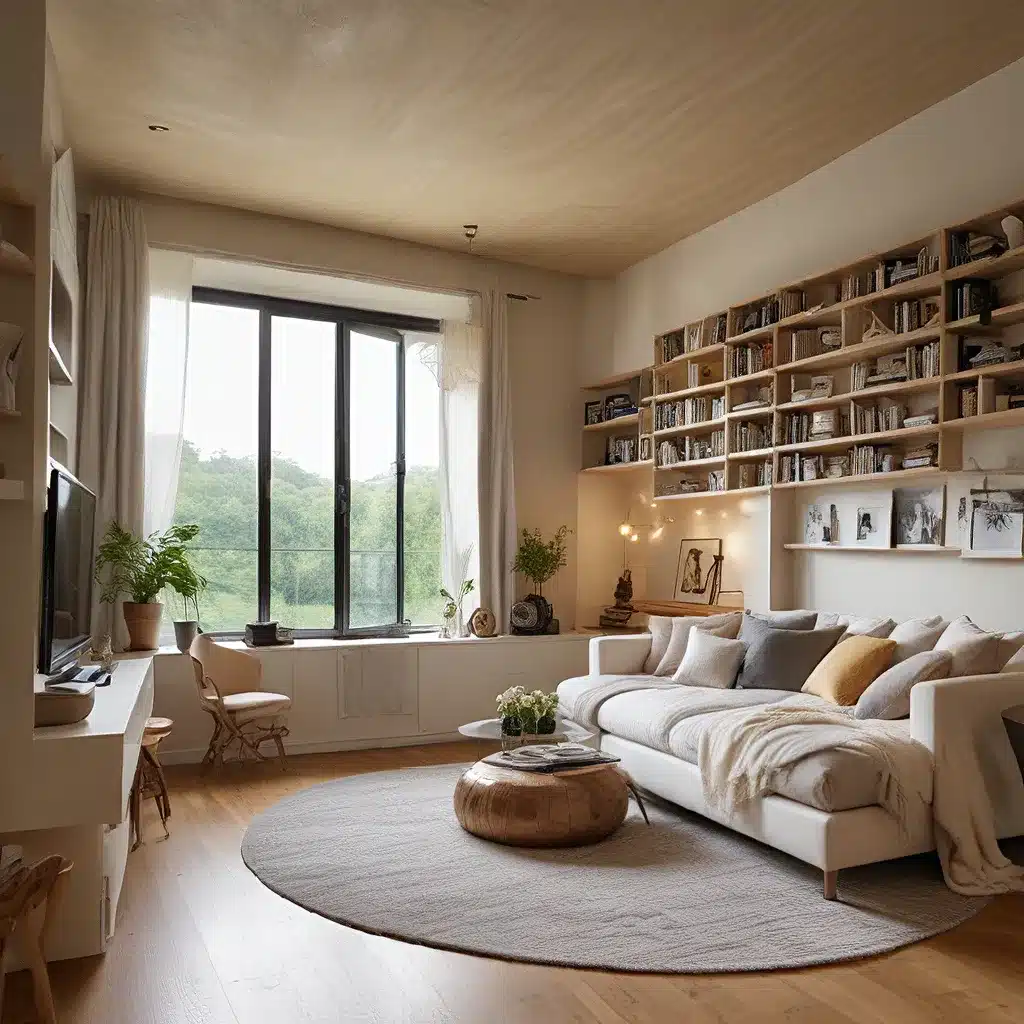
Welcoming the Serendipitous Spark
What if I told you that some of the most innovative and captivating room designs were born not from painstaking planning, but from a simple embrace of the unexpected? As a designer, I’ve learned that sometimes the best ideas come not from meticulously outlining every detail, but from allowing serendipity to work its magic.
Consciously and unconsciously, we are shaped by the seemingly random moments of serendipity that unfold in our lives. I can certainly attest to that. From stumbling upon a tadpole pond in Hawaii as a child to becoming fascinated by a classmate’s drawing of the Batmobile, these unplanned encounters have had a profound impact on my creative journey.
As we grow older, our executive functions become more narrowly focused, and we may lose the open-mindedness that comes so naturally to us as children. Suspending this transition and embracing serendipity can help us maintain that infant-like mindset, leading us to surprising discoveries and career paths. It’s a mindset that I’ve tried to cultivate throughout my design work, and one that has unlocked some of my most innovative and captivating room designs.
Embracing the Unexpected: A Designer’s Serendipitous Journey
Let me share a few examples from my own experiences that illustrate the power of embracing the unexpected.
During a train ride back from Montreal, I was passionately discussing my love for cartooning and illustration with friends when a man sitting across the aisle overheard our conversation. Rather than taking offense, he offered me an apprenticeship with JC Suarez, the creative director of a magazine known for its groundbreaking design. When that opportunity didn’t quite align with my interests, the same man connected me with an apprenticeship at Seymour Chwast and Push Pin Studios, an esteemed design studio in New York City. These serendipitous encounters were the first of many that shaped my career path.
A few years later, a random resume submission to Rockwell Group netted me an unexpected interview question: “Have you ever designed a parade?” Most creatives would have been taken aback, but for me, it was a stroke of luck. I had spent considerable time casually sketching up costume ideas for my wife’s projects, and as a result, I landed the job of designing seven floats for a Disney World parade based on Pixar movies. It was a transformative moment that marked my transition from 2D to spatial experiences, broadening my horizons as an innovator.
But the most profound moment came when I was designing an experience for a museum dedicated to Walt Disney himself. During our first meeting with Walt’s daughter, Diane, she turned to me and said, “A cartoonist? I didn’t know you’re a cartoonist. No wonder you’re so intuitive.” I was flattered, but then gripped by an uneasy feeling from the distant past – a childhood memory of creating a “Ricky Rat” character with a group of friends, hellbent on taking over the world from Mickey Mouse. It was a surreal moment, realizing that I was now designing a museum for the very man whose creation I had once plotted against.
These experiences are a testament to the fact that opportunities often arise from the most surprising places. Whether it’s being a little too loud on a train, supporting a spouse’s costume business, or starting a creative club with a ragtag group of kids, embracing serendipity and remaining open to new possibilities can lead us down vibrant and fulfilling roads.
Unlocking the Innovative Mindset
So, how can we, as designers, cultivate this mindset of embracing the unexpected and allow it to shape our room design ideas? Here are a few key principles to keep in mind:
-
Suspend Preconceptions: Don’t get bogged down by rigid plans or expectations. Be willing to let go of your initial ideas and see where the unexpected takes you.
-
Nurture Curiosity: Approach each design challenge with a sense of wonder and openness. Ask questions, explore tangents, and don’t be afraid to pursue unconventional paths.
-
Seek Inspiration in the Mundane: Sometimes, the most innovative ideas can be found in the most unexpected places. Keep your eyes and mind open to the everyday occurrences and everyday objects that surround you.
-
Embrace Collaboration: Serendipity often thrives in the cauldron of diverse perspectives and experiences. Collaborate with colleagues, clients, and even strangers to uncover new possibilities.
-
Celebrate Mistakes: Rather than viewing setbacks as failures, see them as opportunities to learn and grow. Embrace the unexpected twists and turns, and let them guide you to unexpected and extraordinary outcomes.
By incorporating these principles into our design process, we can unlock a wellspring of innovative ideas that defy the conventional and embrace the unexpected. After all, the most captivating and memorable room designs are often those that surprise and delight the senses, leaving a lasting impression on those who experience them.
Putting Theory into Practice: Innovative Room Design Ideas
Now, let’s dive into some concrete examples of how embracing the unexpected can translate into innovative room design ideas. Here are a few that I’m particularly proud of:
The Unconventional Kitchen
When a client came to me with a request for a modern, minimalist kitchen, I could have played it safe and delivered a sleek, streamlined design. But where’s the fun in that? Instead, I decided to take a different approach, drawing inspiration from an unlikely source – a vintage typewriter.
By incorporating aged brass accents, a retro-inspired color palette, and unexpected textural elements, I transformed the kitchen into a space that felt both timeless and cutting-edge. The result was a room that challenged traditional kitchen design, blending form and function in a way that delighted the senses.
The Surreal Bathroom Oasis
In another project, a client asked me to design a relaxing, spa-like bathroom. Rather than going the predictable route of neutral tones and subtle textures, I decided to take a more daring approach.
Inspired by the dreamlike landscapes of surrealist artists, I integrated organic shapes, unexpected lighting, and a bold, abstract mural that covered the entire wall. The effect was a bathroom that felt like a portal to a different world – a serene, otherworldly oasis where the boundaries between reality and fantasy blurred.
The Multifunctional Living Room Transformation
One of my most recent projects involved transforming a traditional living room into a multifunctional space that could seamlessly transition between work, entertainment, and relaxation. The key to this design was embracing the unexpected.
Instead of a conventional sofa and armchair arrangement, I incorporated a modular sectional that could be rearranged to suit different needs. I also added a built-in desk that could fold away when not in use, creating a seamless flow between work and leisure. Unexpected details, like a suspended bookshelf and a hidden murphy bed, added to the room’s sense of dynamism and versatility.
The result was a living room that defied expectations, adapting to the needs of the modern homeowner while maintaining a strong sense of style and character.
Conclusion: Embracing the Unexpected, Unlocking Innovation
As designers, we have the power to create spaces that captivate, inspire, and transform the way people experience their homes. And by embracing the unexpected, we can unlock a wellspring of innovative ideas that push the boundaries of traditional design.
Whether it’s a serendipitous encounter, a mundane object that sparks our curiosity, or a willingness to celebrate mistakes, the key is to remain open-minded and allow the unexpected to guide us. By doing so, we can create room designs that not only meet the needs of our clients but also leave a lasting impression on all who experience them.
So, let’s embark on this journey of embracing the unexpected together. Who knows what extraordinary and innovative room designs await us, just around the corner?


