
Alright, folks – let’s talk about something super important that we all need to be ready for: emergencies. You know, those unexpected situations that can pop up and turn our lives upside down in the blink of an eye. Whether it’s a natural disaster, a power outage, or just good old-fashioned “life happens” kind of stuff, being prepared can make all the difference.
And one of the most crucial aspects of emergency preparedness? Making sure you’ve got your food and water situation sorted out. Because let’s face it, when the excrement hits the air circulation device, the first things that tend to disappear from the shelves are the essentials – the stuff that keeps us alive and kicking.
So, today, I’m going to share some tried-and-true tips and tricks to help you build up your emergency food and water stash. And trust me, I’m speaking from experience here. I may or may not have been the one responsible for cleaning out the entire snack aisle during that big blizzard a few years back…but that’s a story for another day.
Stockpiling for Survival
First things first, let’s talk about food storage. The general recommendation is to have enough non-perishable grub to last your household at least 2 weeks. That means things like canned goods, dried pasta, rice, beans, powdered milk, and the like. Basically, anything that can sit on a shelf for a good, long while without turning into a science experiment.
Now, I know what you’re thinking – “2 weeks’ worth of food? That’s a lot of space!” But hear me out. When disaster strikes, you don’t want to be that person frantically searching the bare shelves at the local grocery store, fighting off the other panicked folks for the last can of beans. Trust me, it’s not a pretty sight.
FEMA recommends stocking up on shelf-stable items that have a long shelf life, like canned meats, fruits, and vegetables, as well as dried foods, powdered milk, and infant formula (if needed). And don’t forget the manual can opener – you’re not going to want to be trying to pry those cans open with your bare hands when the power’s out!
Now, when it comes to water, the experts suggest having at least 1 gallon per person per day. So, for a family of four, that’s a minimum of 28 gallons for a 2-week period. You can buy pre-packaged bottled water, of course, but you can also store your own water in clean, food-grade containers.
The Hawaii Emergency Management Agency recommends using 2-liter plastic bottles or food-grade water containers, and replacing the water every 6 months. And don’t forget to factor in any water needs for your pets as well!
Getting Creative with Storage
Okay, so now you know what to stock up on, but where the heck are you going to put it all? Don’t worry, I’ve got some space-saving tips up my sleeve.
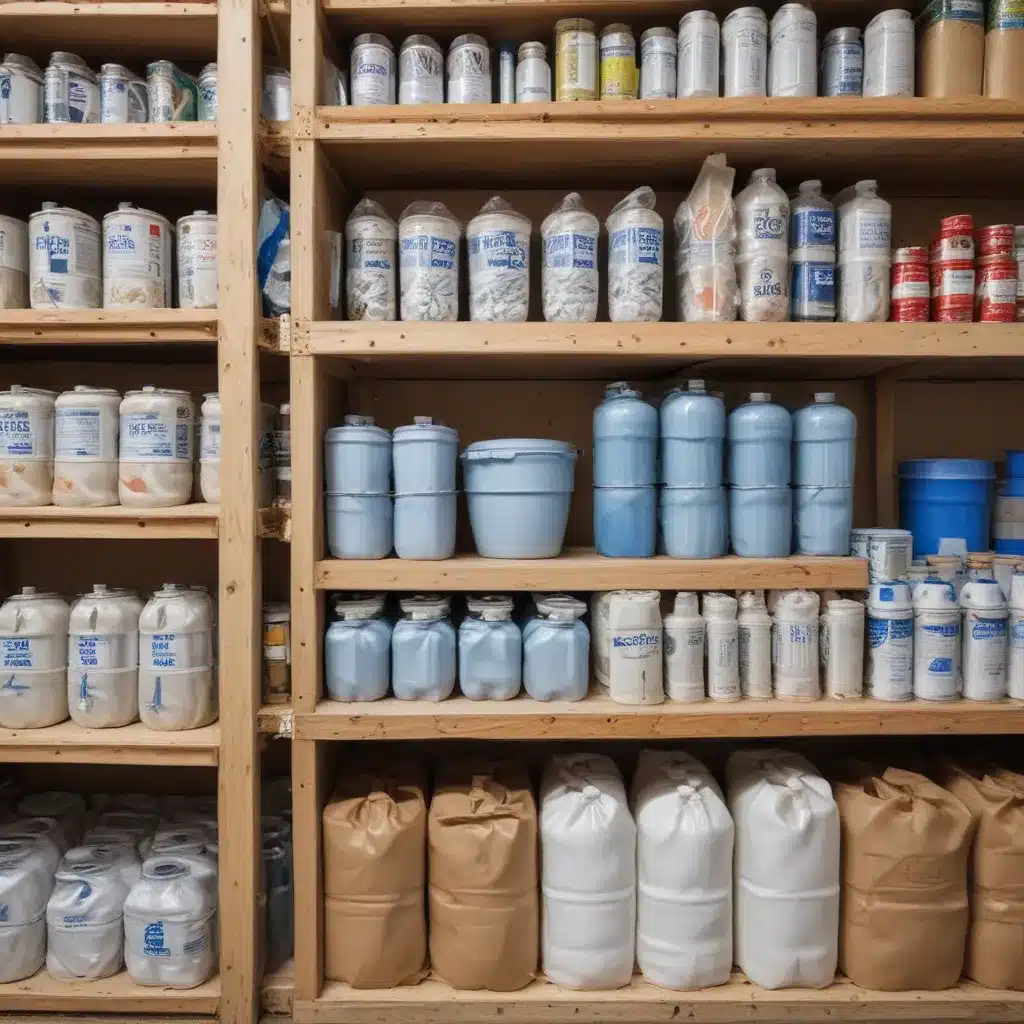
First of all, think vertically. Shelves, racks, and even stacking canned goods can help you maximize the space you have. And if you’ve got a spare closet, basement, or garage, those can be great spots to stash your emergency supplies. Just make sure the area is cool, dark, and dry to keep everything fresh.
Survival Frog also suggests looking into rotating food storage containers that allow you to easily access the oldest items first. This helps prevent waste and ensures your stash stays nice and fresh.
When it comes to water storage, you can get creative too. Bathtubs, sinks, and even clean garbage cans can be used in a pinch. And don’t forget about filling up those empty 2-liter bottles – they’re perfect for compact water storage.
Rotating and Replenishing
Alright, so you’ve got your emergency food and water supplies all set up. Great job! But the work doesn’t stop there. You’ve gotta stay on top of things to make sure everything remains in tip-top shape.
That means regularly rotating your non-perishable foods, using the oldest items first. This helps prevent spoilage and ensures you’re always working with the freshest stuff. And don’t forget to check expiration dates – you don’t want to be cracking open a can of beans from the Triassic period when disaster strikes!
As for water, you’ll want to replace it every 6 months or so, as recommended by the experts. It’s also a good idea to sanitize your storage containers periodically to keep things clean and safe.
And let’s not forget about replenishing your supplies. Whenever you use something from your emergency stash, make a note to replace it as soon as possible. That way, you’re always ready to weather whatever storm (or power outage, or…you get the idea) comes your way.
Tying it All Together
At the end of the day, being prepared for emergencies is all about having a plan and taking action. And when it comes to food and water storage, that means stocking up on the essentials, getting creative with your storage solutions, and staying on top of maintenance and replenishment.
Sure, it might seem like a lot of work, but trust me, it’s worth it. The peace of mind alone is priceless. Plus, you’ll have the satisfaction of knowing that when disaster strikes, you and your loved ones will be taken care of.
So, what are you waiting for? Start building up your emergency food and water stash today! And if you need any help along the way, be sure to check out the resources I’ve mentioned – they’re chock-full of great tips and advice.
Now, if you’ll excuse me, I’m off to go inventory my snack supply. You know, just in case…


