
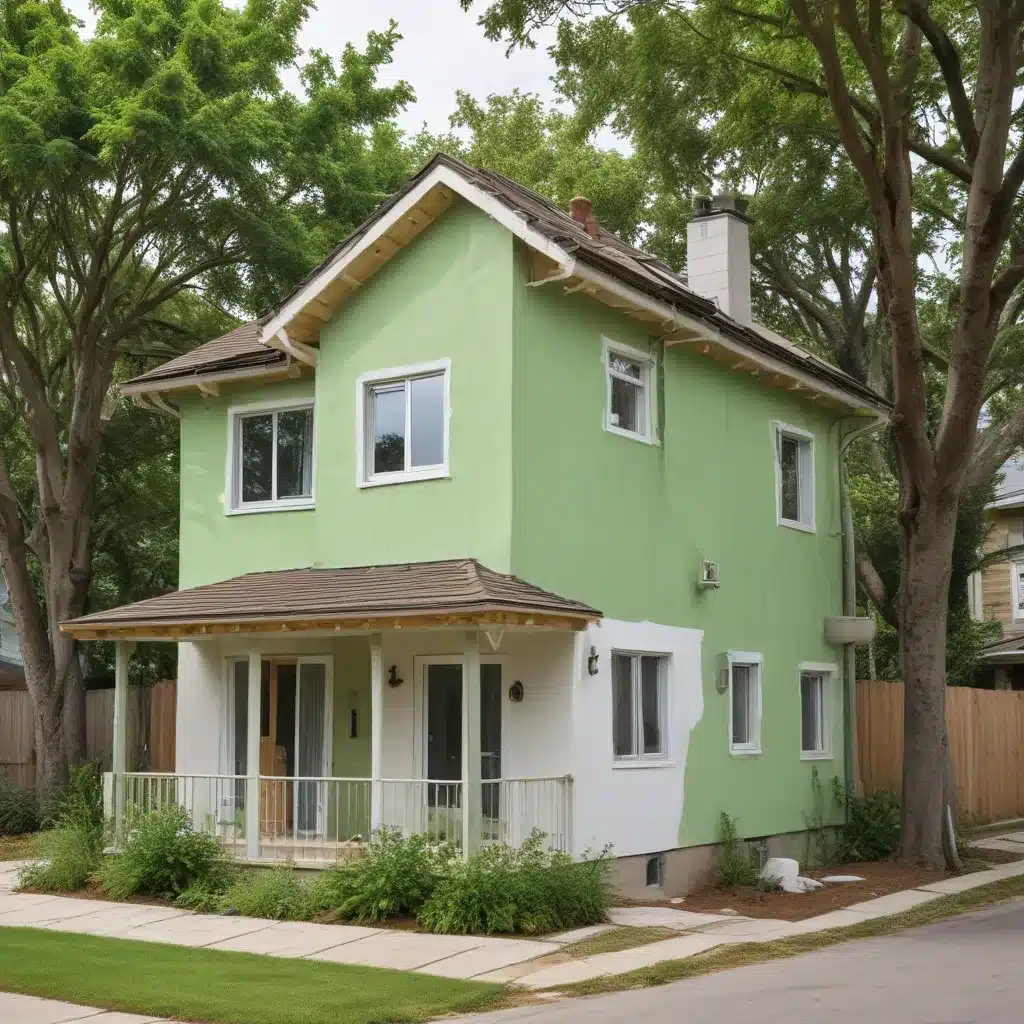
The Rise of Eco-Conscious Construction
As the world becomes increasingly aware of the urgent need to address climate change and environmental sustainability, the demand for eco-friendly homes has never been higher. Gone are the days when “green” building was seen as a niche or luxury – today, it’s a necessity for anyone looking to future-proof their property and reduce their carbon footprint.
But what exactly does “green building” entail, and how can you incorporate it into your home renovation or construction project? In this comprehensive guide, I’ll dive deep into the world of sustainable architecture and construction, drawing on my own experiences as a builder in Aberdeen, UK. From the latest renewable energy technologies to the importance of passive design, I’ll leave no stone unturned in helping you create a home that’s not only beautiful and functional, but also environmentally responsible.
The Pillars of Green Building
So, what are the key principles that underpin green building? In my view, there are three main pillars that every eco-conscious construction project should be built upon.
Energy Efficiency
The first and most crucial aspect of green building is energy efficiency. After all, what good is a “green” home if it guzzles energy like a gas-guzzling SUV? From the outset, the design of the building should prioritize passive solar design, optimizing the orientation and layout of the home to harness the natural power of the sun. This could involve strategically placing windows to maximize natural lighting and heating, or incorporating features like thermal mass and insulation to regulate indoor temperatures.
But energy efficiency isn’t just about the building’s design – it also extends to the materials and technologies used. Opting for high-performance windows, efficient appliances, and renewable energy sources like solar panels or heat pumps can drastically reduce a home’s energy consumption and carbon footprint. And let’s not forget about smart home technologies, which can automate energy-saving features and give homeowners precise control over their energy usage.
Sustainable Materials
The second pillar of green building is the use of sustainable, eco-friendly materials. Gone are the days of relying on resource-intensive, polluting materials like concrete and steel. Instead, forward-thinking builders are turning to natural, renewable, and recycled materials that have a far gentler impact on the environment.
Think about materials like timber, straw, and rammed earth – not only are they renewable, but they also have excellent thermal and acoustic properties, helping to create a comfortable and energy-efficient living space. And when it comes to insulation, options like sheep’s wool, cellulose, and hemp are quickly gaining popularity for their sustainability and performance.
But it’s not just about the materials themselves – it’s also about how they’re sourced and processed. Opting for locally-sourced, low-embodied-energy materials can significantly reduce the carbon footprint of a building project, while recycling and repurposing existing materials can help to eliminate waste.
Water Conservation
The final pillar of green building is water conservation. In a world where water scarcity is an increasingly pressing issue, it’s essential that we design homes that minimize water usage and maximize water efficiency.
This could involve incorporating features like low-flow plumbing fixtures, greywater recycling systems, and rainwater harvesting. By reusing wastewater for irrigation or flushing toilets, we can drastically reduce the amount of fresh water required to maintain a household. And by harvesting rainwater, homeowners can offset their reliance on municipal water supplies and reduce their environmental impact.
But water conservation isn’t just about the technology – it’s also about the landscaping and gardening choices we make. By selecting drought-tolerant, native plants and incorporating water-wise irrigation systems, we can create beautiful, sustainable outdoor spaces that thrive with minimal water input.
The Benefits of Green Building
Now that we’ve explored the key principles of green building, let’s take a closer look at the benefits that come with embracing this eco-conscious approach.
Reduced Energy Costs
Perhaps the most tangible benefit of green building is the potential for significant cost savings on energy bills. By incorporating energy-efficient design, renewable technologies, and water-saving features, homeowners can dramatically reduce their monthly utility expenses. In fact, some studies have shown that green homes can save their owners as much as 30% on energy costs compared to traditional homes.
But the financial benefits don’t stop there. Investing in green building can also increase the overall value of a property, making it a smart long-term investment. As more and more homebuyers prioritize sustainability, homes with eco-friendly features are becoming increasingly sought-after on the market.
Improved Indoor Air Quality
Another major benefit of green building is the positive impact on indoor air quality. By using non-toxic, low-emission materials and prioritizing natural ventilation, green homes can provide a healthier living environment for their occupants. This is particularly important for individuals with allergies, asthma, or other respiratory conditions, who may struggle in homes with poor air quality.
But the benefits of improved indoor air quality go beyond just physical health – they can also have a positive impact on mental well-being. Studies have shown that exposure to natural light, fresh air, and minimal pollutants can boost mood, reduce stress, and even improve cognitive function.
Reduced Environmental Impact
Of course, one of the primary motivations behind green building is the desire to reduce our impact on the environment. By minimizing energy and water usage, as well as opting for sustainable, low-impact materials, eco-conscious homes can significantly reduce their carbon footprint and contribute to a more sustainable future.
This not only benefits the homeowner, but also the wider community and the planet as a whole. As more and more people embrace green building practices, the cumulative impact can be substantial, helping to mitigate the effects of climate change and preserve our natural resources for generations to come.
The Green Building Process
Now that you understand the core principles and benefits of green building, let’s dive into the practical steps involved in transforming your home into an eco-friendly sanctuary.
Planning and Design
The first and arguably most critical step in the green building process is the planning and design phase. This is where you’ll work closely with your architect, designer, and construction team to map out the key features and specifications of your sustainable home.
During this phase, you’ll need to carefully consider factors like the site orientation, building materials, energy efficiency strategies, and water conservation systems. It’s also important to research and incorporate the latest green building technologies, such as solar panels, heat pumps, and smart home automation.
One of the most important design considerations is passive solar design. By optimizing the placement of windows, thermal mass, and insulation, you can harness the power of the sun to naturally heat and cool your home, reducing your reliance on energy-intensive HVAC systems.
Material Selection
Once the design is in place, the next step is to carefully select the materials that will be used in the construction of your home. As we discussed earlier, opting for sustainable, eco-friendly materials is crucial for minimizing the environmental impact of your project.
This might involve sourcing locally-produced timber, using recycled or repurposed materials, or choosing insulation made from natural, renewable fibers. It’s also important to consider the embodied energy of the materials – that is, the energy required to extract, manufacture, and transport them.
By taking the time to research and source the right materials, you can create a home that not only looks beautiful, but also supports a healthier, more sustainable future.
Construction and Installation
With the design and materials in place, it’s time to turn your green building vision into a reality. During the construction phase, it’s important to work closely with your contractor to ensure that sustainable practices are being followed at every step.
This might involve measures like proper waste management, minimizing water usage on-site, and implementing energy-efficient construction techniques. It’s also crucial to ensure that the installation of green technologies, like solar panels or greywater systems, is carried out to the highest standards.
Throughout the construction process, it’s a good idea to keep a close eye on progress and work collaboratively with your team to address any challenges or roadblocks that arise. After all, building a green home is a complex undertaking, and it’s important to remain flexible and adaptable to ensure the best possible outcome.
Real-World Examples of Green Building in Action
To bring these concepts to life, let’s take a look at a few real-world examples of green building projects right here in Aberdeen, UK.
The Passivhaus Apartment Complex
One of the most impressive examples of green building in our local area is the Passivhaus apartment complex on the outskirts of Aberdeen. Designed and constructed with the principles of passive solar design and energy efficiency at the forefront, this development has set a new standard for sustainable living in our community.
The buildings feature heavily insulated walls, triple-glazed windows, and advanced mechanical ventilation systems that work together to minimize energy consumption. In fact, the apartments are so well-designed that they require up to 90% less heating energy compared to a traditional home. And with the incorporation of rooftop solar panels, the complex is able to generate a significant portion of its own renewable electricity.
But it’s not just the energy efficiency that makes this project so impressive – the developers have also gone to great lengths to incorporate sustainable materials and water conservation features. From the use of locally-sourced timber to the implementation of greywater recycling systems, every aspect of the design has been carefully considered to reduce the environmental impact.
The Eco-Renovated Townhouse
Another fantastic example of green building can be found in the eco-renovated townhouse owned by my good friend, Sarah. When Sarah purchased the property a few years ago, it was in need of significant work, and she saw it as the perfect opportunity to transform it into a showcase of sustainable living.
The first step was to tackle the home’s energy efficiency. Sarah worked with a team of green building experts to install high-performance insulation, upgrade the windows, and integrate a state-of-the-art heat pump system. These measures, combined with the strategic placement of windows and the incorporation of passive solar design principles, have resulted in a home that stays comfortable year-round with minimal energy input.
But Sarah didn’t stop there – she also made a concerted effort to use sustainable, low-impact materials throughout the renovation. From the reclaimed timber floors to the eco-friendly paint and finishes, every element of the project was carefully considered to reduce the home’s environmental footprint.
Perhaps most impressive, however, is Sarah’s commitment to water conservation. By installing a comprehensive greywater system and a rainwater harvesting setup, she’s able to dramatically reduce her reliance on municipal water sources, while also maintaining a lush, drought-tolerant garden.
The Future of Green Building
As we look to the future, it’s clear that the demand for eco-friendly, sustainable homes will only continue to grow. With the ongoing climate crisis and increasing awareness of the importance of environmental stewardship, homeowners are becoming more and more discerning when it comes to the impact of their living spaces.
But what does the future of green building hold? In my opinion, we’re likely to see a continued evolution and refinement of the core principles we’ve explored today, with innovative new technologies and materials emerging to push the boundaries of sustainable construction.
One area that’s particularly exciting is the integration of smart home technology with green building principles. Imagine a home that not only generates its own renewable energy, but also automatically adjusts its heating, cooling, and lighting to optimize energy efficiency and comfort. Or a home that uses advanced sensors and AI to monitor and optimize water usage, maximizing conservation efforts.
We may also see a greater emphasis on circular economy principles, with a focus on designing for disassembly and the reuse of materials. This could lead to the development of modular, adaptable homes that can be easily upgraded or reconfigured as homeowners’ needs change over time.
And as the global push for sustainability continues, I anticipate that green building will become the new standard, rather than the exception. Governments, policymakers, and industry leaders will likely introduce increasingly stringent regulations and incentives to encourage eco-conscious construction, driving widespread adoption of these practices.
So, whether you’re planning a major renovation or building a brand new home, now is the time to embrace the principles of green building and future-proof your living space. By investing in sustainable design, energy-efficient technologies, and eco-friendly materials, you can not only save money and improve your quality of life, but also make a meaningful contribution to a more sustainable future.
Ready to get started? Visit our website to learn more about our green building expertise and how we can help you create the home of your dreams.


