
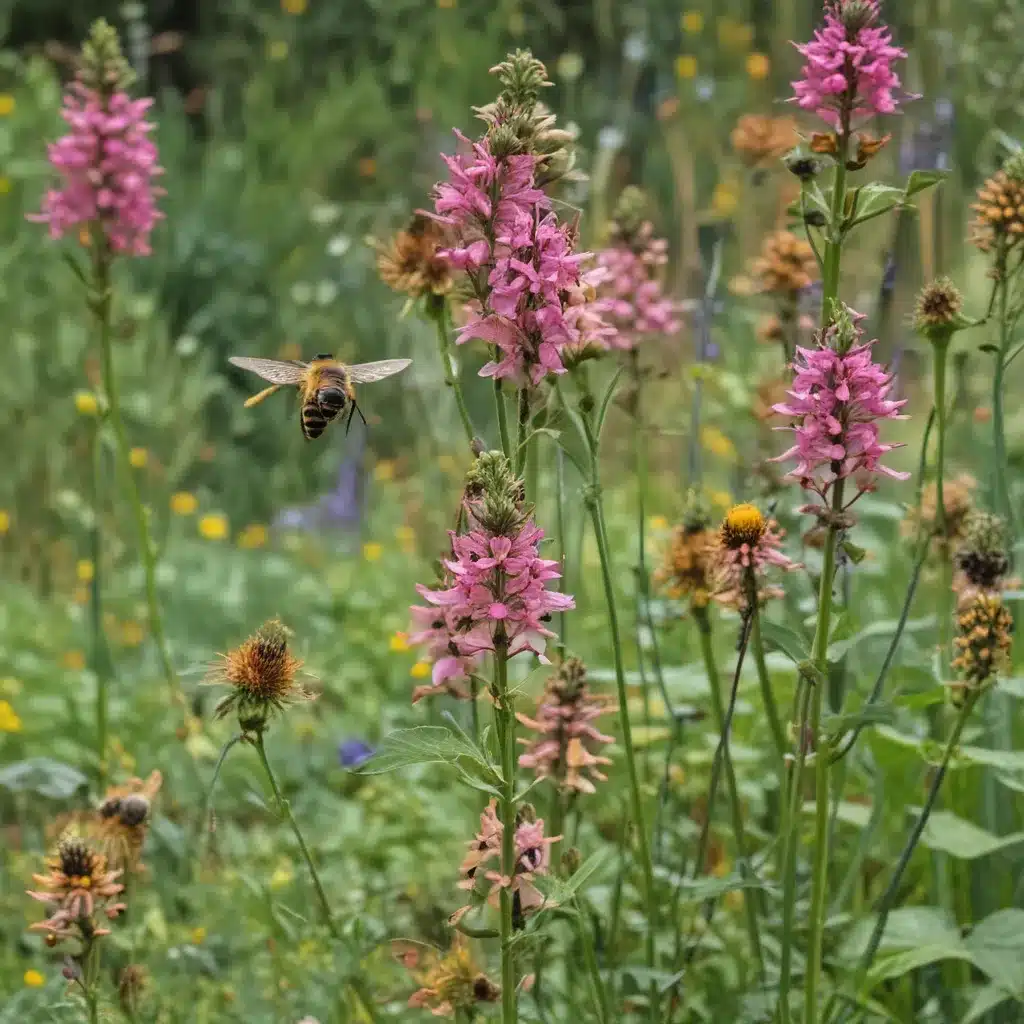
The Buzz About Bees and Blooms
As a passionate gardener and nature enthusiast, I’ve always been fascinated by the intricate dance between plants and pollinators. You know, those industrious little critters that flit from flower to flower, transferring pollen and ensuring the continued flourishing of our gardens? Well, let me tell you, there’s a whole lot more to these flying friends than meets the eye.
You see, I recently stumbled upon a shocking statistic that really got me thinking. Did you know that bee populations around the world have been declining at an alarming rate? It’s true – experts estimate that we’ve lost nearly a third of our bee colonies in the past decade alone. And let me tell you, that’s no small potatoes. These pollinators are the unsung heroes of our ecosystems, responsible for helping to produce a whopping three-quarters of the fruits and vegetables we eat.
But here’s the kicker – it’s not just the bees that are suffering. Our feathered friends, the birds, are also facing their own set of challenges. From habitat loss to climate change, these winged wonders are having a tough time finding the resources they need to thrive. And let’s not forget about the butterflies, hummingbirds, and other critters that play a crucial role in the grand scheme of things.
So, you might be wondering, what’s a gardener to do? Well, my friends, that’s where the power of plants comes into play. You see, by carefully selecting the right blooms and greenery, we can create a veritable oasis for our pollinator pals, giving them the food, shelter, and resources they need to survive and, dare I say, even thrive.
Bee-Friendly Blooms
Now, I know what you’re thinking – how hard can it be to pick some pretty flowers and call it a day? Well, let me tell you, there’s a bit more to it than that. You see, not all plants are created equal when it comes to their pollinator-friendly credentials. Some are absolute superstars, while others… well, let’s just say they’re not exactly the life of the party.
Take, for example, the humble dandelion. Now, I know, I know, most of us tend to view these little yellow flowers as nothing more than pesky weeds. But let me tell you, the bees and birds absolutely adore them. In fact, dandelions are one of the first sources of nectar and pollen in the springtime, providing a much-needed boost for our winged friends as they emerge from their winter slumber.
Another champion in the pollinator-friendly plant world? The good old sunflower. These cheerful blooms not only add a splash of sunny color to any garden, but they’re also a magnet for bees, butterflies, and even hummingbirds. And the best part? They’re incredibly easy to grow, making them a perfect choice for even the most novice of gardeners.
But let’s not forget about the perennials, shall we? Plants like lavender, coneflowers, and bee balm are absolute rockstars when it comes to attracting pollinators. Not only do they offer a steady supply of nectar and pollen throughout the growing season, but they also provide valuable shelter and nesting sites for our buzzing and fluttering friends.
And let’s not forget about the herbs! Rosemary, thyme, and oregano are all favorites among the pollinator crowd, offering up a veritable feast of floral delights. Plus, they have the added benefit of being drought-tolerant and low-maintenance, making them the perfect choice for those of us with a less-than-green thumb.
Nourishing Nectar and Pollen
But it’s not just about the flowers, my friends. You see, there’s a whole lot more to creating a pollinator-friendly garden than meets the eye. It’s all about striking the right balance between the various elements that our winged wonders need to thrive.
Take, for example, the importance of providing a steady supply of nectar and pollen. Now, I know what you’re thinking – “Nectar and pollen? Isn’t that just a fancy way of saying ‘flowers’?” Well, not quite. You see, different plants offer up different types of these vital resources, and it’s important to have a diverse array of options to cater to the varied dietary needs of our pollinator pals.
For instance, did you know that some bees are particularly fond of plants with flat, open blooms, like daisies and zinnias? These types of flowers make it easy for our buzzing buddies to access the nectar and pollen they crave. Meanwhile, other pollinators, like hummingbirds, are drawn to tubular flowers with a rich, sweet nectar. So, by incorporating a variety of plant shapes and sizes into your garden, you can ensure that there’s something for everyone.
And let’s not forget about the importance of timing. You see, different pollinators are active at different times of the year, so it’s important to have a succession of blooms that can provide a steady source of sustenance from early spring all the way through to late fall. That way, our winged wonders can always count on finding a delicious meal, no matter the season.
Cozy Cottages and Comfy Nooks
But it’s not just about the food, my friends. You see, our pollinator pals also need a place to call home. And I’m not just talking about the big, flashy flowers – oh no, there’s a whole world of smaller, more unassuming plants that can provide the perfect cozy cottage or comfy nook for our buzzing and fluttering friends.
Take, for example, the humble clump of sedum. Now, I know, it might not look like much at first glance, but these succulent little plants are absolute havens for all sorts of pollinators. From bees and butterflies to even the occasional hummingbird, these low-growing beauties offer up the perfect sheltered spot for our winged wonders to rest and recharge.
And let’s not forget about the importance of providing a variety of nesting materials. You see, different pollinators have different preferences when it comes to where they lay their eggs and raise their young. Some might prefer the hollow stems of dead plants, while others are all about the soft, fuzzy textures of dried grasses and leaves.
That’s why it’s so important to incorporate a diverse array of plant materials into your garden, creating a veritable smorgasbord of nesting options for our pollinator pals. And the best part? You can even get creative and give them a little extra boost by setting up your own DIY bee hotels or butterfly houses. Talk about taking your gardening game to the next level!
A Seasonal Spectacular
But wait, there’s more! You see, the beauty of a pollinator-friendly garden isn’t just about the plants themselves – it’s about the ever-changing tapestry of color, texture, and life that unfolds throughout the seasons.
Imagine, if you will, a garden that bursts to life in the springtime, with a riot of blooms that attract a dizzying array of buzzing and fluttering visitors. From the delicate, fragrant flowers of the lilac to the bold, vibrant hues of the tulips, each plant offers up a feast for the senses, drawing in bees, butterflies, and hummingbirds alike.
And as the summer sun starts to blaze, the scene shifts, with towering sunflowers and cascading vines taking center stage. These lush, verdant oases become a hub of activity, with pollinators darting to and fro, sipping sweet nectar and gathering pollen to fuel their endless dance.
But the real magic happens in the fall, my friends. As the leaves start to turn and the days grow shorter, the garden takes on a whole new persona, with plants like asters and goldenrod offering up a veritable feast for our feathered friends. Imagine the delight of watching a flock of migrating birds descend upon your backyard, feasting on the bounty of your carefully curated haven.
And let’s not forget about the winter months, when the garden may seem to be sleeping, but in reality, it’s providing valuable shelter and sustenance for a whole host of overwintering pollinators. From the cozy clusters of hibernating bumblebees to the delicate cocoons of butterfly larvae, your garden becomes a true oasis, even in the coldest, darkest days of the year.
Putting it All Together
So, there you have it, my friends – the key ingredients to creating a pollinator-friendly garden that truly gives back. From carefully selecting the right plants to providing a diversity of nesting materials and food sources, it’s all about striking the perfect balance to ensure the health and happiness of our winged wonders.
And let me tell you, the rewards of such a garden are countless. Not only will you be doing your part to support the declining populations of bees, birds, and butterflies, but you’ll also be treated to a veritable feast for the senses, with a constantly evolving display of color, texture, and life.
But don’t just take my word for it. Why not visit abc-home.co.uk to learn more about how you can incorporate these pollinator-friendly principles into your own outdoor oasis? Whether you’re starting from scratch or looking to revamp an existing garden, our team of experts is here to help you every step of the way.
So, what are you waiting for? Let’s get planting and watch as our gardens transform into vibrant, buzzing, and fluttering havens that truly give back to the amazing creatures that make our world go ’round. Bee-lieve me, it’ll be the bee’s knees!


