
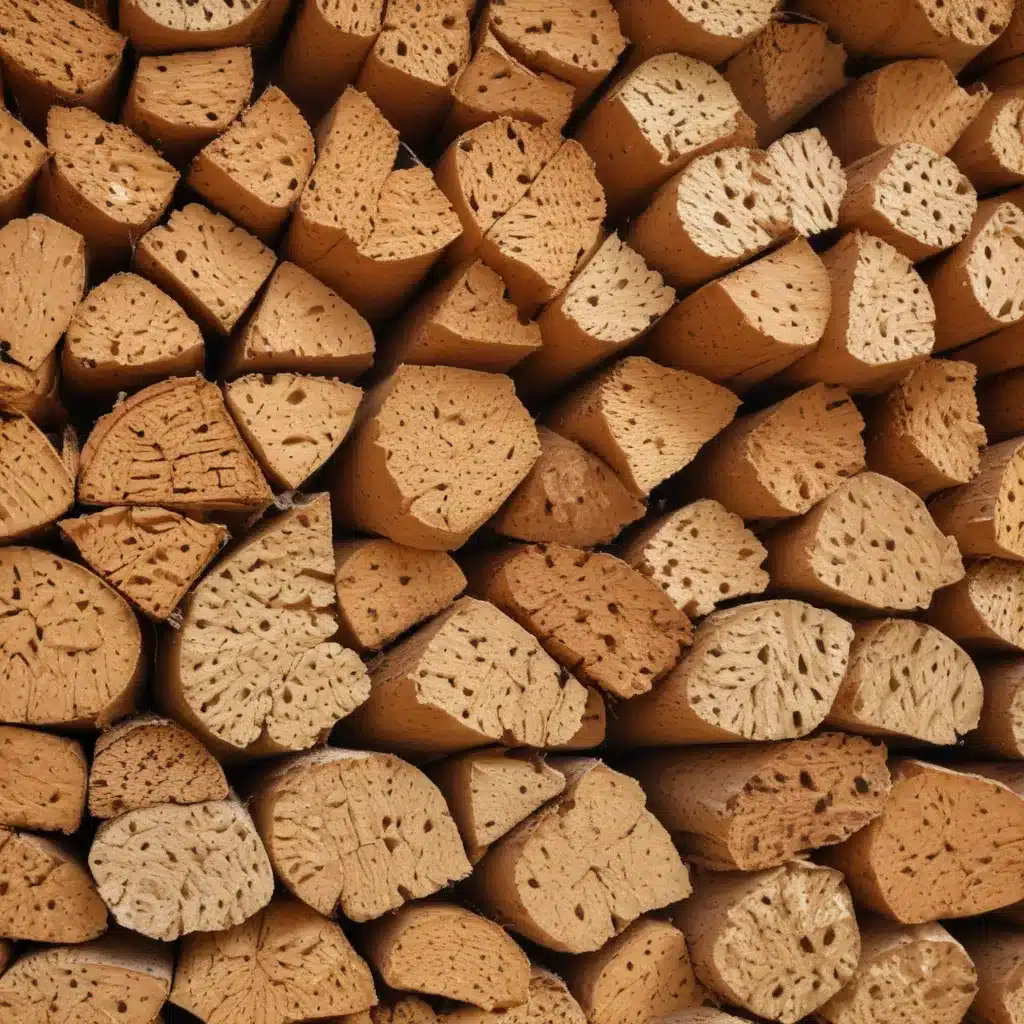
The Humble Cork: A Renewable Treasure Trove
As a building and renovation company nestled in the heart of Aberdeen, UK, we’ve seen our fair share of innovative insulation solutions. But today, I want to delve into a material that’s quite literally grown on trees – cork. Yes, that’s right, the humble cork stopper that seals your favorite bottle of wine can also be a game-changer when it comes to sustainable home insulation.
Let me start by painting you a vivid picture. Imagine standing in the middle of a sun-dappled cork forest, the warm breeze rustling the evergreen leaves overhead. The bark of the cork oak trees glistens, a deep reddish-brown hue that exudes an air of timeless elegance. This isn’t just any ordinary tree – it’s a renewable resource that’s been prized for centuries, not just for its wine-sealing properties, but for its incredible insulating capabilities.
You see, cork is a remarkable material, harvested from the bark of the cork oak tree (Quercus suber). Unlike traditional insulation made from synthetic materials, cork is a natural, renewable, and biodegradable resource. And the best part? It’s grown right here in Europe, with Portugal being the world’s largest producer, followed closely by Spain. This means that by choosing cork insulation, you’re not only investing in the energy efficiency of your home, but also supporting a sustainable and local industry.
The Science Behind Cork’s Insulating Powers
But what is it about cork that makes it such a phenomenal insulator? The secret lies in its unique cellular structure. Each cork cell is filled with an air-tight, waxy substance called suberin, which gives the material its incredible insulating properties. In fact, cork has one of the lowest thermal conductivity values of any natural material, meaning it’s an exceptional barrier against the transfer of heat and cold.
To put this into perspective, let’s compare cork to some of the more commonly used insulation materials. Traditional fiberglass insulation has a thermal conductivity of around 0.035 W/m·K, while expanded polystyrene (EPS) foam clocks in at 0.035-0.040 W/m·K. Cork, on the other hand, has a thermal conductivity value of just 0.040-0.045 W/m·K. This means that for the same thickness, cork can provide comparable, if not superior, insulating performance to these synthetic materials.
But the benefits of cork don’t stop there. It’s also incredibly lightweight, with a density of just 100-300 kg/m³, compared to the 15-30 kg/m³ of fiberglass and the 10-30 kg/m³ of EPS foam. This makes it a dream to work with, as it’s easy to transport, install, and doesn’t add significant weight to your home’s structure.
The Eco-Friendly Advantages of Cork Insulation
Now, I know what you’re thinking – if cork is such a fantastic insulator, why isn’t it used more widely in the building industry? Well, the answer lies in the unique way cork is harvested and processed.
You see, cork oak trees are a renewable resource, as their bark can be stripped without damaging the tree itself. In fact, a healthy cork oak can be harvested every 9-12 years, with the bark regenerating to provide a new crop. This sustainable harvesting method ensures that cork forests can be maintained for centuries, providing a never-ending supply of this incredible material.
But the environmental advantages of cork insulation don’t stop there. Unlike synthetic insulation materials, which are often petroleum-based and energy-intensive to produce, cork is a completely natural and biodegradable substance. At the end of its lifespan, cork insulation can be easily recycled or even composted, making it a true closed-loop material.
Furthermore, cork oak forests play a crucial role in carbon sequestration, helping to mitigate the effects of climate change. These trees absorb and store large amounts of carbon dioxide, and their preservation is essential for maintaining a healthy ecosystem. By choosing cork insulation, you’re not only insulating your home, but also supporting the conservation of these vital natural habitats.
Real-World Applications of Cork Insulation
Now, you might be wondering, “Okay, this all sounds great, but how can I actually use cork insulation in my home?” Well, my friends, the possibilities are endless!
Cork can be used as a versatile insulation material in a wide range of applications, from walls and roofs to floors and even as soundproofing. It’s available in a variety of forms, including sheets, tiles, and loose-fill, making it easy to integrate into any construction or renovation project.
One of the most common uses of cork insulation is in external wall systems. By applying a layer of cork on the outside of your home’s walls, you can create a highly effective thermal barrier that helps to regulate the indoor temperature, reducing your energy bills and carbon footprint. This method is particularly popular in countries with milder climates, where cork’s insulating properties can be fully leveraged.
But the applications don’t stop there. Cork can also be used to insulate attic spaces, keeping your home cozy and warm in the winter and cool in the summer. And for those of you with creaky, drafty floors, cork underlayment can be the perfect solution, providing both insulation and sound absorption.
The Renovation Potential of Cork Insulation
Now, I know what you’re thinking – “This all sounds great, but I’m not building a brand-new home. How can I incorporate cork insulation into my existing property?” Fear not, my fellow renovation enthusiasts, for cork is incredibly versatile and can be seamlessly integrated into even the most well-established structures.
One of the most popular ways to use cork insulation in a renovation project is through the use of cavity wall insulation. By injecting or blowing loose-fill cork into the space between your home’s inner and outer walls, you can dramatically improve its thermal performance without the need for extensive structural work.
But the renovation potential of cork doesn’t stop there. Cork can also be used to insulate the exterior of your home, either by applying it directly to the walls or by using it as part of a ventilated facade system. This approach not only enhances the energy efficiency of your property but can also give it a fresh, modern aesthetic.
And let’s not forget about those pesky drafty windows and doors. Cork can be used as a highly effective weatherstripping material, sealing off any gaps and cracks to prevent heat loss and air infiltration. It’s a simple, cost-effective solution that can make a big difference in your home’s comfort and energy performance.
The Aesthetic Appeal of Cork Insulation
But wait, there’s more! Cork insulation isn’t just about function – it also has a unique and visually appealing aesthetic that can enhance the look and feel of your home. With its warm, natural hues and distinctive texture, cork can add a touch of rustic charm to any space, seamlessly blending with a variety of design styles.
Imagine a cozy attic bedroom with exposed cork ceiling beams, or a modern kitchen with cork floor tiles – the design possibilities are endless! And for those of you who love the idea of a sustainable, eco-friendly home, cork insulation can be a key part of your overall aesthetic, showcasing your commitment to the environment.
But don’t just take my word for it. Many leading architects and designers have embraced the aesthetic potential of cork, incorporating it into their projects in innovative and visually striking ways. From sleek, contemporary cork wall panels to charming cork-lined garden sheds, this versatile material is proving that sustainable can absolutely be stylish.
The Benefits of Working with a Local Insulation Expert
Now, I know what you’re thinking – “This all sounds great, but how do I actually get started with cork insulation?” Well, that’s where we come in. As a building and renovation company here in Aberdeen, UK, we’ve got a wealth of experience working with cork and other sustainable insulation materials.
One of the key advantages of working with a local expert like us is that we deeply understand the unique climate and construction challenges faced by homeowners in this region. We know that Aberdeen can get pretty darn chilly, with harsh winds and frequent rain. That’s why we’re always on the lookout for insulation solutions that can truly stand the test of time and keep your home cozy and comfortable, no matter the weather.
But it’s not just about technical know-how – we also pride ourselves on our personalized, customer-centric approach. When you work with us, you’re not just another number – you’re a valued partner in the journey to create your dream home. We’ll take the time to understand your specific needs and preferences, and then work closely with you to design a tailored insulation solution that ticks all the boxes.
And let’s not forget about the practical considerations. Installing insulation can be a complex and daunting task, but with our team of experienced professionals, you can rest assured that the job will be done right, every time. We’ll handle all the logistics, from procurement to installation, so you can sit back and watch your home’s energy efficiency soar.
So, if you’re ready to harness the power of nature and transform your home with the incredible insulating properties of cork, get in touch with us today! We’d be more than happy to chat about how we can help you achieve your renovation goals, one sustainable step at a time.


