
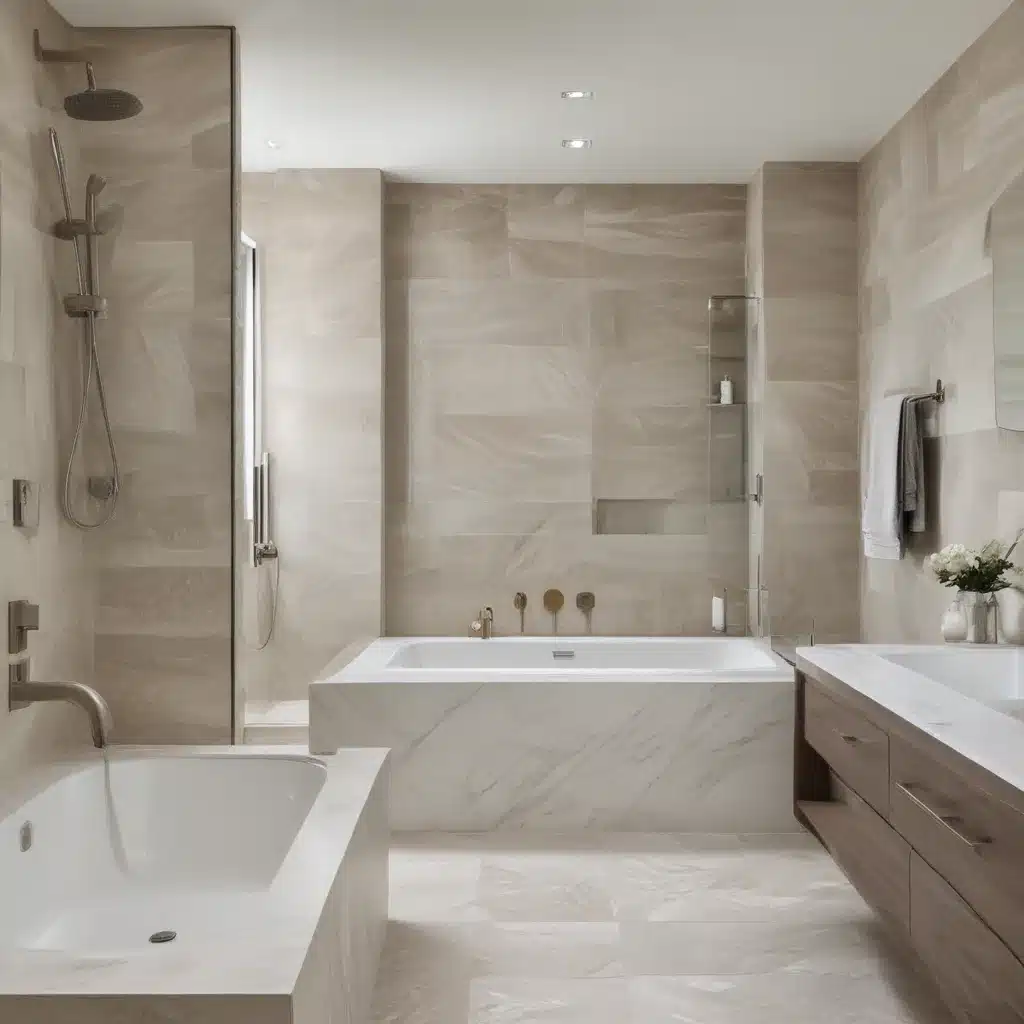
The Ageing Population: A Challenge and an Opportunity
As I sit here, staring at the blank screen, I can’t help but feel a sense of excitement. You see, I’ve been tasked with crafting an in-depth article on how to design a bathroom with ageing in mind. And let me tell you, this is a topic that really gets me fired up. Why, you ask? Well, it’s simple – the world’s population is rapidly growing older, and that presents both a challenge and an opportunity for us in the home renovation and design industry.
Think about it – more and more of our fellow citizens are entering their golden years, and they’re going to be needing some serious bathroom upgrades to accommodate their changing needs. Gone are the days of the one-size-fits-all bathroom. Nope, we’re talking about a whole new era of customized, age-friendly spaces that cater to the specific requirements of our ageing population.
And let me tell you, I’ve got plenty of ideas up my sleeve. From strategically placed grab bars to slip-resistant flooring, we’re about to dive headfirst into the world of bathroom design for the silver-haired set. So buckle up, my friends, because this is going to be one wild ride!
Identifying the Needs of an Ageing Bathroom User
Now, before we can start designing the ultimate ageing-in-place bathroom, we need to take a step back and really understand the unique needs of our older clients. After all, what good is a beautiful new bathroom if it doesn’t actually meet their requirements?
Let’s start with mobility. As we age, our balance and coordination can start to become a bit, shall we say, “challenged.” That’s why we need to think carefully about features that can help our clients move around the bathroom safely and securely. Grab bars, non-slip surfaces, and wide doorways are all must-haves.
But it’s not just about physical mobility – we also need to consider cognitive and sensory changes. Older adults may struggle with things like reduced vision, hearing, or dexterity, so we need to design bathrooms that are intuitive and easy to use. Think about things like clear, high-contrast signage, easy-to-reach controls, and well-lit spaces.
And let’s not forget about safety. Slips, trips, and falls are a major concern for the ageing population, so we need to be proactive in designing bathrooms that minimize these risks. Anti-scald fixtures, non-slip flooring, and strategic placement of storage and shelving can all play a crucial role.
Incorporating Ageing-in-Place Features
Okay, now that we’ve identified the key needs of our ageing bathroom users, it’s time to start putting together the ultimate design plan. And let me tell you, there’s no shortage of awesome ageing-in-place features we can incorporate.
First up, let’s talk about mobility aids. Grab bars are an absolute must-have, and they come in a wide variety of styles and finishes to suit any bathroom decor. But it doesn’t stop there – we can also consider things like shower seats, raised toilet seats, and even motorized bathtubs to make the space truly accessible.
Next up, let’s tackle the issue of slips and falls. Non-slip flooring is a no-brainer, but we can also get creative with things like curbless showers, textured surfaces, and even motion-activated lighting to guide our clients safely around the space.
And let’s not forget about those all-important sensory considerations. We can install easy-to-operate faucets and fixtures, use high-contrast colors to improve visibility, and even incorporate smart home technology to make the bathroom a breeze to control.
The possibilities are truly endless, my friends. But the key is to strike the perfect balance between function and form – after all, we want our clients to feel safe and independent, but we also want them to love the way their new bathroom looks and feels.
Case Study: Transforming a Dated Bathroom into an Ageing-Friendly Oasis
Now, I know all this talk of grab bars and anti-scald fixtures might sound a bit dry, but let me tell you, the real magic happens when we see these ageing-in-place features in action. And I’ve got just the story to share with you.
A few years back, we had a client in Aberdeen – let’s call her Mrs. Smith – who was in desperate need of a bathroom renovation. You see, Mrs. Smith had been living in her home for over 40 years, and her bathroom was starting to show its age. It was small, cramped, and frankly, a bit of a safety hazard for her ageing body.
But Mrs. Smith was determined to stay in her beloved home for as long as possible, so she reached out to us for help. And let me tell you, we were more than happy to lend a hand.
We started by completely gutting the old bathroom and starting from scratch. Out went the outdated fixtures, the slippery tile floor, and the hard-to-reach shelving. In its place, we installed a brand-new, ageing-friendly oasis.
First up, we incorporated a curbless shower with a built-in bench seat, making it easy for Mrs. Smith to safely get in and out. We also added strategically placed grab bars, both in the shower and around the toilet, to give her the extra support she needed.
But it wasn’t just about function – we also wanted to make sure the space looked and felt amazing. So we chose a beautiful, high-contrast tile for the floor, and we installed sleek, easy-to-use faucets and fixtures that complemented the modern aesthetic.
And let me tell you, the end result was nothing short of transformative. Mrs. Smith was absolutely thrilled with her new bathroom, and she couldn’t believe the difference it made in her day-to-day life. She was able to move around the space with ease, and she felt so much safer and more independent.
But the best part? Mrs. Smith was able to continue living in her home for several more years, thanks to the ageing-in-place features we incorporated into her bathroom design. It was a true win-win, and it just goes to show the power of thoughtful, user-centric design.
Designing for the Future: Adaptable and Flexible Bathrooms
Now, as much as I’d love to tell you that Mrs. Smith’s story is the norm, the reality is that not every bathroom renovation project goes quite so smoothly. You see, the truth is that our needs and abilities can change dramatically as we age, and what works perfectly well today might not be so user-friendly tomorrow.
That’s why it’s so important to take a long-term, adaptable approach to bathroom design. We need to think not just about our clients’ current needs, but also about how those needs might evolve over time.
Take, for example, the issue of mobility. While a curbless shower might be the perfect solution for a client who’s currently active and independent, what happens if they start to rely more heavily on a wheelchair or walker in the future? That’s where features like adjustable-height showerheads and removable shower seats can make all the difference.
And it’s not just about physical changes – we also need to consider cognitive and sensory shifts. As our clients age, they might start to struggle with things like reduced vision or dexterity, so we need to design bathrooms that can adapt to those changes. That could mean incorporating smart home technology, using high-contrast finishes, or even planning for future modifications like automated lighting or voice controls.
The key, really, is to approach bathroom design with a spirit of flexibility and forward-thinking. We need to create spaces that can evolve and adapt alongside our clients, ensuring that they can continue to live independently and with dignity for as long as possible.
Collaborating with Experts for Optimal Results
Now, I know what you’re thinking – this all sounds great, but how do I actually go about designing the perfect ageing-in-place bathroom? Well, my friends, that’s where collaboration comes into play.
You see, when it comes to creating truly accessible and user-friendly bathrooms, we can’t just rely on our own expertise as designers and renovators. We need to tap into the knowledge and experience of a wide range of experts, from occupational therapists to accessibility consultants.
Take, for example, our friend Mrs. Smith. When we were working on her bathroom renovation, we didn’t just rely on our own intuitions – we brought in a team of specialists to help us ensure that every design decision was made with her specific needs in mind. We worked closely with an occupational therapist to assess her mobility and sensory challenges, and we consulted with a local accessibility expert to make sure our plans were up to code and truly user-friendly.
And let me tell you, that collaboration paid off in spades. By tapping into the expertise of these professionals, we were able to create a bathroom that not only looked great, but also functioned beautifully for Mrs. Smith’s changing needs. She was able to move around the space with ease, take care of her daily routines with confidence, and ultimately, stay in her beloved home for years to come.
But it’s not just about working with experts – we also need to be proactive in engaging our clients throughout the design process. After all, they’re the ones who know their own needs and preferences best. By involving them every step of the way, we can ensure that the final product is truly tailored to their unique requirements.
So, if you’re looking to create the ultimate ageing-in-place bathroom, don’t be afraid to lean on the expertise of others. Collaborate with occupational therapists, accessibility consultants, and most importantly, your clients themselves. It’s the key to unlocking truly transformative and user-centric design.
Conclusion: Embracing the Challenge of Ageing-Friendly Design
As I sit here, typing away, I can’t help but feel a sense of excitement and pride about the future of bathroom design for the ageing population. You see, while it might seem like a daunting challenge, I truly believe that it’s also an incredible opportunity – a chance for us to rethink the way we approach home renovation and design, and to create spaces that truly empower and enrich the lives of our older clients.
I mean, just think about it – by designing bathrooms that are accessible, safe, and user-friendly, we’re not just improving the physical environment, but we’re also giving our clients the gift of independence, dignity, and peace of mind. We’re helping them to stay in their homes for longer, to maintain their routines and their sense of self, and to continue living their best lives, even as their needs and abilities change over time.
And you know what? I think that’s pretty darn amazing. It’s a privilege to be able to use our skills and expertise to make a real difference in the lives of our clients, and to play a role in shaping the future of ageing-in-place design.
So, if you’re a designer, a renovator, or simply someone who’s passionate about creating accessible and inclusive spaces, I encourage you to embrace this challenge with open arms. Dive headfirst into the world of ageing-friendly bathroom design, collaborate with experts, and most importantly, keep your clients at the heart of every decision you make.
Because when we do that – when we put the needs and preferences of our ageing population first – the results can be truly transformative. So let’s get to work, my friends, and let’s show the world just how amazing ageing-in-place design can be.
ABC Home: Your Trusted Partner in Ageing-Friendly Bathroom Design


