
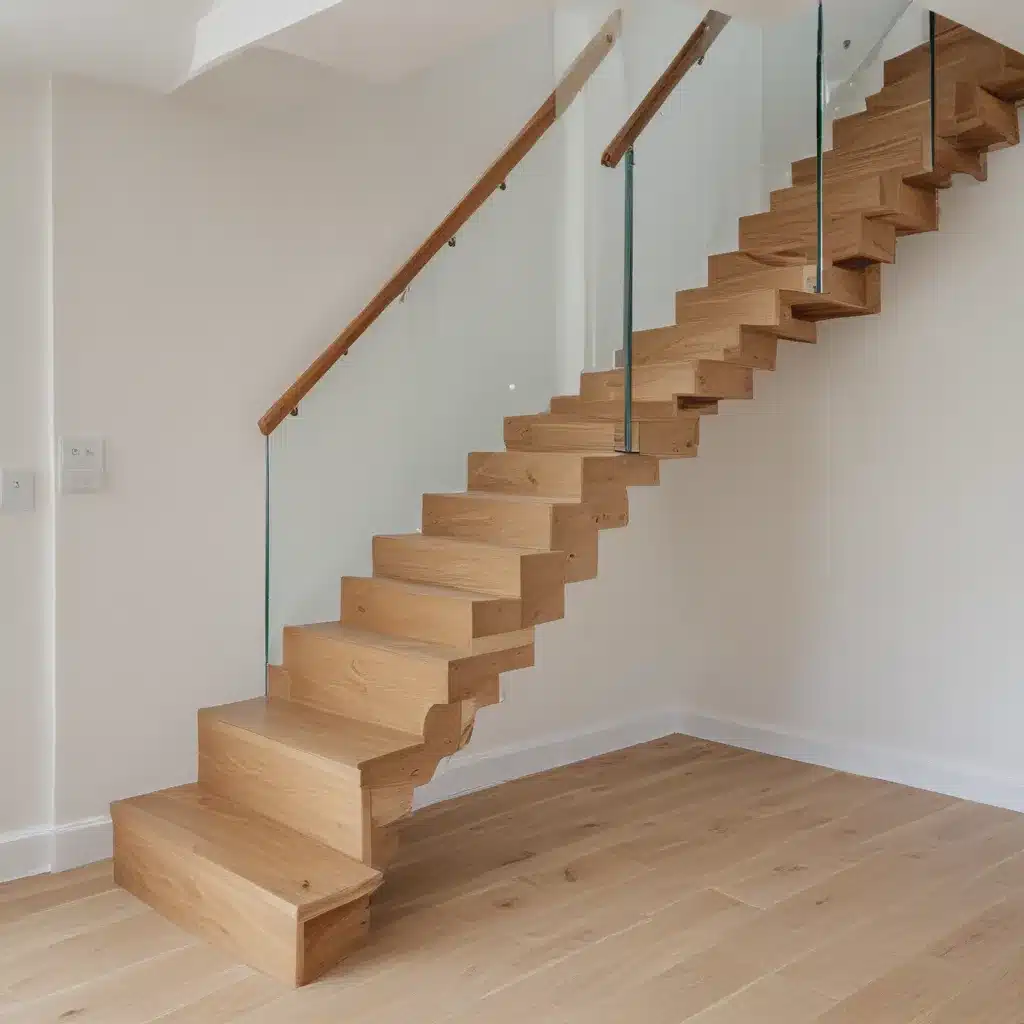
The Importance of Staircase Safety
As a homeowner, the safety of your family is of utmost importance. And when it comes to home renovations, one area that often requires special attention is the staircase. After all, staircases are the unsung heroes of our homes, quietly facilitating our movements from one level to the next. But beneath their humble exterior lies a vital role in ensuring the well-being of everyone who steps foot on them.
You see, staircases can be deceptively treacherous. A single misstep, a loose handrail, or a worn tread can lead to disastrous consequences. That’s why it’s crucial to prioritize staircase safety during the renovation process. Trust me, I’ve seen the aftermath of staircase-related accidents, and it’s not a pretty sight.
But fear not, my friend! In this comprehensive guide, I’ll walk you through the essential steps to ensure your new staircase not only looks stunning but also meets the highest safety standards. We’ll delve into the key regulations, design considerations, and practical tips that will give you the confidence to tackle this project head-on.
So, grab a cup of tea, get cozy, and let’s embark on a journey to building a staircase that will have your family and guests feeling safe and secure every time they ascend or descend. After all, a well-designed staircase isn’t just a functional necessity – it’s a testament to your commitment to creating a safe and comfortable living environment.
Navigating the Staircase Safety Regulations
The first step in ensuring your new staircase meets safety standards is to familiarize yourself with the relevant regulations. In the UK, the key pieces of legislation you need to be aware of are the Building Regulations Approved Document K and the Equality Act 2010.
The Building Regulations Approved Document K lays out the technical requirements for staircase design, covering everything from the minimum width and height of the treads, to the safe placement of handrails. It’s a comprehensive document that can seem a bit daunting at first, but fear not – I’ll break it down for you in a way that makes sense.
One of the crucial aspects of staircase safety is the tread depth. The regulations stipulate that each tread must be at least 250mm deep, with a consistent riser height of no more than 220mm. This ensures a comfortable and predictable step, reducing the risk of trips and falls.
But it’s not just the physical dimensions that matter – the Equality Act 2010 also requires that staircases be accessible to individuals with disabilities. This means incorporating design features like gentle gradients, generous landings, and non-slip surfaces to accommodate those with mobility challenges.
As you can imagine, navigating these regulations can be a bit of a minefield. But don’t worry, I’ve got your back. I’ll walk you through the key requirements, provide practical examples, and even share some insider tips to help you stay ahead of the curve.
Designing for Staircase Safety
Now that we’ve tackled the legal aspects, let’s dive into the fun part: designing your new staircase with safety in mind. After all, a well-designed staircase not only looks great but also provides a seamless and secure user experience.
One of the most important considerations is the layout of the staircase. Spiral staircases, for instance, can be visually stunning, but they often present challenges in terms of visibility and maneuverability. In contrast, a straight or L-shaped staircase tends to be more intuitive and easier to navigate, especially for children and the elderly.
Speaking of children, it’s crucial to incorporate safety features that prevent little ones from taking a tumble. This might include installing sturdy handrails on both sides of the staircase, or even considering a design that incorporates a half-landing to break up the ascent.
And let’s not forget about the materials. Choosing the right flooring and finishes can make a world of difference in terms of slip resistance and visibility. For example, a matte-finish, non-slip tile or a textured, high-traction carpet can provide excellent traction, while a contrasting color or pattern on the treads can help visually distinguish each step.
But it’s not just about the physical design – the lighting scheme also plays a crucial role in staircase safety. Adequate task lighting along the treads and warm, ambient illumination on the landings can help create a well-lit and inviting environment, reducing the risk of missteps.
By carefully considering the layout, safety features, and lighting, you can create a staircase that not only looks stunning but also provides a secure and comfortable experience for everyone who uses it.
Practical Tips for a Safe Staircase Installation
Now that we’ve covered the regulatory and design aspects, let’s dive into the nitty-gritty of actually installing your new staircase. This is where the rubber meets the road, so to speak, and it’s crucial to get it right.
One of the most important things to keep in mind is the structural integrity of the staircase. It’s not enough to simply plop it down and call it a day – the staircase needs to be securely anchored to the floor and wall, with a sturdy support system that can withstand the weight of regular use.
This is where the expertise of a professional contractor comes in handy. They’ll be able to assess the load-bearing requirements, ensure proper load distribution, and make any necessary structural modifications to the surrounding space.
But it’s not just about the technical aspects – the installation process itself can also impact safety. For example, ensuring the treads are properly secured and leveled can prevent uneven surfaces that can trip up unsuspecting users. And paying close attention to the placement of handrails, ensuring they’re at the correct height and securely fastened, can make a world of difference in terms of providing a stable and reliable support system.
And let’s not forget about the finishing touches. Things like non-slip tread covers, properly sealed edges, and a thorough cleanup of any construction debris can help create a seamless and hazard-free environment.
By working closely with a reputable contractor and paying close attention to the installation process, you can have confidence that your new staircase will be a safe and reliable addition to your home.
Real-Life Examples of Staircase Safety in Action
Now, I know what you’re thinking – all of this talk about regulations and design principles is well and good, but how does it all play out in the real world? Well, my friend, let me share a few real-life examples that’ll give you a better sense of what successful staircase safety looks like.
Take the case of the Smith family, for instance. They were in the midst of a major home renovation, and one of the key projects on their list was a brand-new staircase. Now, the Smiths have a young, rambunctious brood, so safety was their top priority.
Working closely with their contractor, they opted for a straight, open-riser staircase design, with sturdy handrails on both sides. The treads were made of a high-traction, slip-resistant material, and the risers were painted in a contrasting color to enhance visibility.
But the Smiths didn’t stop there. They also incorporated a built-in baby gate at the top of the stairs, ensuring their little ones couldn’t take an unexpected tumble. And to top it off, they installed motion-activated LED lighting along the treads, making it easier to navigate the stairs, even in the dark.
Now, the Smiths’ staircase isn’t just a functional necessity – it’s a source of pride and peace of mind. They can rest easy knowing that their family is safe and secure every time they use it.
And then there’s the case of the Jones family, who had a slightly different challenge on their hands. You see, their home was a historic Victorian, complete with a grand, winding staircase. While the architectural details were undeniably stunning, the narrow treads and steep risers posed a real safety hazard, especially for their elderly grandparents.
Undaunted, the Jones family worked with their contractor to devise a solution that would preserve the staircase’s historic charm while making it more accessible. They opted for custom-fitted stair treads with a deeper depth, and installed continuous handrails on both sides, extending all the way to the landings.
The result? A staircase that not only looks breathtaking but also provides a secure and comfortable ascent for all who use it. The Jones family’s grandparents can now navigate the stairs with ease, and the entire family can enjoy the beauty of their home’s architectural heritage without compromising on safety.
These are just a couple of examples, but they illustrate the power of thoughtful staircase design and the profound impact it can have on the well-being of a household. So, as you embark on your own home renovation journey, keep these real-life success stories in mind – they just might inspire you to create a staircase that’s as safe as it is stunning.
Conclusion: Prioritizing Staircase Safety for a Secure and Comfortable Home
As we wrap up our journey through the world of staircase safety, I hope you’ve gained a deeper appreciation for the importance of this often overlooked, yet vital, aspect of home renovation.
Remember, a staircase is not just a means of getting from one level to the next – it’s a crucial component of your home’s overall safety and accessibility. By prioritizing staircase safety, you’re not only protecting your loved ones from potential harm but also creating a secure and comfortable living environment that will serve your family for years to come.
So, as you plan your next home renovation project, don’t let staircase safety fall by the wayside. Dive into the regulations, explore innovative design solutions, and work closely with a trusted contractor to bring your vision to life. Trust me, the peace of mind you’ll gain will be worth every minute of the effort.
And who knows, maybe your new staircase will even become a source of pride and inspiration for your family and friends. After all, a well-designed, safety-conscious staircase is a true testament to your commitment to creating a home that’s not just beautiful, but also built to withstand the tests of time and the pitter-patter of little feet.
So, what are you waiting for? It’s time to take your home’s safety to new heights – literally! Let’s get started on your dream staircase project today. If you need any assistance, feel free to reach out to us at ABC Home – we’d be more than happy to lend a hand.


