
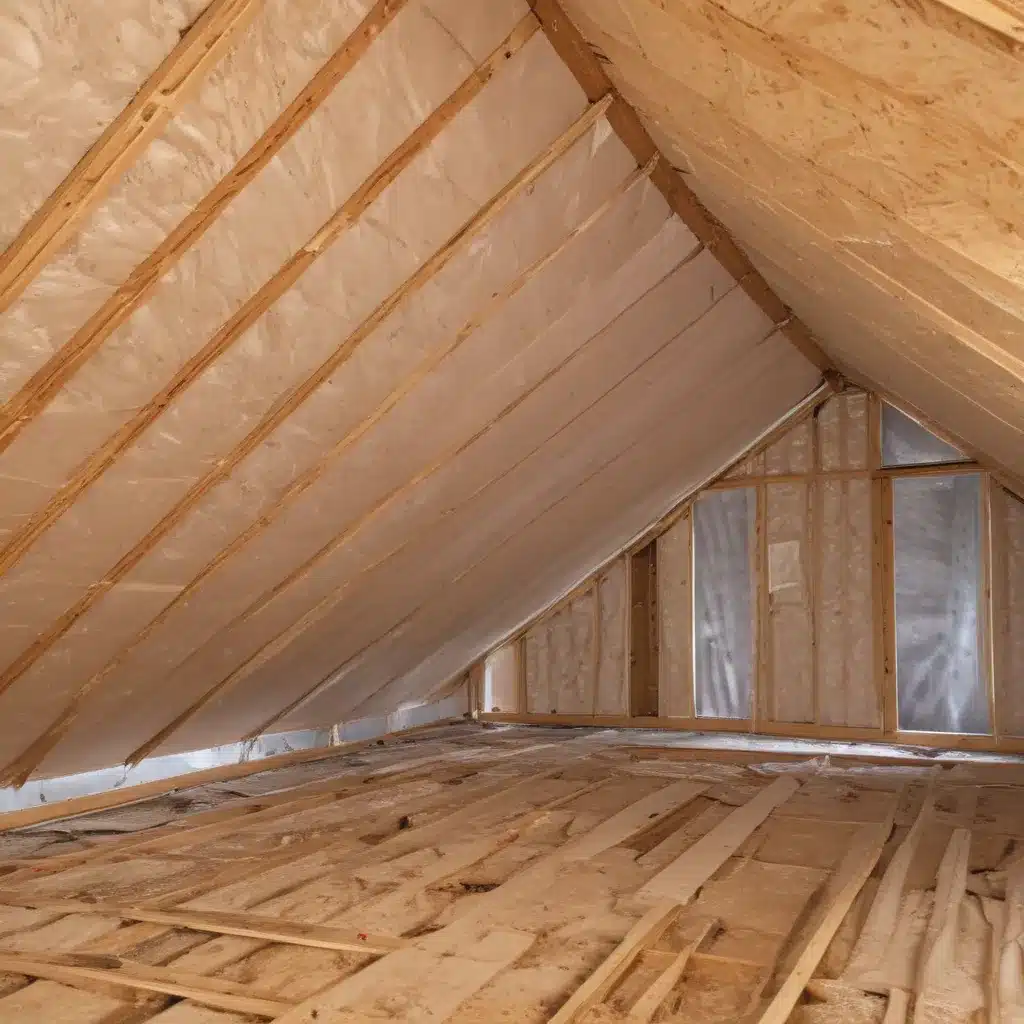
Improve Attic Insulation Before Temperature Shift
Falling Down the Rabbit Hole of Home Insulation
I’ll be the first to admit – I’m a tinkerer. When I bought my little brick house in Chicago a few years back, I couldn’t wait to start experimenting with ways to make it more energy-efficient. You know, the kind of stuff that would save me money on my utility bills and make the place more comfortable, year-round.
So, I did what any well-meaning homeowner would do – I called in the experts. The energy auditor came out, did his blower door test, and gave me a big thumbs up on insulating my attic. “You’ll see huge savings!” he proclaimed. Without hesitation, I hired an insulation company to blow in cellulose until I had a whopping R-60 up there.
Boy, was I in for a surprise.
From Cozy to Stuffy: The Unintended Consequences of Superinsulation
At first, things seemed to be going well. The temperature in the house didn’t fluctuate as much as it used to, and I figured I was well on my way to reaping the rewards of my investment. But then, something strange started happening. I found myself turning on the air conditioning more and more, even when the outdoor temperature was only in the low 70s. Whereas before, I could just open the windows at night and let the cool air flush out the house, now it felt like I was fighting a losing battle.
“I wake up to the stat saying it’s 79 degrees. What explains this?”
I scratched my head, wondering what could be going on. Was my air conditioning unit on the fritz? Had the relative humidity spiked for some reason? I needed to get to the bottom of this.
Thermal Mass: The Hidden Enemy of Efficient Cooling
After doing some digging, I realized the culprit was likely the very thing that was supposed to be helping me – the insulation in my attic. You see, when you have a thick layer of insulation like R-60, it doesn’t just slow down the heat transfer, it also acts as a massive thermal battery, soaking up heat during the day and slowly releasing it back into the living space at night.
“The temperature in the house doesn’t fluctuate as much. However, I feel as if I’m using A/C more.”
It’s a bit like trying to cool a giant concrete block – the heat just doesn’t want to leave. Even once the sun goes down and the outdoor temperature drops, that stored heat in the insulation continues to make its way into my home, forcing me to run the air conditioning to keep things comfortable.
The Importance of Ventilation: Flushing Out the Excess Heat
So, what’s the solution? Well, it turns out that the key to keeping a superinsulated attic cool isn’t just piling on more insulation – it’s about managing the airflow. As one expert pointed out, my 8 soffit vents and 2 turtle vents might not be enough to effectively flush out the hot air that’s building up up there.
The idea is to create a steady, controlled flow of air through the attic, replacing the scorching-hot stuff with cooler outside air. This helps prevent that heat from radiating back down into the living space and keeps the insulation itself from becoming a giant thermal sponge.
Striking the Right Balance: Insulation, Ventilation, and Reflectivity
Of course, it’s not as simple as just adding more vents. As another commenter pointed out, you also need to make sure your air sealing is up to snuff, and that you don’t have any sneaky air leaks allowing that hot attic air to sneak back into the conditioned space.
And let’s not forget about the roof itself. If you’ve got a dark, asphalt-shingle roof, it’s going to be soaking up a ton of heat during the day, which then radiates down into the attic. Swapping that out for a lighter, more reflective roofing material could make a big difference.
Putting It All Together: A Holistic Approach to Attic Insulation
Ultimately, getting the most out of your attic insulation is all about striking the right balance. It’s not just a matter of piling on the R-value – you need to think about airflow, heat transfer, and the overall performance of the entire building envelope.
“The solution to this problem, contrary to what I have frequently seen written on the subject, is not to futilely continue piling on more insulation, but to reduce the actual temperature of the attic itself, both during the day and during the night.”
For me, that’s meant exploring options like adding more ventilation, potentially upgrading my roofing, and making sure my air sealing is up to snuff. And who knows, I might even throw a whole-house fan into the mix, just to really get that airflow moving.
At the end of the day, improving the energy efficiency of your home is a journey, not a destination. But with a little bit of trial and error, and a willingness to dive deep into the science behind it all, I’m confident I can find the right balance and keep my house comfortable, no matter what the temperature is outside.
Embracing the Complexity: The Rewards of Mastering Home Performance
You know, as frustrating as this whole experience has been, I have to admit, I’m kind of enjoying the challenge. It’s like I’ve fallen down the rabbit hole of home performance, and there’s just so much fascinating stuff to learn. From the intricate dance of heat, air, and moisture, to the nuances of building science and thermal dynamics, it’s a veritable wonderland of geeky goodness.
And you know what? I think that’s the key to making the most of your home improvements – embracing the complexity, and being willing to dig a little deeper. Because when you do, you just might find that the solutions to your problems aren’t always as simple as they seem.
So, if you’ll excuse me, I’ve got some more research to do. Who knows, maybe I’ll even figure out a way to harness the power of night sky radiation to cool my house. After all, with a little ingenuity and a lot of determination, anything is possible. And hey, if you’re ever in the Aberdeen area, be sure to stop by ABC Home – I’d be happy to swap stories and compare insulation strategies!


